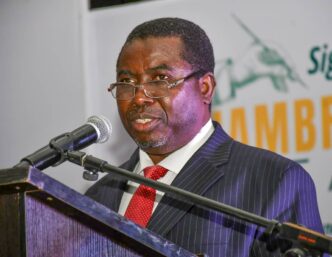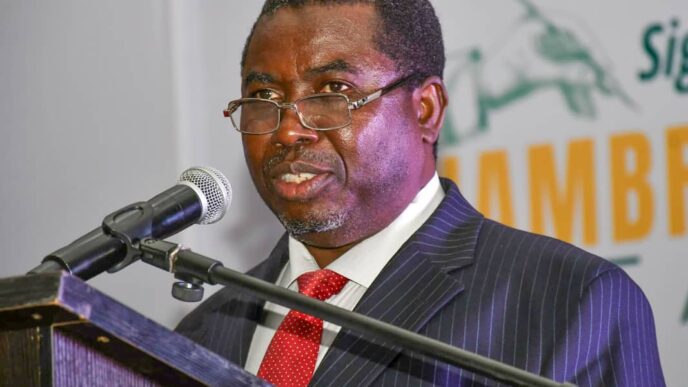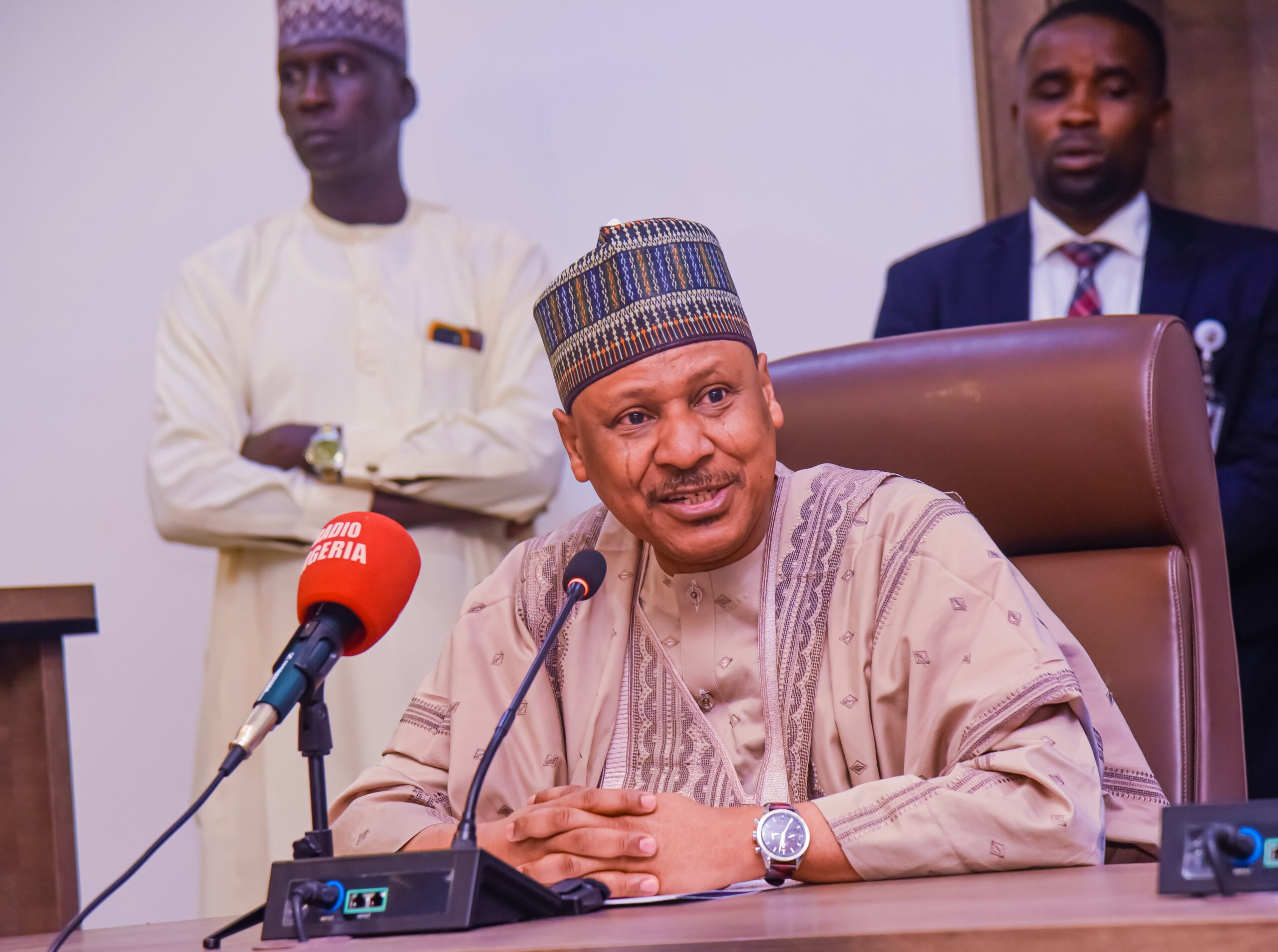
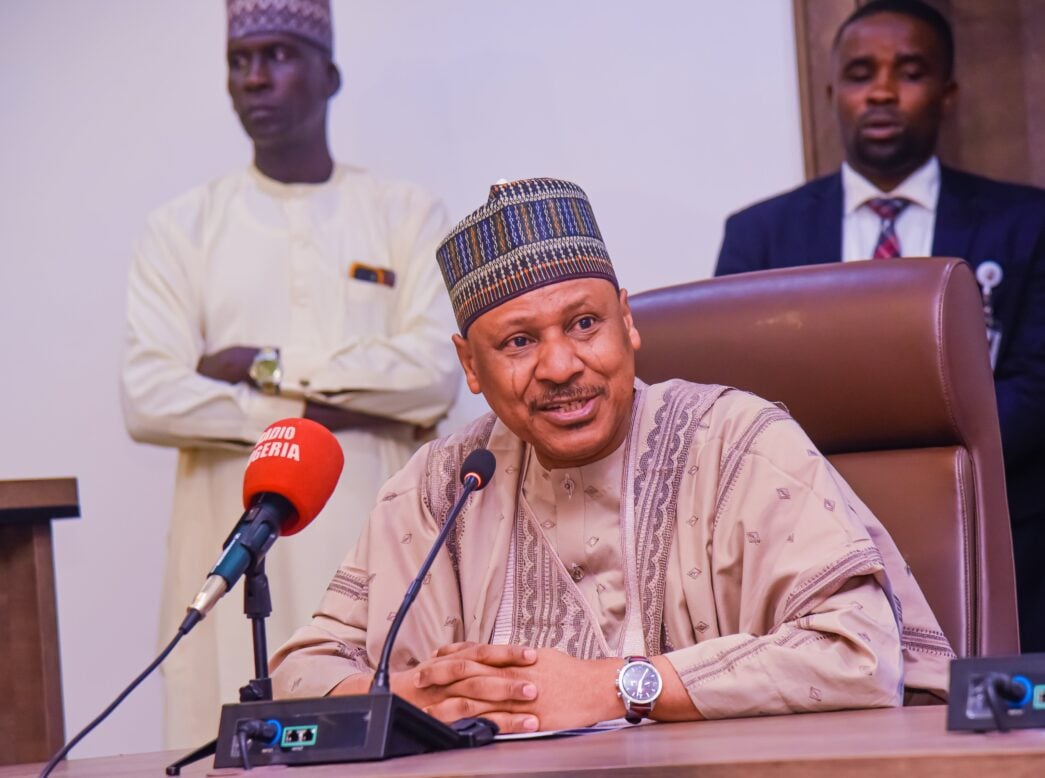
Mohammed Idris, minister of information and national orientation
Mohammed Idris, minister of information and national orientation, says Nigeria is fully prepared to protect its citizens from terrorists and other criminal elements in line with globally accepted rules of engagement.
Idris spoke in Abuja on Monday at the end-of-year press briefing of his ministry.
He was responding to concerns over the new counterterrorism doctrine that classifies armed groups operating outside state authority, including bandits, militias, armed gangs and their enablers, as terrorists.
“Nigeria has to defend itself as a country by observing the highest standards of procedure,” the minister said.
Advertisement
“All our armed forces are trained and have been collaborating with their international partners, and they are following strict protocols of engagement with terrorists.
“We must commend our armed forces for observing that.”
Speaking on the federal government’s performance in 2025, Idris said the President Bola Tinubu-led administration is focused on restoring macroeconomic stability and rebuilding confidence in the economy.
Advertisement
He said Nigeria’s gross domestic product (GDP) grew by 3.98 percent in the third quarter of 2025, driven by resilient expansion in the non-oil sector.
Idris added that headline inflation declined for eight consecutive months to 14.45 percent in November 2025, noting that food inflation is also on a steady downward trend.
According to him, Nigeria’s external reserves strengthened to about $44.56 billion, helping to stabilise the currency and boost investor confidence.
He said the country recorded a trade surplus of N6.69 trillion in the third quarter of 2025, representing a 27.29 percent year-on-year increase.
Advertisement
Idris also disclosed that investor confidence was reinforced by a massively oversubscribed Eurobond issuance that attracted orders amounting to 400 percent of the $2.3 billion target.
On infrastructure, the minister said economic reforms are deliberately tied to delivery, stressing that “an economy cannot grow faster than the infrastructure that supports it.”
He said Nigeria recorded a maximum daily energy output of 128,370.75 megawatt-hours on March 4, 2025, the highest in the country’s history.
Idris added that the government had rolled out the presidential metering initiative and issued the first bond under the presidential power sector debt reduction programme.
Advertisement
He said the federal government committed over N1.5 trillion to road infrastructure in 2025, the largest such investment in Nigeria’s history.
According to him, the investment is anchored on four legacy highway projects, including the Lagos-Calabar coastal highway, the Sokoto-Badagry superhighway, the trans-Saharan highway, and the Akwanga-Jos-Bauchi-Gombe expressway.
Advertisement
“These are not conventional roads,” he said.
“They are being built with reinforced concrete pavement designed to last 50 to 100 years, drastically cutting future maintenance costs and promoting local content.”
Advertisement
He said foundational reforms also extended to agriculture, with the president approving the recapitalisation of the Bank of Agriculture with N1.5 trillion.
The minister also confirmed the release of all 230 abducted pupils of St Mary’s Catholic School in Papiri, Niger state.
Advertisement
Idris said while 2025 focused on strengthening foundations, 2026 would be about building a secure, competitive and prosperous Nigeria.