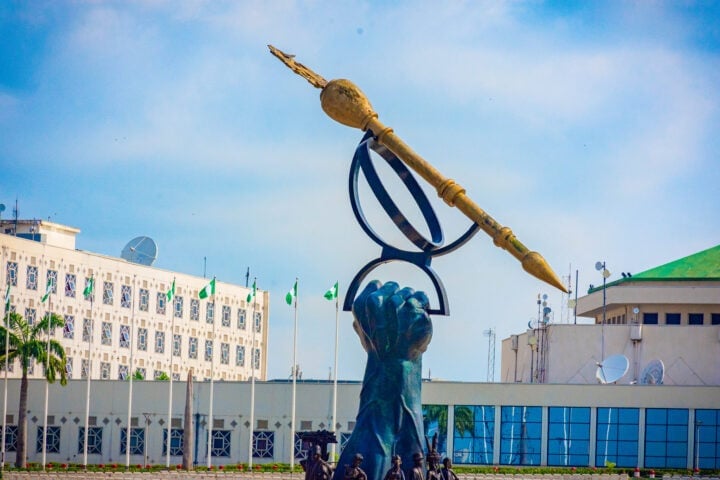
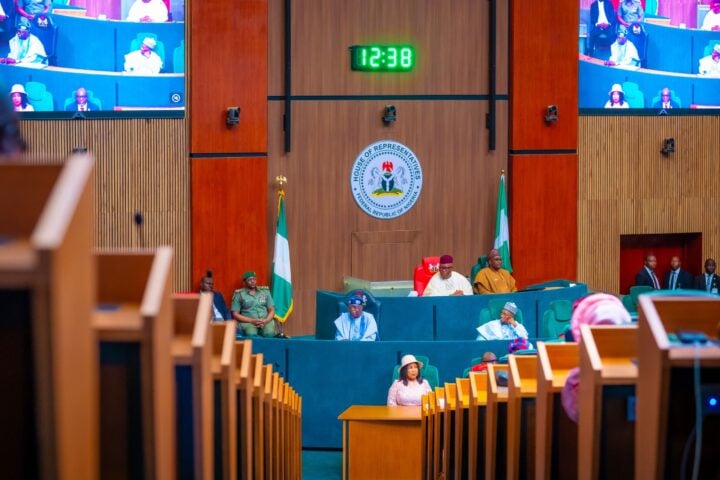
The national assembly is set to debate and vote on 44 constitutional amendment bills.
The constitution alteration bills include electoral and judicial reforms, inclusive governance, security and state policing, devolution of powers, strengthening of institutions, traditional institutions, fiscal reforms, citizenship and indigenisation, fundamental human rights, and local government autonomy.
In recent years, there have been demands to amend the constitution to restructure the country and devolve more powers to state and local governments.
The last amendment to the 1999 constitution (the fifth alteration) took place in 2023, with former President Muhammadu Buhari signing 16 of the bills into law on March 17.
Advertisement
Since the turn of the year, the senate and house of representatives have held public hearings and engaged several stakeholders to gather input on the bills.
The lower legislative chamber had scheduled October 14 for voting on the constitution alteration bills, but the process has since been delayed, and debate on the proposals has yet to begin.
Benjamin Kalu, the deputy speaker and chairman of the constitution review committee, said the process would be concluded before the end of the year.
Advertisement
Here is a breakdown of all 44 bills.
LOCAL GOVERNMENTS
1. Bill to establish local government councils as a tier of government.
The proposed legislation seeks to review the means of election into the offices of the chairmen and vice-chairmen of the LGAs in Nigeria. It proposes that local government leadership should be nominated and elected by the members of its legislative council.
Advertisement
The bill’s proponents argue that many local government officials are elected under systems significantly influenced by state governments, raising concerns about autonomy and genuine representation.
2. Bill to establish the office of the state auditors-general for local governments and the federal capital territory area councils, to strengthen fiscal oversight, promote accountability, and enhance good governance at the grassroots level.
3. Bill to substitute the names of two LGAs in Delta state: “Okpe” and “Sapele” with “Okpe East” and “Okpe West” respectively, in Part I of the First Schedule to the constitution.
4. Bill to alter Part I of the First Schedule to the constitution to change “Ibadan Central” to “Ibadan North-East” LGA of Oyo state.
Advertisement
5. Bill to amend Part I of the First Schedule to the constitution to change the name of Sabon Gari LGA of Kaduna state to Zaria North LGA, also to add the word “south” to the name of the existing Zaria LGA.
6. Bill to alter Part I of the First Schedule to the constitution to correct the name Jaba LGA to Ham LGA of Kaduna.
Advertisement
7. Bill to change the name of Irewole LGA of Osun state to Ikire LGA.
8. Bill to change the name “Ibeno” in Part I of the First Schedule to the constitution.
Advertisement
9. Bill to change the Aiyekire LGA to Aiyedire LGA of Ekiti state in Part I of the First Schedule of the constitution.
INCLUSIVE GOVERNANCE AND CITIZENSHIP
Advertisement
10. Bill to grant citizenship rights to foreign men married to Nigerian women.
The bill seeks to address gender disparity in citizenship rights. Current provisions allow foreign women who marry Nigerian men to obtain citizenship; therefore, the proposal aims to create a reciprocal framework that extends similar rights to foreign men married to Nigerian women.
11. Bill to include citizenship by investment as one of the classes of citizenship in Nigeria, to provide for the acquisition of Nigerian citizenship by qualified foreign investors who meet specified investment thresholds.
The foreign investor seeking Nigerian citizenship shall apply to the designated ministry, accompanied by evidence of investment in Nigeria. The investment must exceed a specified financial threshold or be in strategic sectors deemed critical to national development, as determined by the ministry responsible for granting citizenship.
12. Bill to create reserved seats for women in the national assembly and state houses of assembly.
The proposed legislation aims to increase the representation of women across legislative bodies: it proposes adding one special seat for women in the senate for each of the 36 states and the FCT, one special seat for women in the house of representatives for each state and the FCT, and three additional special seats for women in every state house of assembly.
ELECTORAL REFORMS
13. Bill to provide the criteria for appointing members of the State Independent Electoral Commission and grant the commission additional powers.
14. Bill to provide for independent candidacy in presidential, gubernatorial, national assembly, state houses of assembly and local government council elections.
15. Bill to establish and empower the Electoral Offences Commission to investigate and prosecute electoral offences.
STRENGTHENING OF INSTITUTIONS
16. Bill to increase the number of members of the Federal Civil Service Commission to give each state and the Federal Capital Territory the opportunity of one-person representation.
17. Bill to ensure every local government in each state has at least one member in the house of assembly.
18. Bill to establish the office of the attorney-general of the federation and of the state, separate from the office of the minister of justice, or the commissioner for justice.
The bill’s supporters argue that it will make the offices of the attorneys-general independent and insulated from partisanship.
19. Bill to separate the office of the governor from that of the deputy governor on issues of qualification or disqualification.
There are instances in which a gubernatorial mandate was lost due to issues involving the deputy governor or the running mate. The most prominent example is the 2019 Bayelsa governorship saga, where the supreme court annulled the election of David Lyon of the APC even though he had already completed rehearsals for his inauguration.
The court ruled that Lyon’s deputy-governor-elect, Biobarakuma Degi-Eremienyo, submitted forged certificates to INEC, disqualifying the joint ticket. The precedents form the basis for the bill.
SECURITY/STATE POLICE
20. Bill to establish state and community police.
21. Bill to provide for the financial independence of the Armed Forces of the Federation.
LEGISLATURE
22. Bill to institutionalise legislative bureaucracy in the constitution.
23. Bill to specify the period for the laying of the appropriation bill before the national and state houses of assemblies.
24. Bill to provide for the inauguration of new members after the inauguration of the national assembly or house of assembly.
25. Bill to provide the procedure for removing presiding officers of the house of assembly of a state.
26. Bill to remove transitional law-making powers from the executive arm of government.
There have been periods when the executive assumed powers reserved for the legislature. The bill seeks to end this practice by stripping the executive of any “transitional law-making powers”.
JUDICIAL REFORMS
27. Bill to ensure expedited hearing and determination of petitions challenging the election of any person to an office created under the constitution.
28. Bill to provide for the regulation of the jurisdiction of the supreme court and the court of appeal.
29. Bill to enable payment from the federation account to be made directly to the heads of all federal and state courts through the National Judicial Council.
30. Bill to ease the burden on the supreme court, and strengthen it to focus on its responsibility as a court of policy.
31. Bill to strengthen the independence of the judiciary by providing for an expeditious and seamless succession where there is a vacancy in a judicial office and safeguard the exercise of the powers conferred on the president or governor to remove a judicial officer from office.
32. Bill to enhance equity in the composition of the National Judicial Council.
33. Bill to enhance the pension as well as retirement benefits of retired judicial officers.
34. Bill to enhance the jurisdictions of courts, expand the criminal jurisdiction of the federal high court to include electoral offences and empower judges elevated to higher courts to conclude part-heard criminal matters pending before them before their elevation.
HUMAN RIGHTS
35. Bill to further define acts that constitute torture, inhuman, or degrading treatment.
36. Bill to protect the right of an unborn child being carried by a pregnant woman sentenced to death.
37. Bill to provide for the right to a clean, safe, and healthy environment under the fundamental right and integration of environmental protection into the right to life and dignity of the human person.
DEVOLUTION OF POWERS
38. Bill to move the construction of roads other than Trunk ‘A’ federal roads (major highways connecting states and regions) to the concurrent legislative list.
39. Bill to provide for the inclusion of tourism and tourism-related matters on the concurrent legislative list.
40. Bill to transfer quarantine from the exclusive legislative list to the concurrent legislative list.
TRADITIONAL INSTITUTIONS
41. Bill to establish the Council of Traditional Rulers in Nigeria.
42. Bill to provide direct payment of at least five percent to heads of traditional rulers in each state.
FISCAL REFORMS
43. Bill to mandate all government statutory corporations, commissions, authorities, and agencies, including all persons and bodies established by law, to submit yearly financial statements to the auditor-general within a specified period.
44. Bill to provide for the public disclosure of reports of the auditor-general of the federation and the auditor-general of a state.