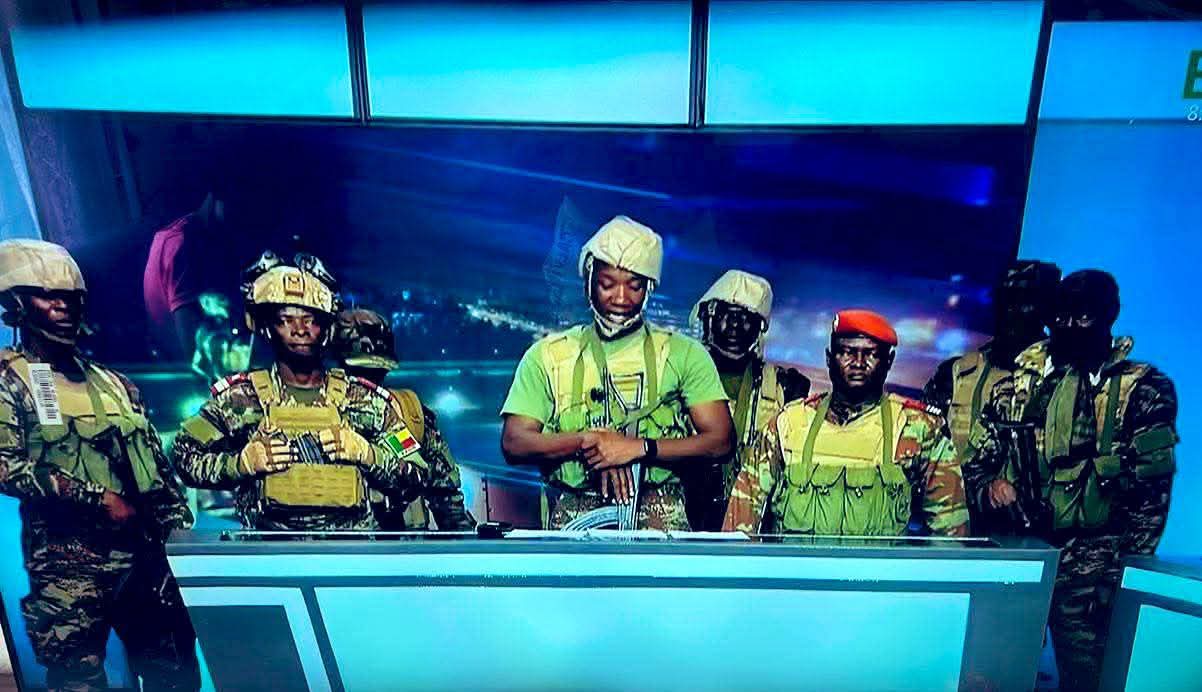
The Benin Republic coup plotters
BY OUMAROU SANON
The failed coup in Benin lasted barely a few hours, but it has exposed a dangerous trend across West Africa. What unfolded in Cotonou on December 7 was not just a clumsy mutiny by a handful of soldiers—it was a reminder of how fragile our democracies have become, and how eagerly foreign actors and their local proxies are exploiting public frustration to rewrite the political map of the region.
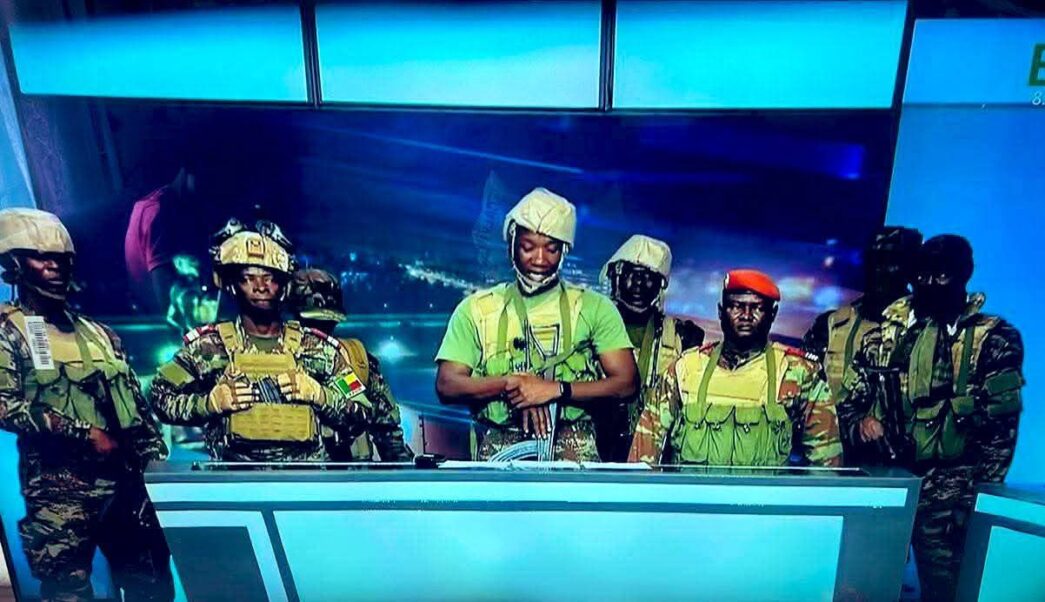
By 7:30 a.m., shots were ringing around President Patrice Talon’s residence. Minutes later, a ragtag group of mutineers stormed the national broadcaster, declared the president “removed,” and presented an unknown artillery officer as leader of a so-called “Committee for Military Refoundation.” They looked startled, disorganised, and unconvincing. By midday, they had been flushed out, arrested, or had fled. Benin’s institutions held firm. The coup failed—and quickly.
But the real story began online. Even before the first verified reports emerged, the usual chorus of self-styled “pan-African revolutionaries”—the same characters who cheerlead every military takeover from Niamey and Bamako to Ouagadougou—were already celebrating. The speed of their reaction raises serious questions. Kémi Seba, who has mastered the art of performative radicalism, hailed the mutiny as a “liberation day” before hastily deleting his post once the coup collapsed. Nathalie Yamb, Egountchi Behanzin, and other loud anti-Western voices recycled old protest videos, fabricated stories of “millions” marching, and claimed government statements were issued from “fake studios.” AES-linked accounts joined in, flooding the information space with lies. It was carefully coordinated and deliberate, intended to mislead.
These people call themselves “pan-Africanists,” but their behaviour betrays something else entirely. Their activism is increasingly indistinguishable from geopolitical propaganda—loud when coups align with their sponsors, silent when repression occurs in their preferred authoritarian states. They do not defend Africa; they manipulate Africans.
Advertisement
Then came the most troubling detail: at the height of the coup attempt, two Russian vessels appeared near the port of Cotonou, only to withdraw once it became clear the mutineers had failed. Perhaps a coincidence—but the timing is too convenient, too familiar. Russia and its proxies have mastered the art of filling the cracks in fragile democracies, using information warfare, opportunistic “solidarity,” and covert support to reshape alliances. West Africa, battered by poor governance and eroding public trust, has become fertile ground for corruption.
If there is comfort, it lies in the maturity shown by Benin’s institutions. The armed forces refused to splinter. The public rejected the mutiny unequivocally. Côte d’Ivoire and others signalled readiness to intervene. For once, democratic states in the region acted like they understood the stakes. And yet, the fact that such a small, ill-prepared group even attempted a coup underscores the depth of the political decay around us.
Let’s be honest: West Africa is sitting on a democratic fault line. Elections are increasingly contentious. Institutions are underperforming. Citizens feel abandoned. Leaders behave with impunity. In such an environment, coups stop being unthinkable. They become tempting. And foreign actors—whether Moscow or any other power—are more than happy to exploit that vacuum. The danger is not just the coups themselves, but also the erosion of democratic norms that makes coups possible.
Advertisement
ECOWAS and the African Union can no longer wait for crises to erupt before reacting. They need a standing peer-review mechanism for democratic governance—not the stale, symbolic reviews of the past, but real political diagnostics that confront uncomfortable truths. Countries must be assessed on press freedom, electoral integrity, judicial independence, civil-military relations, and public trust. Anything less is wishful thinking.
If leaders continue to ignore the widening cracks, West Africa will drift further into a cycle of coups, juntas, and foreign manipulation dressed up as “anti-imperialism.” The failed Benin coup is the latest warning. The next one may not fail. And by then, the region would have crossed a line that is difficult to reverse.
The alarm bells are ringing. West Africa can still pull back from the brink—but only if its leaders choose courage over complacency.
Sanou, is a social critic, Pan-African observer and researcher focusing on governance, security, and political transitions in the Sahel. He writes on geopolitics, regional stability, and the evolving dynamics of African leadership. Contact: [email protected]
Advertisement
Views expressed by contributors are strictly personal and not of TheCable.