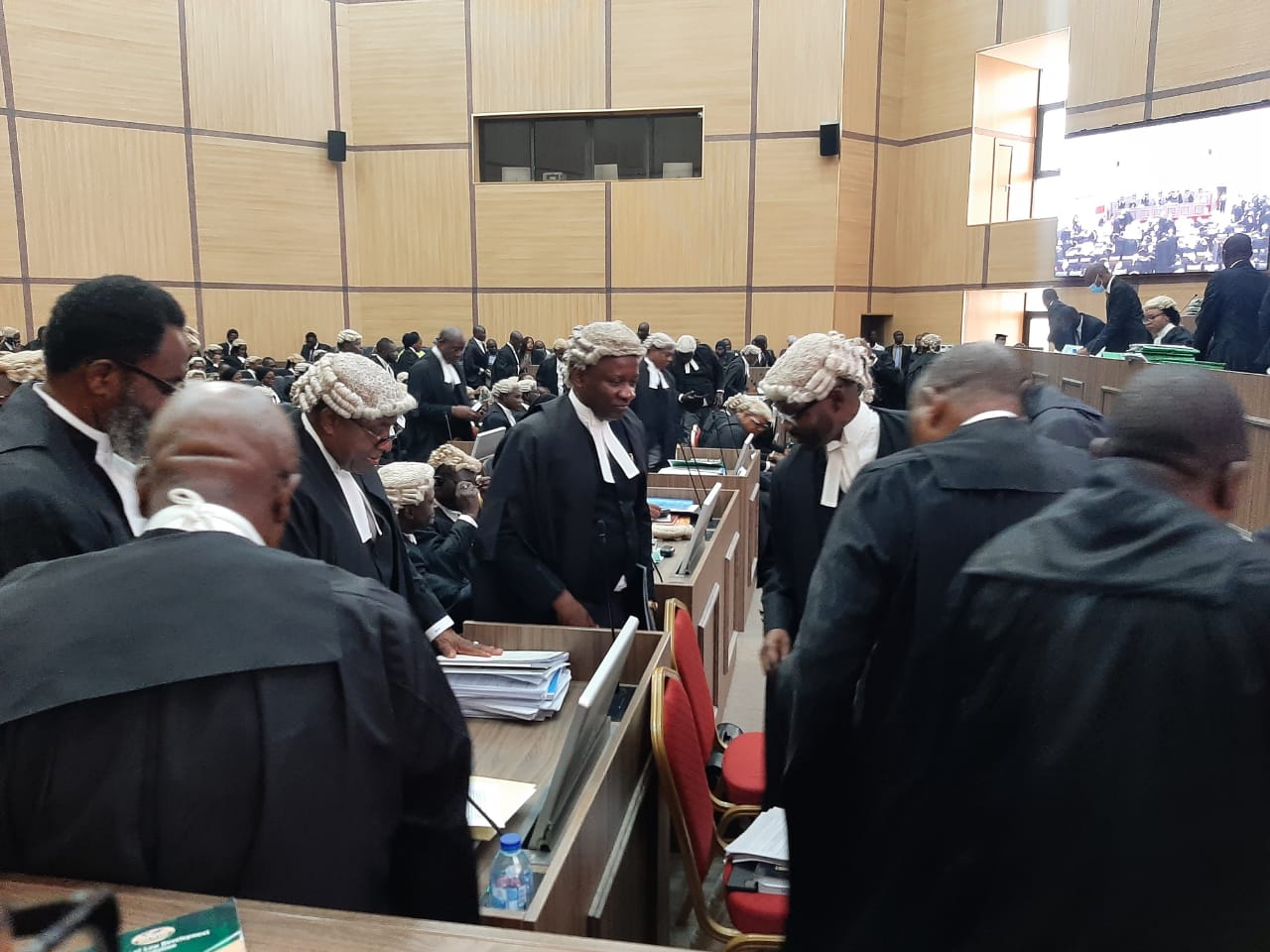
Supreme court | File photo
The supreme court has upheld the president’s powers to declare a state of emergency in any part of the country to forestall a breakdown of law and order.
The apex court also affirmed the president’s powers to suspend elected officials within a set timeframe.
The ruling was premised on a suit filed by Adamawa state, in cahoots with 10 other Peoples Democratic Party (PDP)-led states, challenging the emergency rule declared by President Bola Tinubu in Rivers state in March.
The president had suspended Siminalayi Fubara, governor of the state, his deputy, and lawmakers of the Rivers assembly for an initial period of six months.
Advertisement
Mohammed Idris, who read the majority judgment, noted that Section 305 of the 1999 Constitution as amended, hands the president the discretion to decide what measures to be taken during a state of emergency.
In a split decision of six-to-one, the apex court also held that the president can suspend elected officials within a limited period.
The court subsequently struck out and dismissed the plaintiffs’ suit for want of jurisdiction.
Advertisement
The Rivers emergency rule was lifted in September.
THE SUIT
The PDP governors had questioned the legality of Tinubu’s actions, particularly on whether the president can lawfully suspend or interfere with the offices of a governor and deputy governor, replacing them with a sole administrator.
The governors were also challenging the suspension of the Rivers state house of assembly and the constitutionality of the appointment of a sole administrator.
Advertisement
The plaintiffs argued that the actions taken by the president were in violation of several provisions of the 1999 constitution, particularly regarding the powers and functions of state governors and assemblies.
DISSENTING JUDGMENT
Obande Ogbuinya, a judge, dissented on the majority judgment and ruled that the PDP governors’ suit succeeded in part.
Ogbuinaya argued that the president can declare a state of emergency but does not have the power to suspend elected representatives.
Advertisement
Earlier, the lead judge upheld the preliminary objections raised by the two defendants — national assembly and attorney-general of the federation — that the plaintiffs have not shown cause of action to warrant the jurisdiction of the supreme court.
The judge dismissed the suit for lack of jurisdiction but went ahead to consider the merits.
Advertisement