Mokwa flood disaster
BY ISAH KAMISU MADACHI
Nigeria does not lack robust disaster policies on paper. From the National Disaster Risk Management Policy of 2018 to the many emergency response plans put forward by NEMA, there is, of course, no shortage of institutional arrangements that show readiness. The problem, however, is beyond the papers. These policies talk repeatedly about “vulnerable populations,” but rarely do they explain who these people are or how they should be protected when disasters occur. Even the National Disaster Risk Management Policy itself admits poor integration of gender into disaster planning, which in practice leaves the safety of women and children to uncertainty during floods and other emergencies.
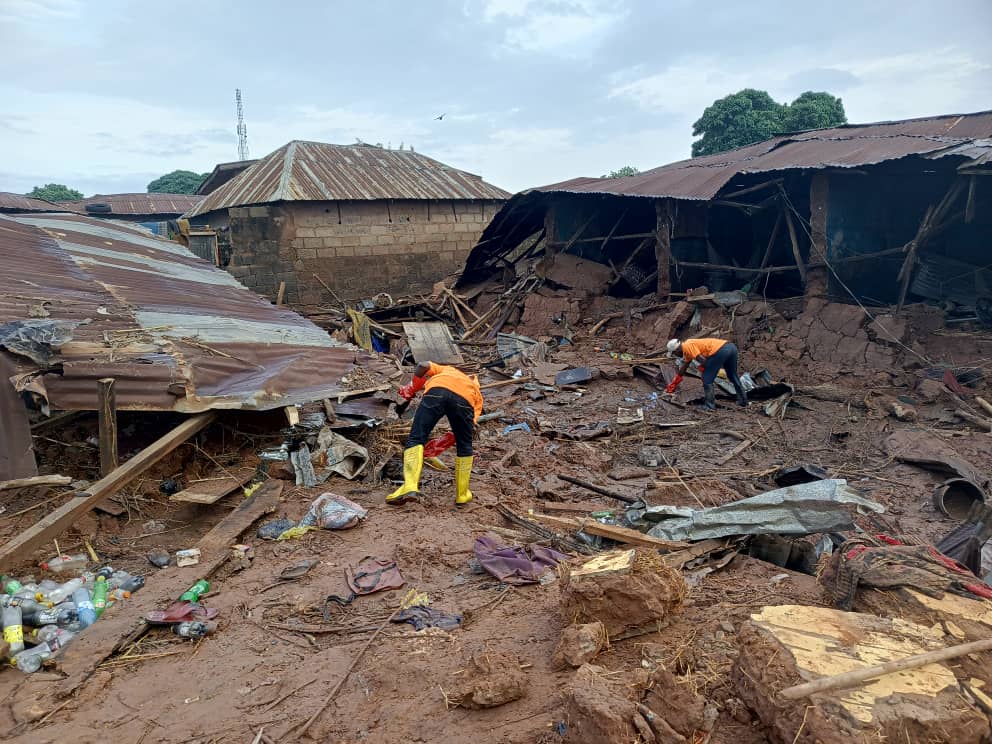
In less than two years, Nigeria has witnessed many devastating flooding events, claiming the lives of hundreds, displacing millions, and destroying properties worth billions of naira. From the Alau Dam collapse in Borno state to the Mokwa flood in Niger state, and the recent 2025 rainy season floods in Adamawa and Bauchi, the damage is quite enormous. Among the most affected people are women, children, and persons living with disabilities. These climate-induced events are becoming more frequent and destructive in Nigeria due to the changing climate.
The people who suffer the most during and after climate disasters are usually those who contribute the least to the global climate crisis, especially women, children, and PLWDs. In the dominant practice of the Nigerian communities, women are the caregivers by default. Therefore, when floods occur, they are always the ones who shoulder the responsibility of carrying children, helping the elderly, and trying to move belongings through the intruding waters.
Advertisement
It is during these moments of panic and uncertainty that women and girls become vulnerable. The chaos of evacuation often exposes them to physical harm, sexual harassment, and neglect. Children, too, often get separated from their families. Several studies show that in times of disaster, women and girls face risks of abuse. These cases are not peculiar to Nigeria. However, they are seriously disturbing, given the growing frequency of climate-induced disasters in Nigeria.
In many temporary shelters and IDP camps, the risks do not end. Reports mostly from NGOs and humanitarian organisations across Nigeria bring to light cases where humanitarian workers, security personnel, and others in positions of power use the situation to exploit and abuse women in such critical situations, leaving them with physical harm and lasting emotional scars and trauma. It’s also common that others still exploit the vulnerability of the flood victims to expose them to human trafficking. Yet, Nigeria’s disaster response policies rarely spell out how the vulnerable groups should be protected before, during, and after floods.
What is the government doing to protect them at such critical times? Who guarantees their safety during evacuation? How prepared are emergency response systems to address the needs of women and children? There is a need for action, especially considering the increased occurrence of disasters in Nigeria.
Advertisement
Flood response should not be treated as a one-size-fits-all emergency because disasters affect people differently. Therefore, governments must ensure that IDP camps are safe spaces for women, children, and PLWDs. Evacuation plans must prioritise the needs of these vulnerable groups.
Still, empowering women in vulnerable areas with climate resilience and emergency response knowledge and skills is a feasible solution. This can include training them in emergency preparedness, first aid, waste management, and disaster risk awareness. Government agencies and other stakeholders must work together to ensure this support reaches grassroots communities.
The needs and vulnerabilities of women, children, and PLWDs in the face of climate change crises shouldn’t be ignored. They deserve protection, empowerment, and a voice in how Nigeria responds to the climate crisis. If the climate continues to change, causing devastating events, our systems must also change, and that starts with coming up with policies protecting those most at risk.
Isah Kamisu Madachi is a policy enthusiast and development practitioner. He writes from Abuja, and can be reached via: [email protected]
Advertisement
Views expressed by contributors are strictly personal and not of TheCable.