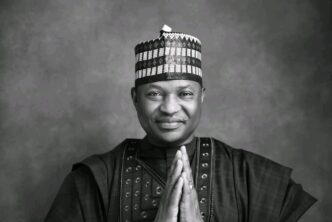

File photo
A federal high court in Lagos has dismissed a suit seeking to invalidate the laws establishing the Nigerian Christian Pilgrims Commission (NCPC) and the National Hajj Commission of Nigeria (NAHCON).
Akintayo Aluko, presiding judge, held that the applicant failed to prove that the establishment and operation of the two commissions breached provisions of the 1999 constitution.
The suit was filed by Human Rights and Empowerment Project Ltd/Gte, which asked the court to declare the NCPC Act and the NAHCON Act unconstitutional on the grounds that they allegedly violated sections 10 and 42 of the constitution.
The organisation also sought an order restraining the federal government from funding or subsidising Christian and Muslim pilgrimages, arguing that such support amounted to the adoption of a state religion and discriminated against adherents of other faiths.
Advertisement
Relying largely on newspaper reports in his affidavits, the applicant contended that public funds were being used to support religious activities and argued that such expenditures constituted a misuse of taxpayers’ money.
At the hearing of the suit on October 9, 2025, counsel to the applicant urged the court to hold that government involvement in pilgrimages was unconstitutional, insisting that restricting support to Christians and Muslims violated the right to freedom from discrimination.
In response, the National Hajj Commission of Nigeria told the court that intending pilgrims fund their participation through payments made to state Muslim pilgrims’ welfare boards, adding that the federal government does not directly sponsor the Hajj.
Advertisement
Counsel for NAHCON argued that the existence of the commissions did not amount to adopting a state religion and that the applicant failed to identify any group whose constitutional rights had been infringed.
In its judgment delivered on Friday, the court examined sections 10 and 42 of the constitution, which prohibit the adoption of a state religion and protect citizens from discrimination on religious and other grounds.
Aluko held that the applicant did not present credible evidence showing that the establishment of the commissions led to the adoption of a state religion or infringed on the right to freedom from discrimination.
On the allegation of misuse of public funds, the judge noted that the applicant’s own evidence showed that the Lagos state government saved about N4.5 billion over three years after discontinuing the sponsorship of pilgrimages and redirected the funds to infrastructure projects.
Advertisement
The judge further held that the newspaper reports relied upon by the applicant constituted hearsay and could not be admitted as proof unless properly certified in accordance with the law.
Aluko added that declaratory reliefs must be supported by strong and convincing evidence, which the applicant failed to provide.
“The law is settled that allegations founded on speculation or media reports cannot sustain a constitutional claim,” the judge held.
The court consequently dismissed the suit for lacking merit and made no order as to costs, directing parties to bear their respective expenses.
Advertisement