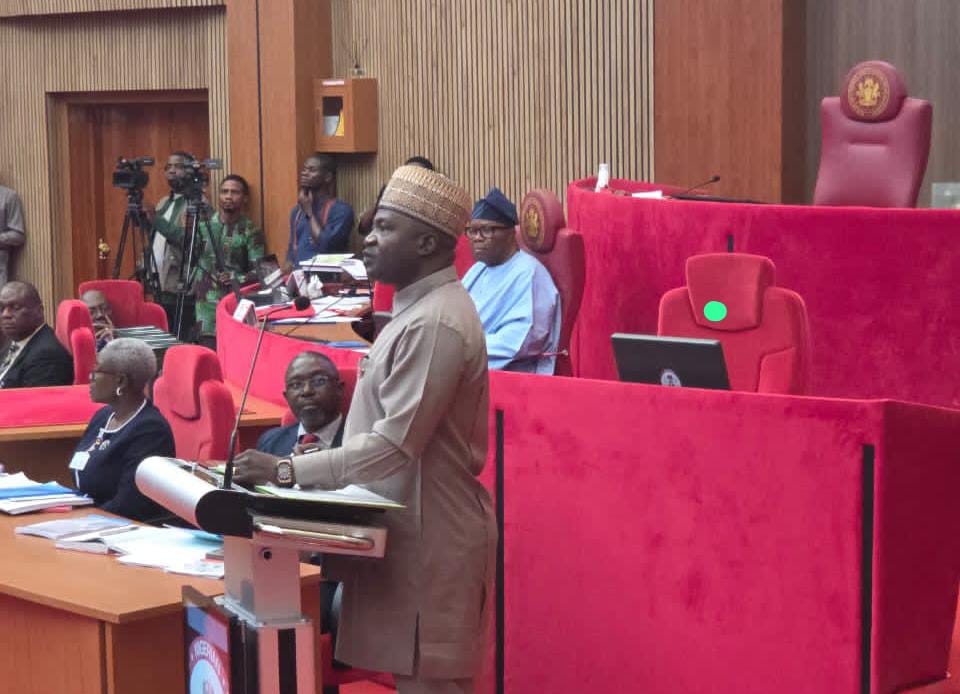
Christopher Musa during his screening at the senate
BY JOHN KOKOME
In moments of national anxiety, when insecurity gnaws at the edges of hope and governance appears to be fighting fires on too many fronts, there is often a quiet longing for a figure who can steady the ship. It is within this atmosphere that General Christopher Musa’s return to national prominence has ignited fresh debates: Does he hold the magic wand? Can one man shift the arc of Nigeria’s security trajectory? And most importantly, are Nigerians right to believe he can?
For many citizens, Musa represents something rare, a soldier whose reputation has not been drowned in the controversies that often shadow command. His previous leadership at the helm of Nigeria’s counter-insurgency operations, especially in the north-east, won him a reputation for being field-tested, measured, and unusually connected to the pulse of the men he led. His name is often spoken not as a talisman but as an embodiment of competence and stability. Yet competence in uniform does not automatically translate into the sweeping transformation Nigerians crave.
The obsession with finding a “magic wand” is itself a symptom of Nigeria’s historical expectation that salvation will arrive through the sheer force of individual brilliance. But even the most formidable General is constrained by institutions, politics, entrenched interests, weak inter-agency coordination, and the complex social dynamics that fuel insecurity. If General Musa is to succeed where others have been swamped, it will not be because he carries a mythical solution but because he can galvanise the machinery of defence in ways that transcend traditional command paradigms.
Advertisement
Musa’s greatest strength may lie not in raw force but in strategic empathy. He has shown, repeatedly, a willingness to merge the tactical with the humane, an understanding that insurgency and banditry thrive in spaces where the state has collapsed or appears indifferent. His approach tends to blend boots-on-ground tenacity with outreach, community engagement, and attention to morale. This is crucial: Nigeria’s war is not only against armed groups but against despair, poverty, disillusionment, and the breakdown of trust between citizens and the institutions created to protect them.
However, the challenges ahead of him are immense. Insecurity in today’s Nigeria is hydra-headed: jihadist insurgency in the north-east, banditry and kidnapping in the north-west, separatist agitations in the south-east, oil theft in the Niger Delta, farmer-herder conflicts across the Middle Belt, and emerging urban criminal networks. These are not merely military problems; they are national problems manifesting through violence. Without political coherence from the top, sustained investment in intelligence infrastructure, serious reforms in recruitment and welfare, and deep accountability within the security sector, even the most capable Defence Minister will find himself battling shadows.
Still, Musa enters office at a time when Nigerians appear willing to give him the benefit of the doubt. Perhaps it is because he carries himself with a quiet seriousness. Perhaps it is because of his unblemished service record. Or perhaps it is because, exhausted from years of security failures, the public longs for a leader who seems both disciplined and genuinely invested.
Advertisement
But hoping that he holds a magic wand is to miss the point, and to place on him a burden no individual can bear. What Nigerians should instead hope for is that General Musa brings coherence, firmness, and strategic clarity. That he is empowered to drive difficult defence reforms. That he prioritises intelligence-led operations over headline-grabbing raids. That he pushes for cross-government collaboration instead of siloed action. That he leans into innovation, modern warfare tools, and global security partnerships. And most importantly, that he restores confidence within the ranks and trust among civilians.
If Musa succeeds, it will not be because he wielded magic. It will be because he built systems strong enough to outlast personalities. The enduring measure of his tenure will not be whether insecurity instantly disappears because it won’t, but whether Nigeria can begin the long, painstaking process of reclaiming control from forces that have battered its resilience.
So, does General Christopher Musa hold the magic wand? No. But what he may hold is something far more valuable: a blend of discipline, experience, emotional intelligence, and national goodwill that, if supported with the right political will and institutional reforms, could push Nigeria closer to the peace it desperately seeks.
For the sake of a nation yearning for peace, stability, and progress, we can only hope earnestly and collectively that he succeeds. Nigeria’s future may well depend on it. And perhaps, in a country accustomed to waiting for miracles, that is the kind of leadership that truly matters.
Advertisement
John Kokome, a communications strategist and public affairs analyst, writes from Lagos. He can be contacted via [email protected]
Views expressed by contributors are strictly personal and not of TheCable.