BY KAYODE ADEBIYI
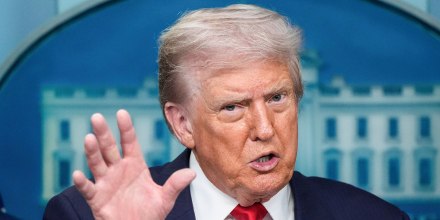
Few figures in modern American history embody contradiction as vividly and publicly as Donald J. Trump. To some, he is a liberator, an unapologetic disruptor who says out loud what many only whisper, a figure who challenges institutions long seen as untouchable. To others, he is a destabilising force whose rhetoric, behaviour, and governing style undermine the very norms America claims to cherish. But beyond the political arguments lies a deeper reality: Trump is not just a political actor. He is a symbol, a mirror reflecting America’s hopes and insecurities, its fractures and its fantasies.
A major part of Trump’s appeal lies in his persona: bold, brash, and unapologetically unfiltered. At a time when society increasingly demands restraint, diplomacy, and careful self-presentation, he represents a raw kind of freedom. He expresses frustration openly, mocks institutions, challenges authority, and behaves as though shame cannot touch him.
For millions of Americans, especially those who feel silenced by political correctness or marginalised by cultural change, Trump becomes a living embodiment of rebellious authenticity. Ironically, the very traits that offend many Americans are the same traits that energise his supporters. He behaves in ways many wish they could, speaking boldly, confronting critics without hesitation, and rejecting the polished expectations of polite society.
Advertisement
No group illustrates the Trump paradox more clearly than American evangelical Christians. Historically unified in their political choices, they now find themselves sharply divided over Trump’s legitimacy as a leader. One side sees him as an unlikely instrument of God’s will, a modern-day Cyrus, flawed, unconventional, and abrasive, yet chosen to reassert Christian influence in America.
They point to biblical stories where God used imperfect people to accomplish divine purposes. In their view, Trump’s willingness to confront cultural and moral decline is not a flaw but a sign of divine appointment. God, they say, often uses the “foolish things of the world to confound the wise.”
The other side of the evangelical community rejects this interpretation. They argue that leadership, whether spiritual or political, cannot be separated from personal morality. They ask hard questions about his faith: Who is his pastor? What church shapes him? What evidence exists of transformation?
Advertisement
They see his personal history and public behaviour as inconsistent with Christian virtues such as humility, fidelity, discipline, and compassion. To them, Trump is not a vessel of God’s will but a politician who leverages religious language for political gain. Their disagreement with fellow believers is not merely political. It is deeply moral, theological, and personal.
For generations, Americans also held a clear, if idealistic, image of what a president should be: morally steady, dignified in speech, disciplined in private life, respectful in public conduct, and careful with power. Even when presidents fell short, the expectations themselves remained intact. Trump shattered that image. His complicated marital history, impulsive communication, love of public name-calling, and refusal to observe traditional political etiquette marked a dramatic break from presidential norms.
His scepticism toward science and his appointment of officials who shared that scepticism further challenged long-standing expectations about how leaders should govern. To many Americans, these shifts represent a dangerous erosion of the dignity and responsibility tied to the presidency. To others, they signal a necessary departure from what they perceive as political hypocrisy and elitist performance.
This tension is magnified by America’s own contradictory self-image. For decades, the nation has presented itself as a global moral leader, a champion of democracy, a defender of ethics, and a guardian of institutions. Yet Trump resonates strongly with Americans who believe the country’s moral posture abroad does not match the reality at home. They see in him someone willing to puncture national pretensions, challenge sacred institutions, and call out what they view as elitist double-speak.
Advertisement
To this segment of the population, he is not just a political figure. He is a cultural reckoning. He speaks for the unheard, the underestimated, and the overlooked, the America that feels overshadowed by coastal elites, media institutions, and intellectual gatekeepers. In him, they see authenticity over decorum, disruption over tradition, and rebellion over refinement.
Trump did not create America’s divisions, but he embodies and intensifies them. He is both a reflection of the nation’s tension and a force accelerating it. His presence raises uncomfortable questions that Americans can no longer ignore, including what qualities truly define leadership in a diverse democracy, whether personal morality matters in political office, whether institutions should remain untouched or be disrupted, whether raw authenticity is more valuable than civility, and whether America has lost faith in its own moral narrative or simply outgrown it. These questions go beyond Trump. They reveal contradictions at the core of American identity.
When all is said and done, Donald Trump is more than a politician. He is a cultural phenomenon, a mirror in which America sees its values, its divisions, its resentments, and its yearnings reflected. To supporters, he represents freedom and defiance. To critics, he signals danger and decline.
To the nation as a whole, he is a reminder that democracy is shaped not just by institutions but by the fears, beliefs, and aspirations of its people. Trump divides America so deeply because he embodies its long-standing internal struggle, one that has always simmered beneath the surface. He is not an exception but an expression of a nation wrestling openly, loudly, and painfully with its own contradictions.
Advertisement
Adebiyi, a public relations professional, lives in the UK
Advertisement
Views expressed by contributors are strictly personal and not of TheCable.