


“Those who make peaceful change impossible make violent change inevitable.” — J. F. Kennedy
This assertion resonates deeply with several African countries today. As a wave of coups sweeps across the continent, force is increasingly seen as an “optional” path to power.
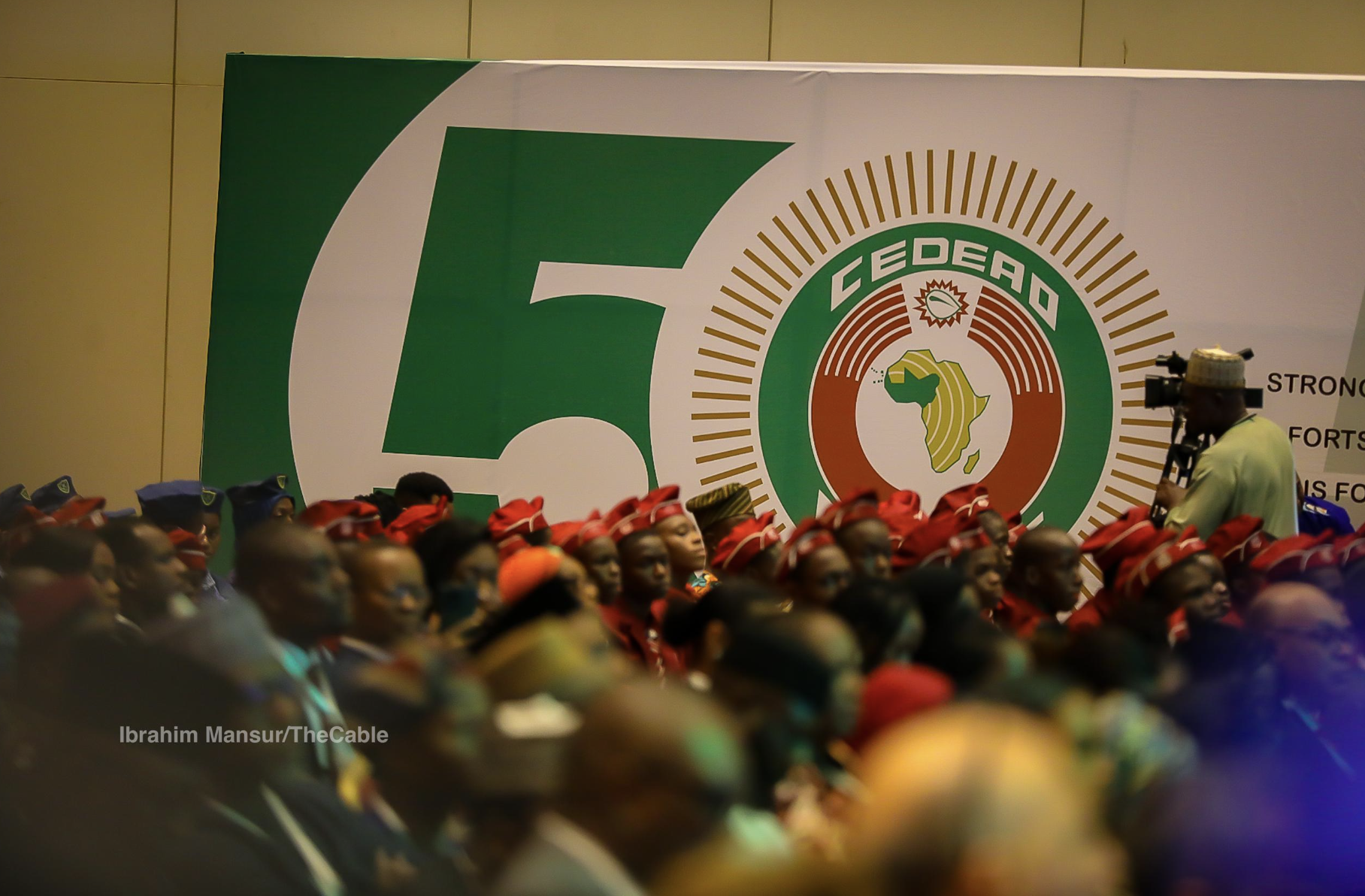
West Africa now enters a new political era marked by the recurrence of military coups and the weakening of the Economic Community of West African States (ECOWAS). We are also witnessing Nigeria’s weakening leadership influence and a global shift away from regionalism and liberal democracy.
A significant change is on the horizon, signalling a new order in West African relations. This shift is evident in the changing political structures, alliances and leadership across the region. At the root of this are shared political ideas moving across space.
Advertisement
Like a virus, ideas have the capacity to travel across borders regardless of geographical barriers; they are as infectious as the flu. The recent coups d’état across Sub-Saharan Africa share this viral nature, crossing borders and altering political structures as they go. But this isn’t the first.
A Historical Reversal
The first wave of military coups took place in the 1960s (Nigeria 1966, Congo 1965, Ghana 1966). It wasn’t until the 1990s that we began to see a semblance of democratic returns in places like Benin, Ghana, and Nigeria. However, in the last five years, there’s been a resurgence of this. Chad, Sudan, Gabon, Mali, Niger, and Burkina Faso have all witnessed successful coups, while Benin has faced attempts. These events have led many to ask: Did African countries ever truly practice democracy in the first place?
Advertisement
History shows there are primary drivers of instability. For instance, we see systemic economic failure, poverty, weak institutions, corruption, military frustration, and ethnic tension across Africa. Among Francophone nations, deep-seated anti-French sentiment is rampant, as protests mount against France’s perceived “neocolonial” hold. Sadly, Nigeria’s pushback, as regional leader, against the coup tides has been abysmally weak.
Nigeria’s Internal Geopolitics
President Tinubu’s swift response to quashing a recent coup attempt in Benin, when contrasted with his reluctant reaction to the coup that brought General Tchiani to power in Niger, illustrates how internal geopolitics impact Nigeria’s foreign policy. At the time, the northern elites’ relationship with Niger acted as a restraint on military action for Tinubu.
It was easier to intervene in Benin due to the contiguous relations between the President’s political base in Southwest Nigeria and the Republic of Benin. Conversely, had former President Buhari been in power, his influence on Niger—rooted in Northern Nigerian ties—might have prompted a different response. This is because Southwest and Benin share historical allegiance defined by geography similar to Northern Nigeria and Niger. This shows that the depth of specific diplomatic and ethnic ties determines the extent of Nigeria’s intervention.
Advertisement
The Decline of ECOWAS
The success of the Nigerian Air Force in the Benin incident further suggests that a swift response can quell coup attempts in smaller nations. However, ECOWAS’s inability to tame this “menace” stems from its failing regional influence. This is partly due to the ruling APC’s focus on the consolidation of power and fragmentation of the opposition camp. This “introversion” makes the APC a genius of internal politics but a failure in foreign influence. ECOWAS weakens daily as Nigeria descends into what some describe as a “one-party state”—a shrinking worldview resulting from a lack of a clearly defined foreign policy in addressing external politicking.
Post-Regionalism and the New Guard
However, the 21st century is witnessing a breakdown of regional blocs. New power structures are forming along ideological lines as the limits of old ideas become apparent. Recent events—such as the detention of 11 Nigerian Air Force officials in Burkina Faso and the quashed coup in Benin—signal a change that extends far beyond Nigeria. Nigeria’s relationship with its neighbours is now under test. We might be seeing regionalism redefined as seen across the globe.
Advertisement
Brexit and Donald Trump’s border walls are European and American examples of this return to regrouping on one hand and nationalism on the other. We may be witnessing the birth of post-regionalism. Just as Brexit signalled a British exit from the EU and a recommitment toward the Commonwealth, France is losing its grip on its former colonies. Hence, the West may be redefining its foreign policy with Africa in light of recent developments. Meanwhile, a new alignment is emerging in the camp of the BRICS with Africa.
The Rise of the AES
Advertisement
If the present trend continues, ECOWAS is likely to split along linguistic and ideological lines. The Sahelian countries have already formed the Confederation of Sahel States (AES), comprising Niger, Burkina Faso, and Mali. This bloc may grow, positioning military dictatorships as a “revolutionary front against imperialism” or even against the conservative, pro-democracy bloc in West Africa.
The growing influence of BRICS in the new world order gives the AES and reactionaries confidence across the region. China and Russia–two dominant members of BRICS–offer economic and military support against possible sanctions from the West. For instance, the contraction of Wagner/Africa Corps services to Mali and CAR comes to mind. Also, during the #EndBadGovernance protest in Nigeria, some protestors were seen with Russian flags in the north. This only mirrors the confidence and shifts in some places, either externally motivated or internally coordinated.
Advertisement
Apparently, the reactionaries are youths with enthusiasm to explore alternatives.
The Post-COVID Agitation
Advertisement
While the Arab Spring opened the Middle East to democratic regimes, a “reversed pattern” is emerging in West Africa. Post-COVID-19 governance has brought noticeable changes. We are seeing revolutionary agitations against the current order, often along demographic lines. Movements like #EndSARS (Nigeria), #RejectFinanceBill (Kenya), #FreeSenegal, and the #Gen212 protests (Morocco) signal a new level of youth defiance.
There is a growing fascination with revolutionary action among Africans under 30 who have no experience of the hardships of previous military eras. On the internet, figures like Ibrahim Traoré have become idols. The awe he inspired during his recent appearance at the inauguration of John Mahama in Ghana is a testament to this shift.
There is also a demographic shift in the leadership. The heads of these new military governments are mostly aged 35 to 64, resonating with Africa’s “youth bulge.” Leaders like Ibrahim Traoré and Assimi Goïta represent a break from the gerontocratic systems common across the continent.
ECOWAS may face further breakaways along linguistic and political ideological lines in the coming days. Following this, the question arises: Is “post-democracy” at hand? It is difficult to say. Certainly, however, whatever emerges will be shaped by its nature—either fiercely pro-democracy or resolutely anti-democracy.
Ariwoola Samuel Akinwale wrote this piece from Lagos. He can be contacted via [email protected]
Views expressed by contributors are strictly personal and not of TheCable.