


BY JOHN KOKOME
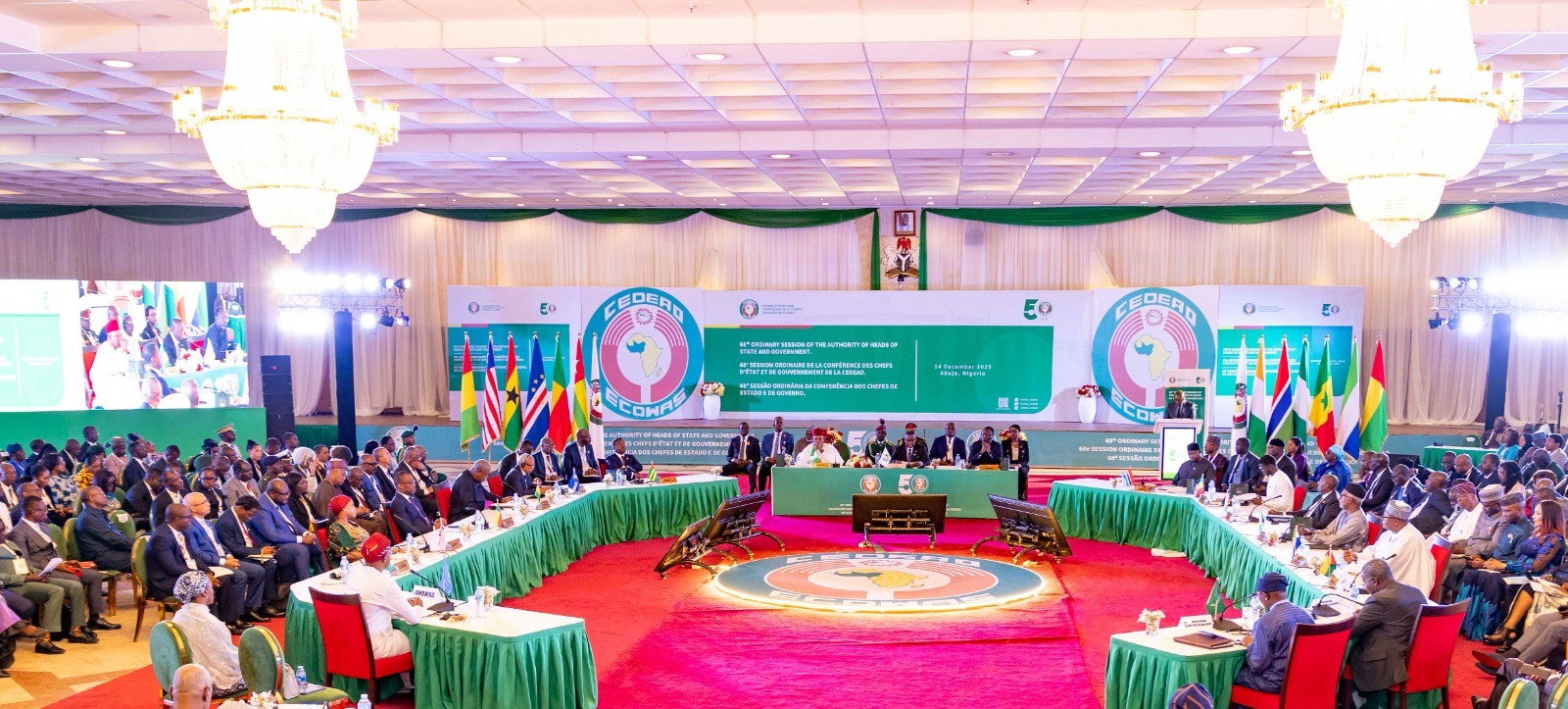
For over four decades, the Economic Community of West African States (ECOWAS) has been the region’s flagship institution for promoting political stability, economic integration, and collective security. It has weathered wars, transitions, dictatorships, and moments of fragile peace. Yet today, ECOWAS is confronted with a crisis of confidence so profound that even its strongest defenders can no longer pretend all is well. The withdrawal of Mali, Burkina Faso, and Niger; the rise of military juntas; the fragmentation of regional policies; and the growing distrust among citizens all point to one reality: ECOWAS must finally tell itself the bitter truth.
And the bitter truth is not that coups are back. It is that ECOWAS itself has lost moral authority.
Over the years, ECOWAS drifted from being an institution rooted in collective aspiration to one increasingly perceived as a club of presidents. Its interventions, whether political, diplomatic, or military, have been interpreted by many citizens as selective, inconsistent, and often driven by the convenience of leadership rather than the collective will of West Africans. People see the firmness with which ECOWAS confronts juntas, but they also see the softness with which the same body treats civilian rulers who tamper with constitutions, extend term limits, or suffocate democratic institutions. This double standard is the poison eroding ECOWAS from within.
Advertisement
West Africans are not foolish; they know when an institution is losing its compass. When ECOWAS looks the other way as elected leaders manipulate electoral commissions, jail opponents, stretch tenures, silence the press, and suffocate civic spaces, it sends a harmful signal: that democracy only matters when a soldier topples a president, not when a president slowly kills democracy from within. That false equation is why many citizens now shrug when juntas seize power. In their eyes, the military is simply replacing one form of democratic decay with another. It is a dangerous, faulty logic, but it is a logic ECOWAS helped create through silence.
Another bitter truth is that ECOWAS has become too dependent on external validation and funding. Its strategic posture often aligns more with international donors than with regional realities. Instead of building strong, indigenous mechanisms for mediation, peacekeeping, and citizen engagement, the organisation increasingly operates like an extension of foreign priorities. This fuels suspicion and weakens its legitimacy. An institution that derives its operational fuel from outside cannot effectively speak truth to its own members.
The recent tensions between the bloc and the Sahel states illustrate this disconnect. While ECOWAS has valid concerns about military rule, it failed to genuinely diagnose the deeper social fractures that made coups possible in the first place. People in Mali, Niger, and Burkina Faso did not just wake up one morning to cheer soldiers. They had endured years of insecurity, corruption, poverty, and disillusionment. They watched extremist violence expand, rural communities suffer, and governments appear powerless. When ordinary people feel unprotected and unheard, any alternative begins to look better, even if it is not.
Advertisement
ECOWAS never seriously acknowledged this crisis of governance. It never told itself the truth that democracy in the region had become hollow: elections without choice, institutions without independence, economies without inclusion, and leaders without accountability. Instead, it clung to the façade of “constitutional order,” forgetting that order without justice is simply organised chaos.
The way forward is not for ECOWAS to abandon its principles. On the contrary, it must reaffirm them genuinely, consistently, and courageously. It must rebalance its priorities by confronting both military governments and civilian autocrats with equal moral force. The bloc must create new political standards that punish constitutional manipulation with the same severity it reserves for coups. A president who rigs elections or amends a constitution for personal gain is as big a threat to stability as a soldier who storms the palace. ECOWAS must say this clearly, loudly, and without apology.
Additionally, ECOWAS must reconnect with its citizens. For too long, it has been an organisation of elites, technocrats, and diplomats. Ordinary West Africans scarcely understand its relevance. That gap is dangerous. The union must take its message, benefits, and initiatives to the people directly through town halls, youth forums, civil society partnerships, and public accountability platforms. Legitimacy grows from engagement, not decrees.
Finally, ECOWAS must invest in conflict prevention rather than crisis reaction. Instead of waiting for institutions to collapse, it must adopt early-warning and early-response systems that identify democratic backsliding before it erupts into full-scale breakdown.
Advertisement
The bitter truth is simple: ECOWAS can still be the backbone of West Africa’s stability, but only if it reforms, listens, self-corrects, and leads with courage instead of convenience. The region deserves an ECOWAS that protects all citizens, not only leaders; democracy, not incumbency; unity, not fragmentation.
It is time for ECOWAS to confront its own reflection. Only then can it regain the trust it has lost and chart a new path for a stronger, more stable West Africa.
John Kokome, a communications strategist and public affairs analyst, writes from Lagos. He can be contacted via [email protected]
Advertisement
Views expressed by contributors are strictly personal and not of TheCable.