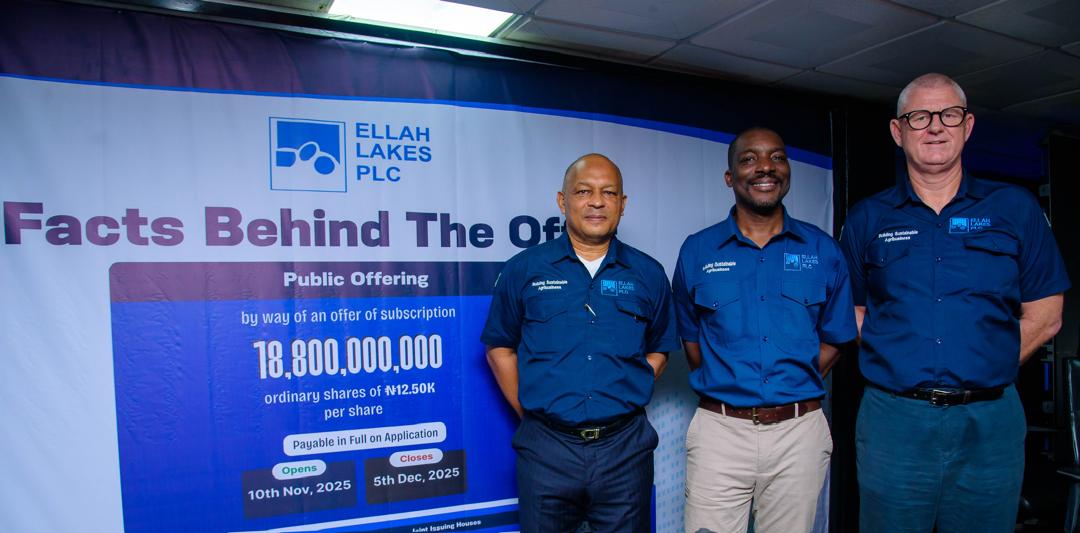
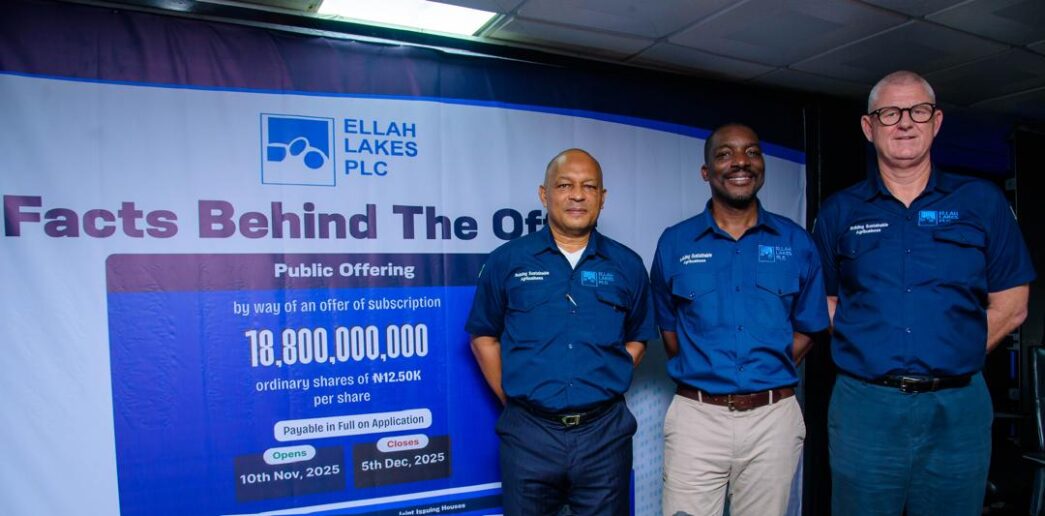
For investors closely tracking Nigeria’s capital markets, the extension of the Ellah Lakes ₦235 billion Offer for Subscription to December 19th presents a unique moment. This decision is the final signal for serious, long-horizon investors. It is an opportunity to enter at the foundational stage of a transformation that is already underway, benefiting from a rapidly narrowing gap between the company’s current share price and its intrinsic value as a scaled-up industrial operator.
The conversation is shifting from the quantum of the raise to the shrinking timeline for entry. In a Nigerian agricultural landscape often characterised by fragmented supply chains and reliance on raw commodity exports, Ellah Lakes’ integrated approach stands apart. At ₦12.50 per share, the valuation is fundamentally anchored in the company’s tangible, fully secured asset base: over 30,000 hectares of arable land across multiple states.
This land base is the physical substrate upon which a fully integrated agro-industrial ecosystem is being actively constructed. The critical inflection point begins the moment this new capital converts those hectares into high-margin processing and value-added production. Once this conversion is complete, and the operational indicators suggest it is accelerating, investors will no longer be buying asset-backed potential. They will be buying into a more expensive, yield-generating industrial platform built on realised processing profits.
This distinction is why the December 19th deadline is consequential. Ellah Lakes is entering a phase where operations, particularly under the robust ARPN integration framework, are set to materially change the company’s long-term earnings profile. The ongoing construction and commissioning of industrial processing mills represent a structural shift away from primary agriculture. When these mills are fully operational, the revenue model will be based on capturing deep processing margins and commanding greater pricing power, rather than being susceptible to raw commodity price shocks. The groundwork for this entire end-to-end system is already being laid through targeted mechanisation efforts, mill infrastructure, and supply chain structuring.
This transition highlights a significant opportunity cost for investors who hesitate. Once the industrial assets are commissioned and integration milestones begin generating predictable, high-margin cash flows, the market will inevitably reprice the stock. The ₦12.50 entry point, which today reflects an asset-heavy valuation from the foundation-building phase, will become a discounted relic of an earlier period. Investors delaying past December 19th will therefore be forced to enter a future valuation shaped by post-commissioning performance, not by the current tangible asset value.
Ellah Lakes’ model is strategically built for resilience. The vertical integration, combining land control, processing capacity, and supply chain consolidation across multiple geographies, creates a unique hedge against endemic market risks such as commodity volatility, FX instability, and input cost inflation. This integrated, multi-dimensional model is rare in the Nigerian context, and its maturity will prove to be a source of significant competitive advantage.
The final extension of the Offer is best interpreted as a clear market signal: the window for access at the foundational valuation is closing. Once the capital raise is successfully completed and the operational milestones lock into place, the inherent nature of the investment changes permanently. At this moment, the ₦12.50 share price gives access to a company positioned for industrial transformation. After December 19th, new investors will likely be purchasing crystallized industrial performance, and that difference in entry price could be substantial.
Ellah Lakes’ journey to becoming a fully integrated agro-industrial powerhouse is accelerating; this extension is the final invitation to participate before the full value crystallises.