


BY AJIBOYE AMOS OLAKUNLE
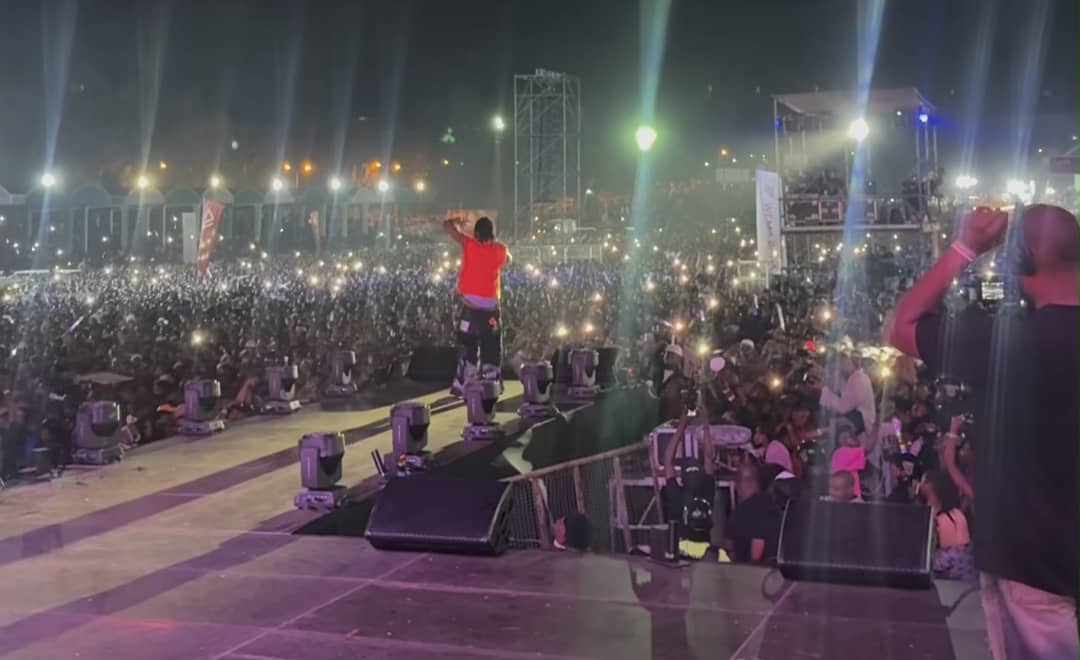
Every December in Nigeria offers a revealing portrait of national priorities. In Lagos, Abuja, Port Harcourt, and other major cities, concert venues are often sold out weeks in advance. Stadiums become impassable, not because of protests or civic mobilisation, but because of music shows and holiday events. Beaches, cinemas, lounges, and amusement centres operate at full capacity. During the Christmas season, especially, Nigeria demonstrates a remarkable ability to mobilise time, money, and collective energy around leisure and entertainment.
This capacity, however, rarely appears with the same intensity during elections. On polling days, many voting centres remain quiet for long stretches. Youth turnout is inconsistent, and civic enthusiasm fades quickly after online debates subside. The contrast is stark and instructive. It raises a difficult question about the country’s democratic health: what happens when a society can mobilise effortlessly for entertainment but struggles to do so for governance?
Nigeria’s persistent governance failures are often attributed to corrupt leadership, weak institutions, and policy inconsistency. These factors are real and damaging. Yet they do not fully explain the endurance of poor governance. Political outcomes are shaped not only by those who govern, but by those who participate. Where participation thins out, particularly among young people, political power becomes concentrated, accountability weakens, and governance quality declines.
Advertisement
Demographically, Nigeria is a young country. Youth constitute a majority of the population. In theory, this should translate into political leverage. In practice, it does not. Youthfulness alone does not confer power. Political influence belongs to those who register to vote, collect their PVCs, stand in line, organise locally, monitor elections, and remain engaged beyond moments of public outrage. Where these actions are absent, leadership becomes a closed loop, dominated by familiar actors, recycled ideas, and low expectations.
It is important to clarify that this argument is not an attack on entertainment or popular culture. Nigeria’s creative industries represent one of the country’s most significant success stories. Afrobeats has projected Nigerian sound across continents. Nollywood has become a global cultural export. Comedy, fashion, and digital content creation have generated employment and strengthened national identity. These sectors have offered hope and economic opportunity where the state has often failed.
The problem emerges when cultural participation begins to substitute for civic responsibility. Entertainment, when it becomes a form of escape rather than balance, undermines democratic accountability. A society can celebrate creativity and still neglect governance, but such neglect has long-term consequences that eventually affect culture itself.
Advertisement
Recent political cycles illustrate this dynamic clearly. During election seasons, political conversations dominate social media. Hashtags trend. Online debates intensify. Influencers and public figures take positions. For a moment, politics appears central to national consciousness. Yet this digital enthusiasm rarely translates proportionately into offline civic action. PVC collection rates lag. Voter turnout remains uneven. Long waits at polling units deter participation. Post-election monitoring is left to a committed minority.
This pattern reveals a common misunderstanding of democracy. Social media engagement is mistaken for political participation. Outrage is confused with organisation. Visibility is mistaken for influence. But democracy does not operate on attention alone. It depends on physical presence, institutional pressure, and sustained involvement.
The #EndSARS protests of 2020 offered a powerful counterexample. For the first time in years, Nigerian youth mobilised across ethnic, religious, and regional lines. They organised without traditional political structures, raised funds transparently, coordinated logistics digitally, and forced a national reckoning on police brutality. For a brief period, governance responded to popular pressure.
Yet the aftermath exposed a structural weakness. Protest energy was not converted into a durable political infrastructure. No lasting electoral machinery emerged. No significant pipeline of youth candidates followed. Without institutional anchoring, moral pressure dissipated, and the political system absorbed the shock. The moment passed without producing long-term structural change.
Advertisement
A similar pattern was evident during the 2023 general elections. Youth engagement online reached unprecedented levels. Civic organisations worked tirelessly to encourage participation. Volunteers monitored polling units and educated voters. Still, the outcome underscored a familiar reality: visibility does not guarantee victory. Turnout remained inconsistent, youth representation in elective offices stayed marginal, and entrenched political forces retained substantial control.
Why does entertainment consistently outperform governance in capturing youth attention?
Economic precarity is one major factor. Millions of young Nigerians face unemployment or underemployment. Politics feels abstract when basic survival is uncertain. Entertainment offers quicker emotional relief and, in some cases, faster financial reward. Civic engagement, by contrast, demands patience in a system that rarely offers immediate returns.
Distrust also plays a significant role. Years of broken promises, selective accountability, and disputed elections have eroded confidence in political institutions. Many young Nigerians believe the system is structurally rigged. When trust collapses, citizens retreat into spaces that feel more transparent, predictable, and rewarding culture, creativity, and private enterprise.
Advertisement
Technology compounds the problem. Social media platforms are designed to reward spectacle, not deliberation. Algorithms favour humour, controversy, and virality over policy depth or civic education. Political content struggles to compete in an environment optimised for entertainment.
There is also the influence of public figures. While some celebrities consistently encourage civic participation, others engage selectively, retreating when activism threatens comfort or commercial interests. The resulting mixed signals reinforce the idea that politics is optional, only important when convenient.
Advertisement
The consequences of widespread disengagement are profound. When youth withdraw from governance, policy decisions are made without their input. Education reforms ignore student realities. Employment policies fail to address entry-level challenges. Digital economy regulation lags behind innovation. Security and taxation decisions reflect priorities disconnected from the lived experiences of the majority.
More troubling still, political vacancies are filled by individuals whose primary qualifications are loyalty and access rather than competence or vision. In an engaged society, such figures would face sustained scrutiny. In an apathetic one, they operate with minimal resistance.
Advertisement
This does not have to remain Nigeria’s trajectory. The same organisational capacity that fills stadiums can strengthen polling units. The same creativity that markets music globally can communicate civic ideas locally. Young Nigerians already possess the skills required for political influence, storytelling, mobilisation, fundraising, and coordination. What is required is consistency and institutional focus.
Nigeria does not need fewer concerts or quieter holidays. It needs citizens who treat governance with the seriousness it demands. Participation is not an endorsement of perfection; it is a safeguard against neglect. Voting is not an expression of blind trust; it is a mechanism for limiting damage.
Advertisement
Democracy is unforgiving of absence. When citizens fail to show up, others govern without challenge. Nigeria’s future will not be shaped by what trends online or fill entertainment venues, but by who remains present in civic space.
History will record the outcome. Whether this generation will be present when it does remains an open question.
Ajiboye Amos Olakunle can be contacted via [email protected]
Views expressed by contributors are strictly personal and not of TheCable.