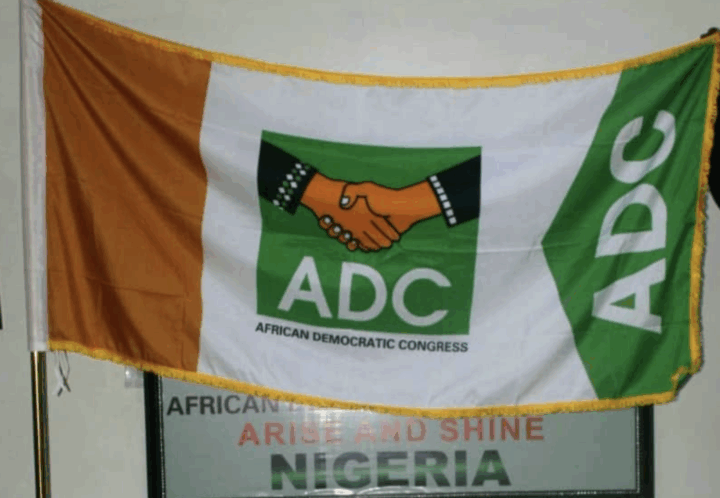
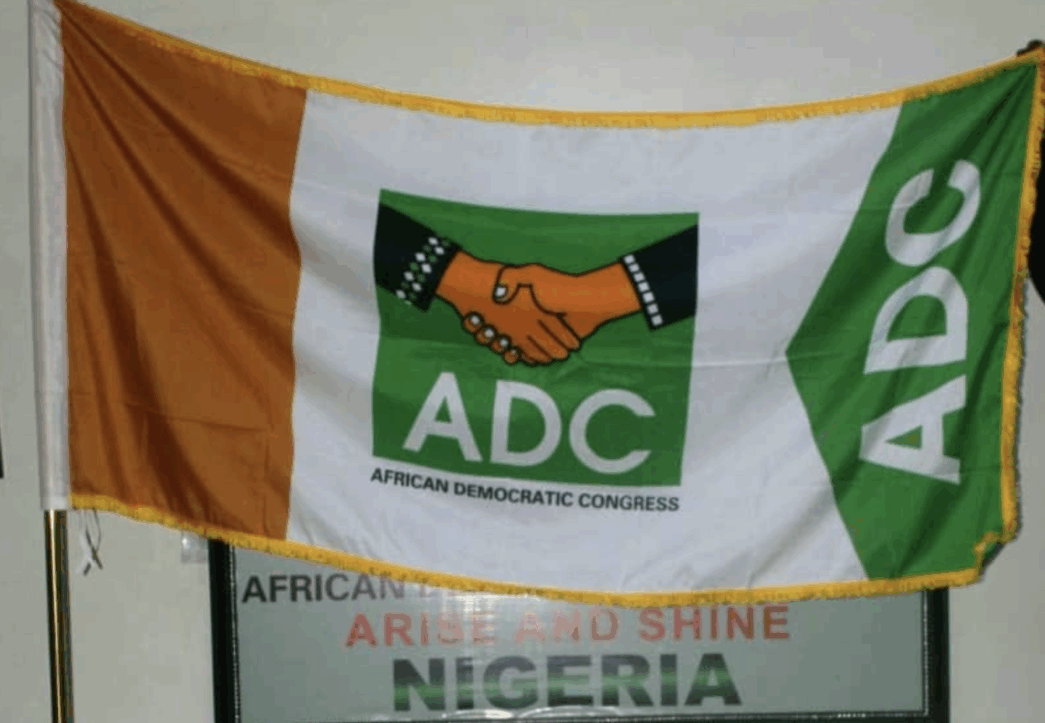
The National Forum of Former Legislators (NFFL) has asked the federal high court in Abuja to deregister the African Democratic Congress (ADC) for allegedly failing to meet the minimum constitutional requirements for political parties.
The forum, in a suit marked FHC/ABJ/CS/2637/2025, filed by Raphael Igbokwe, the national coordinator, who deposed to an affidavit, the group alleged that the ADC has failed to meet constitutional requirements to retain its status as a political party.
Igbokwe said the ADC did not secure 25 percent of votes in any state during the last presidential election.
The NFFL chairman said the ADC did not win any seat in the August 2025 bye-elections conducted by the Independent National Electoral Commission (INEC), adding that the outcome fell below the minimum legal threshold.
Advertisement
He urged the court to declare that the ADC has failed to meet the requirements of the constitution and the Electoral Act and should be deregistered.
Section 225 empowers INEC to deregister a political party that violates registration conditions or fails to meet the minimum electoral benchmarks, including securing at least 25 per cent of votes in any state during a presidential poll.
In February 2020, INEC deregistered 74 parties for “failing to meet the criteria” provided in section 225(a) of the 1999 Constitution.
Advertisement
The supreme court later upheld the decision in March 2022.
On Wednesday, when TheCable asked Igbokwe, who represented Ahiazu/Ezinihitte federal constituency of Imo state in the 7th and 8th house of representatives, whether his request was effectively an endorsement of a one-party state, he rejected the suggestion.
“Our action has nothing to do with shutting down multiparty democracy or promoting a one-party state. Nigeria has several political parties with national visibility and representation. Opposition is not defined by existence alone, but by meeting constitutional and electoral standards,” he said.
“The issue before the court is strictly legal: a political party must justify its continued registration by meeting minimum requirements, just like the supreme court affirmed in previous cases. Our duty as a public interest group is to ensure that the law is respected, not to choose which party survives.
Advertisement
“If any party, including the ADC or any other, falls short of the constitutional threshold, the law must take its course. That is how democracy grows by strengthening the rules, not bending them for any group.
“So, this is not about removing opposition; it is about protecting Nigerians from the proliferation of inactive political platforms that exist only in name but contribute nothing to governance, representation or voter engagement.”
In July, opposition politicians and some ADC leaders adopted the party as the coalition platform for the 2027 elections.
Some of the coalition party members include ex-Vice-President Atiku Abubakar; Uche Secondus, former national chairman of the Peoples Democratic Party (PDP); Nasir el-Rufai, former governor of Kaduna; Peter Obi, presidential candidate of the Labour Party (LP) in 2023; Rotimi Amaechi, former minister of transportation; and Odigie Oyegun, former chairman of the All Progressives Congress (APC).
Advertisement
Former Senate President David Mark, Rauf Aregbesola, ex-minister of interior, and Bolaji Abdullahi, a former minister of sports, emerged as the chairman, secretary and spokesperson of the ADC, respectively.
Last month, the national working committee (NWC) of the ADC expelled Leke Abejide, a member representing the Yagba federal constituency in the house of representatives, for opposing the adoption of the party as a coalition platform.
Advertisement