BY PHILIP ADEMOLA OLAYOKU
I, the man of colour, want only this: That the tool never possess the man. That the enslavement of man by man cease forever. That is, of one by another. That it be possible for me to discover and to love man, wherever he may be. The Negro is not. Any more than the white man… Both must turn their backs on the inhuman voices which were those of their respective ancestors in order that authentic communication be possible. Before it can adopt a positive voice, freedom requires an effort at disalienation. (Fanon, 1986, p.231)
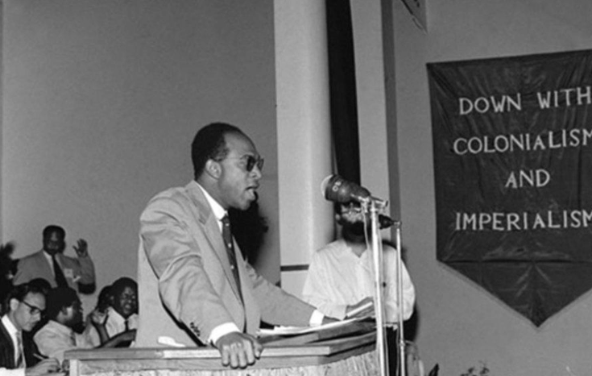
Fanon’s ideological contributions reverberated at the Faculty of Social Science, University of Jos, where academics, activists, unionists, civil society actors, policymakers and students gathered in celebration of his 100th posthumous birthday. The convening was facilitated by the Centre for Democracy and Development (CDD West Africa) and the Council for the Development of Social Science Research in Africa (CODESRIA), in partnership with the Academic Staff Union of Universities (ASUU), Centre for Information Technology and Development (CITAD) and the University of Jos. Participants included experts from across Africa and the African Diaspora who interrogated the relevance of Fanon’s thoughts to the African experience in today’s world. The hybrid conference entailed plenary and parallel sessions with presentations on how the Fanonian epistemology intersects with African politics, popular culture, decolonisation, social movements, pan-Africanist interventions, technology and innovation, securitisation, and gender relations.
The highlight of the event was the intergenerational dialogue, where scholars with experience as the old vanguard of Nigeria’s scholar-activist space interfaced with the younger generation of scholars and students to breathe new imaginations into today’s revolutionary efforts. What stood out was the persistent call for the reintroduction of the Fanonian pedagogy into the formal educational system to provide fresh insights and direction for budding scholars in shaping a prosperous and sustainable future for the African continent. As Fanon proposed in the above quotation, the decolonial future of Africa is dependent on a holistic consideration of attitudinal change by both the African and White man, who work toward a paradigmatic shift to install an epoch of social justice through the erasure of the legacies of inhuman relations of the past. Within the recent orientation of global politics towards a multipolar order that leverages the rise of China as a major economic and political force, the call for reimagining the place of Africa in the scheme of socioeconomic, cultural and political engagements cannot come at a better time. However, the reassertion of the African is not without its complexities, as evidenced in the resistance to alternative engagements by the West that long dominated the bipolar global regime. This resistance has basically been characterised by far-right politics of pseudo nationalists who foster hate under the pretext of protectionism.
Advertisement
The Black man’s burden, subsisting in the refusal to detach from the inhumane ancestral heritage of imperialism, continues to outweigh his potential for success on the home front and within the diaspora. Regarding the latter, he continues to be subjected to racial hate through physical violence, often perpetrated through profiling by state agents. He is also vulnerable to psychological violence perpetrated through racial slurs proliferating on anonymised and pseudonymised digital platforms, and subsisting in daily social interactions. At home, the African has to contend with the treachery of the lumpenbourgeoisie and lumpenproletariats (Fanon, 1963, pp. 128-9) who collaborate to derail his trajectory of success. The lumpenbourgeoisie mirrors the Hobbesian sovereign with unquestioned authority, even if the emergence of his oligarchy is not through social contract but the usurping of the volonte generale to install the volonte de l’elite. The expression of this betrayal in recent electoral history is reflected in the Cameroonian, Tanzanian, Gabonese, Ivorian, Bissau Guinean, Togolese and Nigerian polities. The hijack of the democratic process has resulted in the re-incursion of the military into national politics in African countries, including Niger, Mali, Burkina Faso, Sudan, Gabon, and Madagascar. The latest foiled attempt in Togo reflects that the trend shows no sign of abating. The initial welcome of these dictatorships in some of the countries calls for a reflection on the declining legitimacy of representative democracy on the continent, further tensioned by the regional implications of the formation of an alternate bloc of the Alliance des Etats du Sahel in West Africa.
The elites, after appropriating the people’s mandate, have laid siege on the institutions for accountability, beginning with the plutocratic occupation of the legislature and judiciary, and the weaponisation of state security apparatuses (the police and the military) against the impoverished masses. The lumpenbourgeoisie has found beneficial friendship in the creation of and collaboration with the lumpenproletariats. This latter group is amorphous in character with a chaotic, decentralised operational model that defies the logic of loyalty. The lumpenproletariats are composed by an intellectually impoverished cadre, most of whom were hitherto manipulated for political gains as tools for electoral victory, but eventually metamorphose into split groups of dissent and blind loyalty dependent on the reward scheme of their patrons. The dissenting group provides a ready mass for recruitment to undermine the state through guerrilla tactics within militias that sometimes engage in acts of terror. Those who are more refined find solace in casting arbitrary aspersions on the government, and are at times in paid service of neocolonialists to infiltrate the new media with anti-government narratives. The loyalists are praise singers, schooled in shallow narratives of progress to manipulate data in order to give a false sense of development. This group finds relevance at present as digital distractors leveraging media platforms to dissuade young Africans from interrogating the fundamentals of development by muddying politics with entertainment for economic benefits as content creators. Their blind loyalty is often rewarded by unmerited favours, including through political appointments that disregard national interests.
Amidst this political dysfunction, the intellectual class, comprising professionals, remains under attack. From infrastructural deficits through the defunding of public institutions to low-wage compensation, the intellectual has been burdened by a system of inefficiency with its infectious lukewarmness that has resulted in political pessimism. The vulnerabilities of the intellectual to criticisms by the masses for ineffective and underwhelming performance, and punitive blows from the government for daring to request accountability, create a dilemma of choice between endorsing the status quo or persisting in the demand for a transformative political system. Nonetheless, Fanon admonishes that the intellectual has an important role to liberate the masses from political oblivion through education.
Advertisement
In his words: “We once more come up against that obsession of ours –which we would like to see shared by all African politicians–about the need for effort to be well informed, for work which is enlightened and freed from its historic intellectual darkness. To hold a responsible position in an underdeveloped country is to know that in the end everything depends on the education of the masses, on the raising of the level of thought, and on what we are too quick to call “political teaching.” (Fanon, 1963, p. 197)
The restoration of Africa to political sanity is thus dependent on the intellectual, who cannot continue to be neutral and leave the destiny of the continent to the whims and caprices of the lumpenbourgeoisie and their foreign collaborators. The African intellectual needs to devise alternatives to external interference disguised as peacemaking processes, and the flagrant display of sustaining imperial exploitation through insatiable cravings for rare-earth minerals. The intellectual has the role at the table of determining and negotiating national interests of African nations in their engagements within bilateral and multilateral partnerships. In carrying out these roles, Fanon cautions against the philistinic culture of isolation among intellectuals as it replicates the devaluation of the masses as “the other,” and cannot lead to sustained progress. This is because progress is solely dependent on the masses – it begins and ends with them.
As he noted: “…political education means opening their minds, awakening them, and allowing the birth of their intelligence; as Césaire said, it is “to invent souls.” To educate the masses politically does not mean, cannot mean, making a political speech. What it means is to try, relentlessly and passionately, to teach the masses that everything depends on them; that if we stagnate it is their responsibility, and that if we go forward it is due to them too, that there is no such thing as a demiurge, that there is no famous man who will take the responsibility for everything, but that the demiurge is the people themselves and the magic hands are finally only the hands of the people. In order to put all this into practice, in order really to incarnate the people, we repeat that there must be decentralisation in the extreme. The movement from the top to the bottom and from the bottom to the top should be a fixed principle, not through concern for formalism but because simply to respect this principle is the guarantee of salvation. It is from the base that forces mount up which supply the summit with its dynamic, and make it possible dialectically for it to leap ahead.” (Fanon, 1963, pp. 197-8)
The decentralisation of efforts through mass education requires embracing the whole commune by seeking to integrate everyone. This entails blurring the lines of difference, even while respecting identities. Along this line, it is beneficial to adopt Ekeh’s conceptualisation of citizenship in discussing the bane of the amoral civic public. What is particularly instructive is the mutuality of responsibility between the citizen and the state. It is conventional that the primary function of a state is the protection of lives and properties, and this underscores the Hobbesian proposition that ‘a man has no duty to a sovereign that cannot protect him.’ In return for the protection of the state, a citizen also has the responsibility to prioritise its general welfare above sectional and personal interests. The lack of commitment to these mutual responsibilities has led to unstable polities where African nations grapple with internal insurrections and terrorist threats. These have often been triggered by political and economic corruption of citizens who appropriate the commonwealth for sectional and personal aggrandisement. The intellectual thus has a role to reset the psyche of the African by refocusing the terms of association on sociality, a principle that lays emphasis on the quality of social contract beyond political rhetoric. In line with Akiwowo’s Asuwada template, the masses would have to come to the realisation that sociality is teleological, and by implication that national destiny is dependent on sharing a common vision to achieve a common goal as a people. This likewise applies to the continent. The realisation must, however, be facilitated by the intellectual.
Advertisement
The intervention of the intellectual must also be methodical, in order to devise appropriate responses to the imperial strategy of domination. Fanon wore a gender lens in deciphering the method of European domination in Algeria, where French imperialists weaponised the ‘unveiling’ of women to culturally alienate the people.
For him: “In the colonialist program, it was the woman who was given the historic mission of shaking up the Algerian man. Convening the woman, winning her over to the foreign values, wrenching her free from her status, was at the same time achieving a real power over the man and attaining a practical, effective means of destructuring Algerian culture.” (Fanon, 1965, p.38).
While patriarchy is wont to spotlight the oppression of men as the major strategic tool of imperialism, Fanon’s detailed exploration of the victimisation of women and their proactive engagements in the Algerian struggle with imperialism is quite instructive. There is no gainsaying the fact that the continent is not lacking in women who have been relentless in the struggle against imperialism including Ellen Johnson Sirleaf, Winnie Mandela, Netumbo Nandi-Ndaitwah, and Graca Machel. These women eventually emerged to play significant roles in their countries’ national politics. In more recent history, women have been formidable as icons of digital vanguards at the forefront of national liberation struggles that have leveraged technology for mobilisation. The roles of Alaa Salah and Aisha Yesufu as icons of the Sudanese revolution and Nigeria’s EndSARS movement respectively, have been ingrained in the recent history of social movements in Africa. While Fanon stressed the importance of the masses in societal transformation, he was intentional in showing how women are naturally integral to the success and sustenance of such transformation.
Again he observed: “It must be constantly borne in mind that the committed Algerian woman learns both her role as “a woman alone in the street” and her revolutionary mission instinctively. The Algerian woman is not a secret agent. It is without apprenticeship, without briefing, without fuss, that she goes out into the street with three grenades in her handbag or the activity report of an area in her bodice…The women in Algeria, from 1955, began to have models. In Algerian society stories were told of women who in ever greater number suffered death and imprisonment in order that an independent Algeria might be born. It was these militant women who constituted the points of reference around which the imagination of Algerian feminine society was to be stirred to the boiling point. The woman-for-marriage progressively disappeared, and gave way to the woman-for-action. The young girl was replaced by the militant, the woman by the sister.” (Fanon, 1965, pp. 50, 107-108)
Advertisement
While the belligerence of the era of direct imperial domination has been overshadowed by psychological conditioning of the present through techno-oligarchy, the methods of engagement need to be redesigned along the needs of the time. As earlier stated, women have taken the lead by appropriating the tools of imperial domination in the struggle for digital justice. The intellectual must thus be observant of this trend, and refocus the misdirection of influencers as lumpenproletariats to the purposeful use of their platforms for the continent’s development. The confrontation of imperialism of the present cannot be sustained by brisk force, but must be engendered through scientific socialism that triggers internal developments in line with the requirements of the digital age. The destruction of the subsisting vestiges of imperialism does not imply compromise but a firm stance on promoting the dignity of the African person, even when there is openness to the liberation of neo-imperialists. Fanon maintained this recommendation of reason over violence when he wrote that: “It is now time for reason to make itself heard. If the French Government now hopes to revive the conditions that existed before 1954 or even 1958, it is well that it should know that this is now impossible. If on the other hand, it is willing to take account of the changes that have occurred in the consciousness of Algerian man in the last five years, if it is willing to lend an ear to the insistent and fraternal voices that give impetus to the Revolution and that are to be heard in the struggle of a people who spare neither their blood nor their suffering for the triumph of freedom, then we say that everything is still possible.” (Fanon, 1965, p. 180)
The reimagination of the African condition can take a cue from Fanon’s “New Humanism,” (Fanon, 1963, pp. 245) to be realised by a liberation project that leaves no one behind and is embedded in the people’s culture. The resuscitation of the Fanonian pedagogy within the African academy should thus entail an interpretation of the present through the lens of the past in devising collectively sustainable futures for the continent’s development. The Adinkra symbol of the Sankofa bird is an ideal representation of this epistemological template, where indigenous knowledge systems become the foundations for innovations that are suited to the time. We must, however, be wary of not committing the fallacy of what Irele calls the “vegetal metaphor” by uncritically romanticising the past, but liberate ourselves from the pessimism of the present to design a progressive future. As Fanon tells us: “The problem considered here is one of time. Those Negroes and white men will be disalienated who refuse to let themselves be sealed away in the materialised Tower of the Past. For many other Negroes, in other ways, disalienation will come into being through their refusal to accept the present as definitive.” (Fanon, 1986, p. 226).
Advertisement
References
Fanon, Franz. (1986). Black Skin, White Masks. Tran. by Charles L. Markmann. Pluto Press.
Fanon, Franz. (1963). Wretched of the Earth. Trans by Constance Farrington. Presence Africaine.
Fanon, Franz. (1965). A Dying Colonialism. Trans. by Haakon Chevalier. Grove Press.
Philip Ademola Olayoku is the coordinator of The West African Transitional Justice Centre, Nigeria
Advertisement
Views expressed by contributors are strictly personal and not of TheCable.