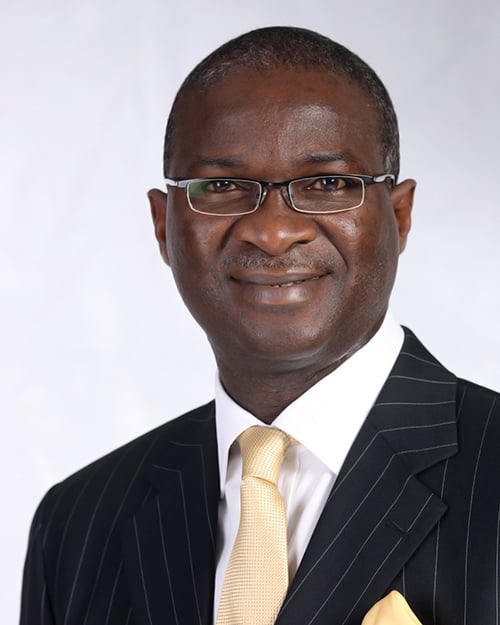
Moore Adumein
Moore Adumein, justice of the supreme court, says forensic practice has become central to the administration of justice by improving clarity, supporting evidence-based decisions, and reinforcing accountability.
Adumein spoke at the second Founders’ Day anniversary of the Chartered Institute of Forensics and Certified Fraud Investigators of Nigeria (CIFCFIN) at the Abuja Chamber of Commerce and Industry (ACCI).
He said the justice sector relies on credible evidence, effective investigation, and the proper management of case materials.
The supreme court justice added that forensic methods enhance operational systems and institutional credibility across the board.
Advertisement
Adumein commended CIFCFIN for introducing cutting-edge tools to tackle cybercrime, digital offences, and other emerging threats.
“It (CIFCFIN) continues to engage with international investigative frameworks and proposes their adoption in sensitive national processes, such as the electoral system management and public sector reforms,” he said.
“These practices must be guided by credible reports, transparency, and professionalism.”
Advertisement
He said one of the institute’s most notable milestones is the training and capacity development of more than 5,000 forensic specialists within and outside the country.
“This is no small effort. It has deepened institutional knowledge, expanded professional competence, and enhanced our ability to respond to complex realities,” Adumein said.
He said the institute’s work has positioned public and private organisations to embrace structured forensic standards.
Adumein added that these efforts have boosted transparency, strengthened internal controls, and improved organisational resilience at a time when institutions face increasingly sophisticated risks.
Advertisement
In his keynote address, Iliyasu Gashinbaki, founder and chair of the governing council, said the anniversary represents more than a ceremonial event but a reflection on an institution that has grown into a national bulwark against corruption, financial crimes, and systemic decay.
“As we mark this moment, we are reminded that every great nation stands on justice, accountability, and truth,” Gashinbaki said.
He said the Institute’s establishment remains “one of the most significant interventions in Nigeria’s anti-corruption architecture and the entire criminal justice system”.
Gashinbaki urged the federal government to amend the Freedom of Information (FOI) Act to meet present-day realities.
Advertisement
He said timely, accurate, and unrestricted access to data is now indispensable in an era where corruption is driven by digital sophistication.
Gashinbaki praised the institute’s co-founders, whom he described as the “12 wise men”, for demonstrating foresight and resilience throughout the legislative process that led to the eventual signing of the establishment bill.
Advertisement
He also acknowledged the contributions of Yusuf Buba Yakub, former chair of the house committee on foreign affairs, who sponsored the bill, and Ajayi Boroffice, the former senator, who championed it in the senate.
Advertisement