Catfish
BY OMOLOLA AFOLABI
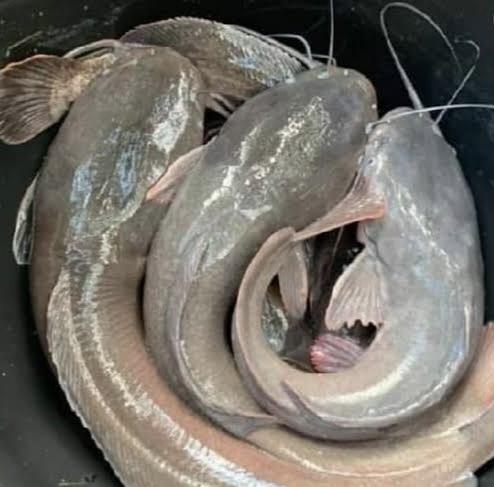
A new scientific investigation has raised urgent concerns about the safety of one of Ebonyi state’s most popular food staples: catfish. The study, led by Ezekiel Odimgbe, an environmental scientist, reveals alarming levels of toxic heavy metals — including lead, cadmium, copper, and iron — in both wild and farmed catfish consumed daily across the state.
With catfish long considered a healthier and more affordable alternative to red meat, the findings suggest that residents may unknowingly be ingesting hazardous contaminants that build up in the body over time, potentially causing serious health problems.
A SILENT SPILLOVER FROM THE MINING INDUSTRY
Advertisement
Ebonyi state has undergone rapid industrialisation in recent years, with mining, quarrying, and agricultural expansion reshaping its landscape. But these activities leave a toxic imprint.
“Industrial and mining operations release heavy metals into rivers and ponds,” Odimgwe explained. “Catfish is a major protein source here, and because people eat it so frequently, we needed to determine if harmful metals were accumulating in the fish.”
The research team focused on samples from Ndibe Beach, a natural water body, and two artificial ponds commonly used for fish farming. The choice of locations reflects the dual pathways through which contamination can enter the food chain: polluted natural waterways and poorly regulated aquaculture environments.
Advertisement
INSIDE THE LAB: HOW THE FISH WERE TESTED

Once collected, each fish sample underwent a meticulous laboratory analysis. The researchers dissected the gills, liver, and muscle tissues known to store metals and digested them in a chemical solution known as aqua regia. A Varian 220 atomic absorption spectrophotometer was then used to measure seven heavy metals: lead, copper, nickel, iron, cobalt, cadmium, and arsenic.
The results, Odimgwe said, were most concerning
ALARMING LEVELS OF LEAD AND CADMIUM
Advertisement
Among all the metals detected, iron, lead, copper, and cadmium stood out for their elevated concentrations. More worrying, the levels found exceeded World Health Organisation (WHO) permissible limits.
“Lead can cause neurological damage and kidney failure,” Odimgwe noted. “Cadmium is linked to cancer and severe organ toxicity. Even essential metals like iron and copper can damage the liver and kidneys when present in excess.”
These dangers are heightened because heavy metals bioaccumulate — building up in organs over time, even when consumed in small amounts.
FARMED VS WILD: WHICH IS SAFER?
Advertisement
One of the study’s most striking revelations is that contamination varied between wild and farmed catfish.
Pond-raised fish contained higher levels of iron, nickel, copper, and cadmium, likely due to contaminated feed or stagnant, unmonitored water.
Advertisement
However, wild fish from the Ndibe River showed significantly higher levels of lead, a sign of pollution from industrial runoff and mining activity.
“This tells us that environmental conditions, feed quality, and water sources all influence contamination patterns,” Odimgbe said.
Advertisement
A PUBLIC HEALTH RISK HIDING IN PLAIN SIGHT
The health implications are far-reaching. While short-term exposure can trigger nausea, headaches, fatigue, and stomach upset, long-term consumption poses much greater risks: kidney failure, liver damage, reproductive issues, cardiovascular disease, neurological disorders, and cancer.
Advertisement
Children and pregnant women are particularly vulnerable.
“Children absorb metals faster, and their nervous systems are still developing,” Odimgwe stressed. “Pregnant women can pass these metals to the fetus, and people with kidney or liver issues are even more at risk.”
REGULATORS AND FARMERS URGED TO ACT
To curb the threat, Odimgwe called for stronger governmental oversight and regulatory reforms.
“Authorities must enforce routine monitoring of water bodies and tighten waste-disposal regulations for industries and mining operations,” he said.
Fish farmers also have a crucial role, ensuring that pond water and feed are consistently tested for contaminants and that farming standards meet environmental safety requirements.
WHAT CONSUMERS CAN DO NOW
While policy reforms may take time, communities can take immediate steps to protect themselves.
Odimgwe advised residents to reduce consumption of fish from known contaminated sources and buy only from farms that maintain documented safety standards. He also emphasised that cooking does not eliminate heavy metals, making preventive sourcing essential.
“Community awareness is key,” he added. “People need to understand the risks so they can make safer and healthier choices.”
WHAT NEXT?
Odimgwe and his team plan to expand their analysis to other fish species and regions across Nigeria, building a more comprehensive national picture of contamination trends. Public-health outreach is also part of their roadmap.
“Public education is essential,” he said. “We’re planning seminars, community programmes and collaborations with health agencies to share our findings widely.”
THE BIGGER PICTURE
What begins in the soil and water eventually finds its way onto people’s plates. Odimgwe’s research underscores how environmental mismanagement can create an invisible chain of exposure — one meal at a time. As Ebonyi state, south-east Nigeria, continues to grow industrially, the challenge will be ensuring that its rivers, ponds, and food systems do not become collateral damage.
For now, the warning is clear: Nigeria must confront heavy-metal contamination before a silent public-health crisis grows louder.