BY WEALTH DICKSON OMINABO
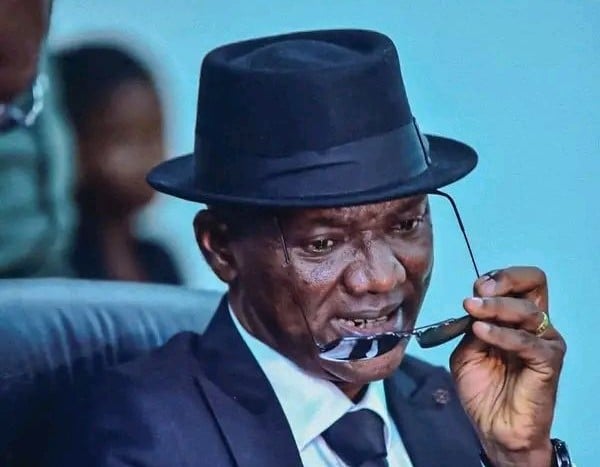
Bayelsa state was thrown into mourning recently when the news of the passing of its Deputy Governor, Senator Lawrence Ewhrudjakpo, was announced. Sen Ewhrudjakpo died at 60. He was said to have collapsed in his office after a meeting. He was later taken to the Federal Medical Centre, Yenagoa, where he was confirmed dead.
As a leader, he made modest contributions to the state’s development, serving as a commissioner, a senator, and a deputy governor. As a deputy governor, his impact was mostly felt in healthcare and local government systems under his supervision. He initiated reforms that helped advance Bayelsa’s development.
The testimonies from those close and afar share engaging lessons about his leadership. His integrity, dedication, and the legacy he leaves behind are truly remarkable.
Former President of Nigeria, Dr Goodluck Ebele Jonathan, described him as a devoted steward of Bayelsa, a patriot, and a loyal servant of the state. He noted that Sen Ewhrudjakpo’s commitment to public service and pursuit of knowledge stood him out in every office he occupied.
Advertisement
Governor of Bayelsa state, Sen. Douye Diri, says he was a loyal friend and brother who wore many caps in the course of his public service, pursuing reforms that brought laurels and honour to the state. “Ewhrudjakpo was a man of many parts. He wore the cap of a lawyer and a public health official, who took charge of the committee on primary healthcare.
Coincidentally, on Friday, the state government received a primary healthcare award in Abuja.”
Former Governor of Bayelsa state and senator representing Bayelsa West, Seriake Dickson, described him as a dependable and loyal ally with whom they pursued common causes in service to God and humanity.
Many saw him as an administrator in politics who helped bridge the gap between politics and governance, thereby serving as a stabilising force in government, helping to ensure that policies and reforms impact the people.
Advertisement
His academic journey spanning over four decades exemplifies his commitment to self-improvement and lifelong learning. From early education in Kpakiama to earning a PhD in Human Rights and Labour Law in 2023, he demonstrated that continuous education can enhance leadership and service to the community.
Ewhrudjakpo was known for his thought-provoking engagement in public discourse. His use of analogies made his interventions clear and engaging. He was a regular participant at the Goodluck Jonathan Foundation’s Democracy Dialogues in Abuja, Yenagoa, Benin, and Accra, where he joined other notable speakers and participants across the continent to proffer solutions to the continent’s development challenges.
I recall his profound contributions during the 2021 Democracy Dialogue in Abuja, tagged “Democracy and the Unity of the State”. He compared nation-building to the institution of marriage, arguing that unity demands commitment beyond origin and identity. He challenged Nigerians to move beyond the state of origin and consider residency as a basis for political participation.
He argued: “As Africans, shall we continue to blame our woes on the colonial masters? Even though they made the mistake of bringing us together, let us borrow from the philosophy of a marriage in which the husband and wife leave their families and agree to live together. Let us de-emphasise our state of origin; let us see ourselves as Nigerians.”
Advertisement
He prescribed that Nigeria adopt a state of residence policy, under which anyone residing in a state for 15 years should be allowed to contest for political positions.
Beyond public life, he was known for simplicity. In a political system where power, fortune, and fame often create distance between leaders and the people, Ewhrudjakpo remained accessible. There were moments when one would not immediately recognise his status. He drove himself to events, interacted freely with his staff like colleagues and chatted with guests like friends.
He was a man of conviction who balanced his principles even when they clashed with those of his associates. In the twilight of his life, when his boss, the governor, moved from the PDP to the APC, he declined and stayed true to his political convictions. Weeks later, reports of an impeachment saga emerged, later confirmed by a court case. The episode marked a defining point in his political career, as his public conduct indicated a strained relationship. But the way he handled it serves as a lesson for our politicians and the younger generation.
Many politicians would have used the moment to inflame the polity or sponsor attacks, but he handled the issue with tact: no sponsored attacks, no gimmicks, and no media interviews beyond the court suit. His ability to handle tough situations exemplifies true leadership. His life reminded me of the poem “If” by Rudyard Kipling, which celebrates a man who passes through life’s vicissitudes without losing his character.
Advertisement
Kipling explains that to be a man, you need to stay true to conviction despite the circumstances: “If you can talk with crowds and keep your virtue, or walk with kings—nor lose the common touch… Yours is the Earth and everything that’s in it, and—which is more—you’ll be a Man.”
Sen Ewhrudjakpo, the “workaholic” deputy governor, will be remembered for many things, especially his hard work, committed service and prowess. As we honour his memory, let us imbibe a culture of peace, inclusiveness and service rooted in integrity and service to the people. For Sen. Ewhrudjakpo, he came, he served, and he died in service.
Advertisement
His story was that of devotion, service, and impact.
Ominabo is a journalist and researcher on governance and security.
Advertisement
Views expressed by contributors are strictly personal and not of TheCable.