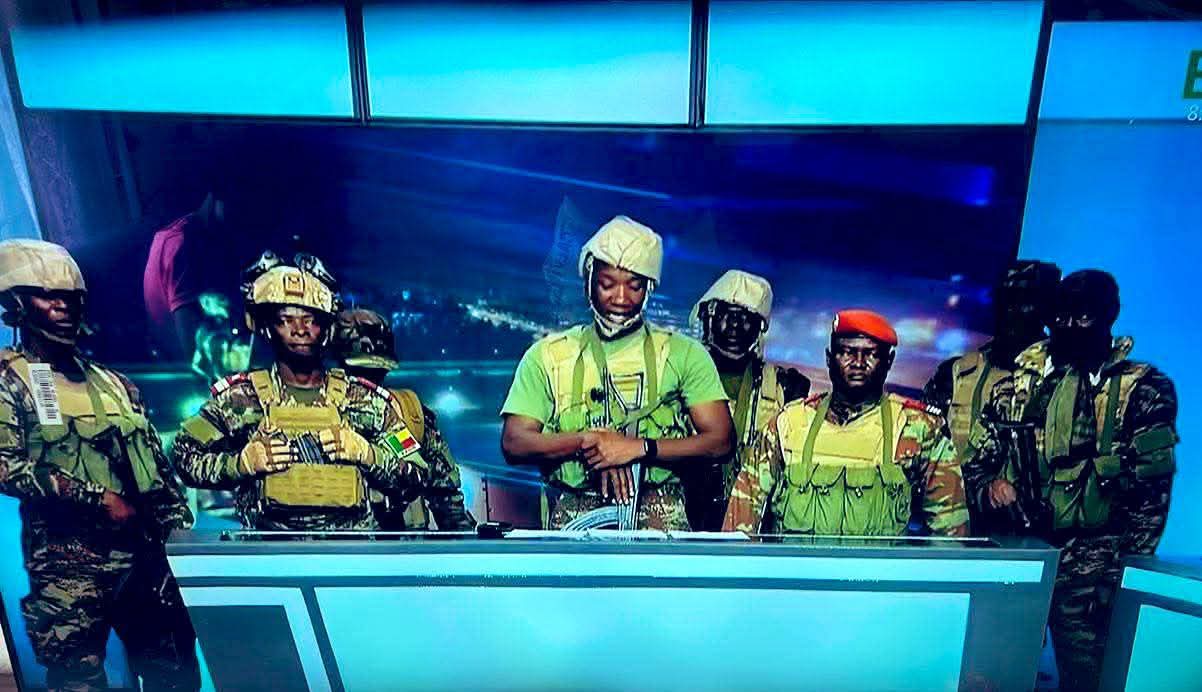
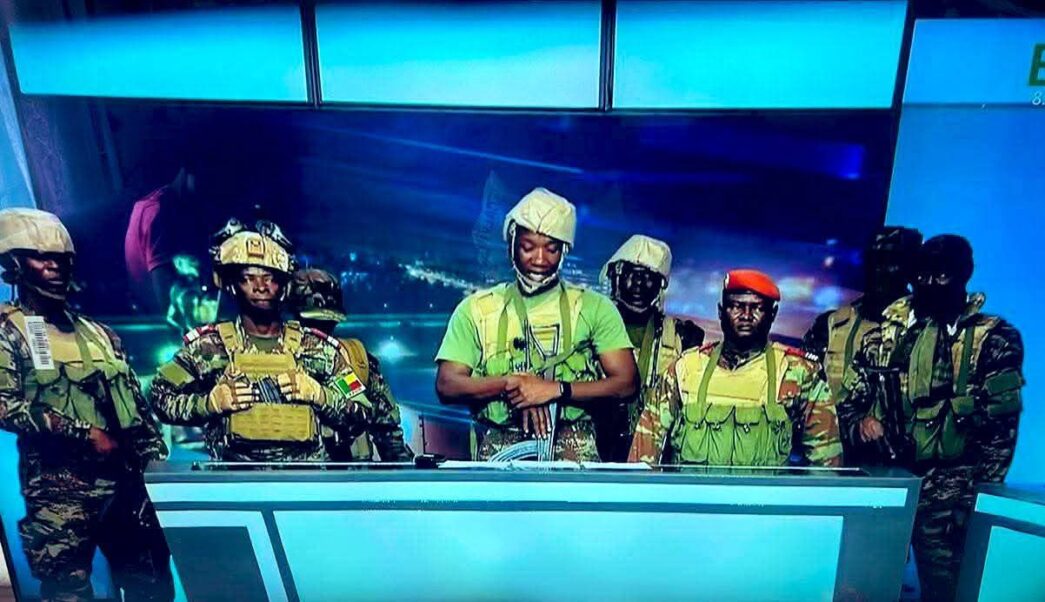
The Benin Republic coup plotters
BY ZAGAZOLA MAKAMA
The failed coup attempt in the Benin Republic is far more than an isolated disturbance in West Africa. It is a political earthquake whose tremors are being felt all the way from Cotonou to Bamako, Niamey and Ouagadougou.
For the military juntas entrenched in the Sahel, Sunday’s events were a nightmare scenario, a decisive blow to their hope of expanding the “putschist club” across the region.
President Patrice Talon’s firm, composed address to the nation late Sunday night, delivered the final stamp of legitimacy. But what many are now acknowledging is this: Nigeria’s swift and disciplined intervention was the game-changer.
Advertisement
In the early hours of the crisis, as coup plotters seized the National TV station and attempted to entrench themselves, the Government of the Republic of Benin activated its mutual defence channels with Abuja. Within minutes, Nigeria’s Chief of Defence Staff, General Olufemi Oluyede, acting under the directive of President Bola Ahmed Tinubu, activated a rapid-response military operation.
The Nigerian Air Force fighter jets were ordered into Beninese airspace to dominate the skies, neutralise hostile positions, and support loyalist forces. Simultaneously, Nigerian ground forces mobilised and crossed into Benin under Benin-led coordination, providing reinforcement to secure key installations and restore constitutional order.
This single act of regional leadership changed the trajectory of the coup, shattered the momentum of the plotters, and halted what could have become a prolonged national crisis.
ECOWAS was already mobilising, but Nigeria’s decisive action set the tone and provided the operational backbone that ended the coup within hours. It was a clear demonstration that Abuja remains the stabilising anchor of West Africa politically, diplomatically, and militarily.
Advertisement
As Talon spoke last night, the fear in the junta capitals was visible. Social media networks aligned with the juntas scrambled to spin the failure: “It’s not over yet!” “Talon is bluffing!” “Stay vigilant!”
But beneath the bravado was panic. Their long-held dream to expand military rule into coastal West Africa had collapsed and Nigeria’s intervention made that collapse irreversible. The night became a theatre of desperation, with fake democrats, pseudo-intellectuals and Pan-African opportunists trying to salvage their ideological embarrassment. They resorted to tired diversionary tactics, attacking ECOWAS, questioning its motives, and searching for excuses.
But the truth was undeniable: The coup failed because the region, led by Nigeria, refused to allow another country to fall. But expected, some Nigerians, often those who do not follow security operations, took to social media asking: “Why didn’t Nigeria use this same energy against terrorists and bandits?”
An absurd question. It is as if these people have never seen the daily reports of: Dozens of terrorists neutralised across Zamfara, Katsina, Kaduna and Borno, mass destruction of ISWAP and Boko Haram enclaves, bandit kingpins eliminated, thousands of kidnapped victims rescued, large quantities of weapons recovered, aerial bombardments carried out week after week
Advertisement
Nigeria has been fighting terrorists with unmatched intensity. To compare the two operations, one a cross-border rapid-intervention mission lasting hours, and the other a domestic counterterrorism war spanning over 15 years, is intellectually dishonest. What happened in Benin was not “energy Nigeria never shows.” It was a different type of mission, a rapid, high-precision, multinational constitutional defence operation, and Nigeria executed it flawlessly.
The larger significance of the failed coup is now evident. It has exposed the weakness of the Sahel juntas, halted their push to expand military authoritarianism southwards, sent a message that ECOWAS has finally adapted and will no longer tolerate illegal takeovers and reaffirmed Nigeria’s decisive role in shaping regional security outcomes.
The supporters of the junta are terrified, and they should be. Because Sunday marked the beginning of a new countdown. The ideological project of the Sahel military regimes is weakening, and their attempt to export instability has backfired spectacularly. The next months will be critical. The Sahelian juntas, already struggling with insecurity, economic collapse, and public frustration, now face an emboldened regional order.
Nigeria’s leadership, demonstrated so clearly in Benin, has restored confidence that democratic stability in West Africa can and will be defended.
Advertisement
The failed coup in Benin not only preserved a nation’s democracy. It reset the balance of power in the region. And Nigeria stood at the centre of that pivotal moment.
The clock is ticking for the putschist regimes.
History has resumed its rightful course.
Advertisement
Zagazola Makama is a counter-insurgency expert and security analyst in the Lake Chad Region
Advertisement
Views expressed by contributors are strictly personal and not of TheCable.