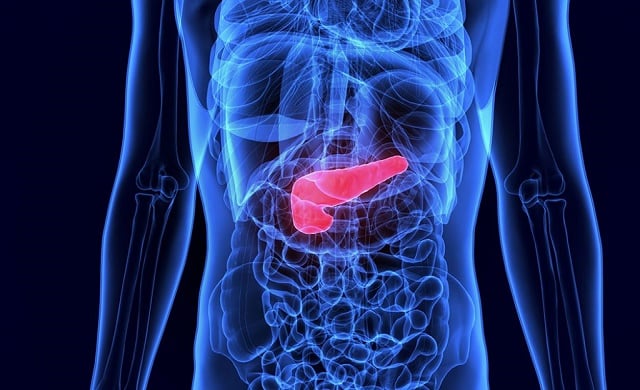
Pancreatic cancer illustration
A team of scientists at the University of California, Los Angeles (UCLA) have developed a groundbreaking cell-based immunotherapy capable of seeking out and destroying pancreatic cancer cells, even after the disease spreads to other organs.
In pre-clinical studies, the treatment slowed tumour growth, extended survival in mice, and remained effective in harsh solid tumour environments.
The findings appear in the journal Proceedings of the National Academy of Sciences (PNAS).
The therapy works by harnessing human stem cells to produce a special type of immune cell known as invariant natural killer T (NKT) cells.
Advertisement
These cells are then genetically engineered with a chimeric antigen receptor (CAR), allowing them to recognise and attack pancreatic cancer cells on multiple fronts.
Yanruide Li, a post-doctoral scholar at UCLA and lead author of the study, says even when the cancer tries to evade one attack pathway by changing its molecular signature, “our therapy is hitting it from multiple other angles at the same time”.
“The tumor simply can’t adapt fast enough,” he said.
Advertisement
Unlike many immune therapies that struggle to penetrate solid tumours, these CAR-NKT cells can do so directly and remain active inside.
They detect cancer cells through several mechanisms and attack them without burning out, maintaining a sustained assault on the disease.
NKT cells also have a unique advantage of being naturally compatible with any immune system.
This means they can be mass-produced from donated stem cells without triggering dangerous reactions.
Advertisement
The therapy was tested in multiple laboratory models, including those that mimic cancer spreading to organs such as the liver and lungs.
Lili Yang, a UCLA professor of microbiology, immunology, and molecular genetics, said developing a therapy that targets both the primary tumour and its metastases in pre-clinical studies, one that can be ready to use off-the-shelf, “represents a fundamental shift in how we might treat this disease”.
While promising, the therapy has only been tested in mice. Human tumours are far more complex, capable of evolving and escaping detection.
Long-term safety and side effects remain unknown, and scaling up production presents regulatory and logistical challenges.
Advertisement
Meanwhile, the scientists said a single dose could cost around $5,000, significantly less than existing personalised CAR-T treatments.
Advertisement