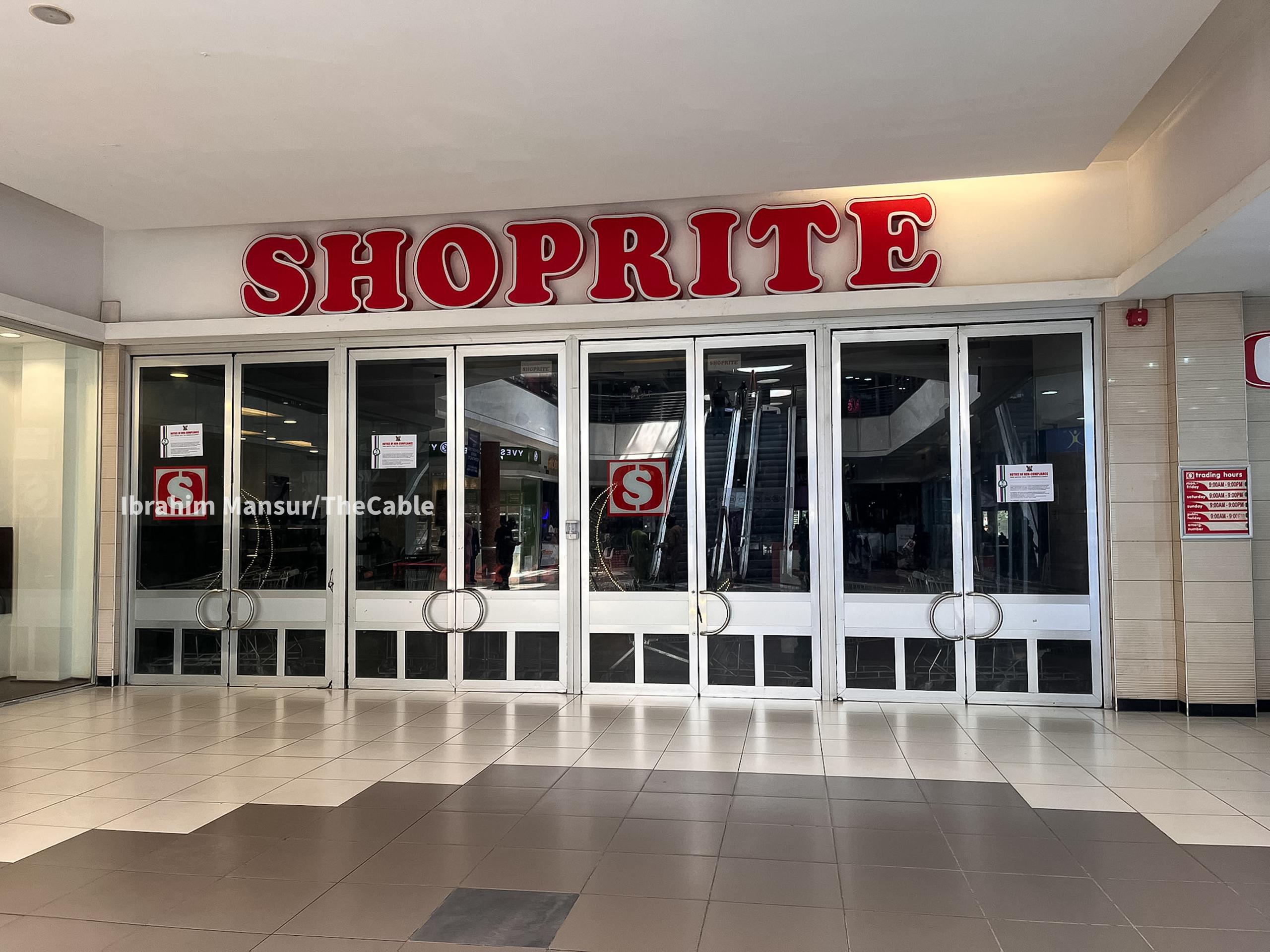
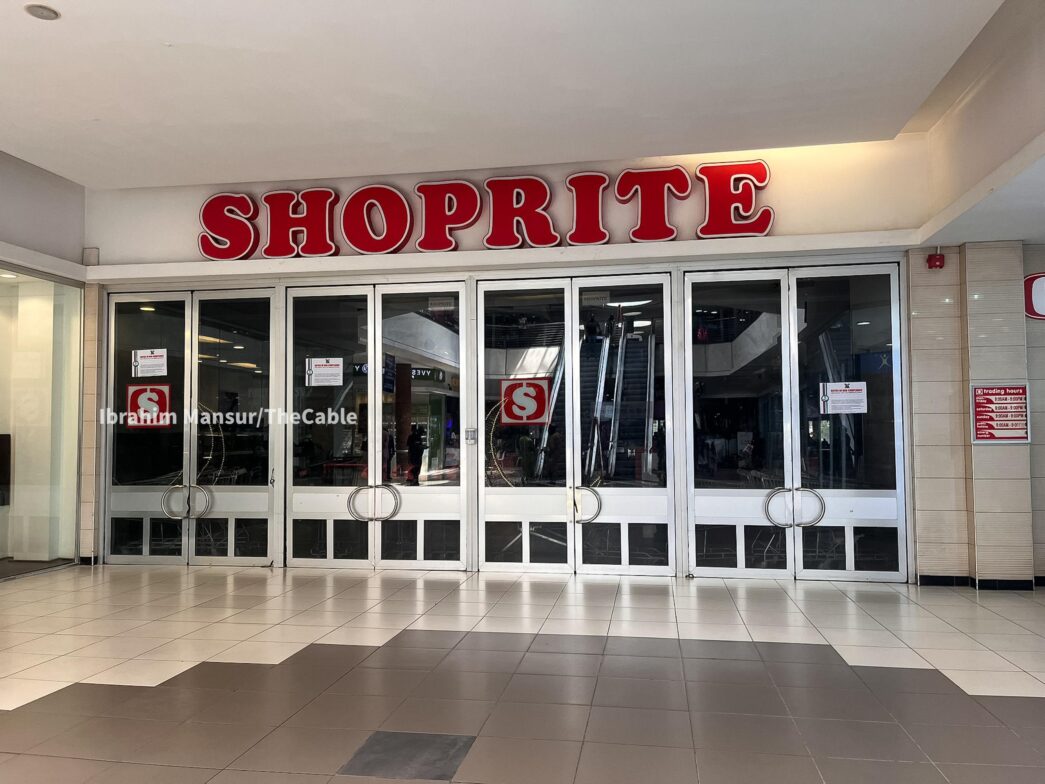
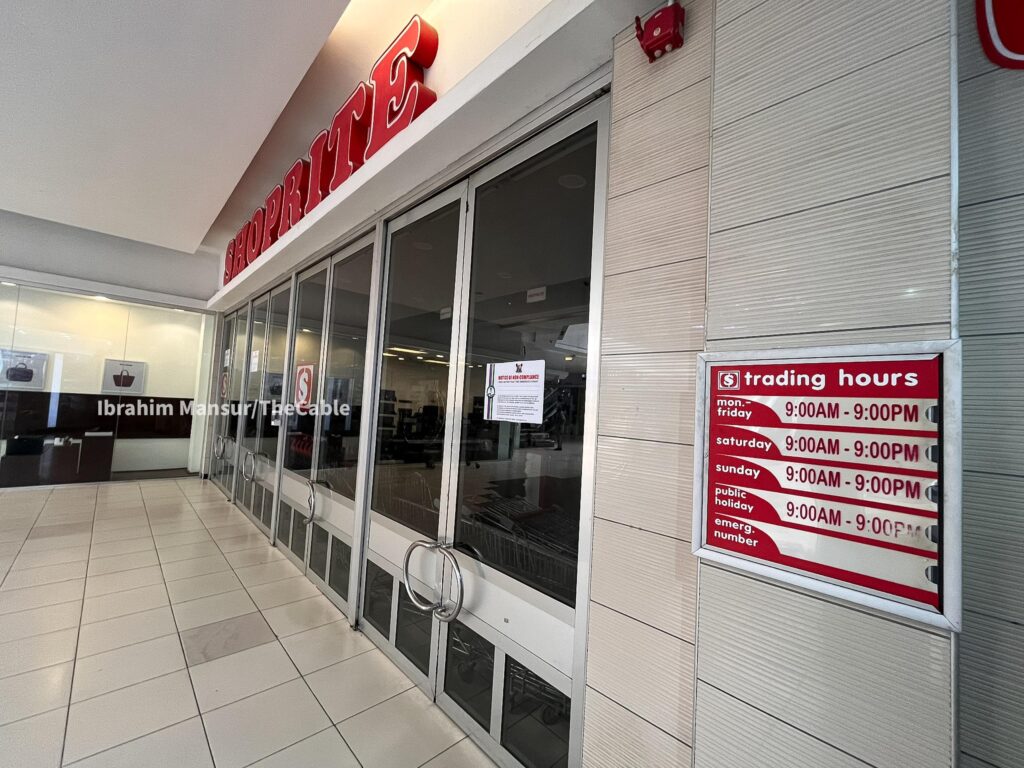
The Lagos State Internal Revenue Service (LIRS) has sealed the Shoprite outlet at the Ikeja City Mall over alleged failure to meet tax obligations.
In a notice spotted at the entrance by TheCable on Monday, the LIRS said the breach is an offence punishable by fines and imprisonment under Section 94 of the Personal Income Tax Act, 2011 (as amended).
“Take notice that the owner/occupant of this premises has failed to comply with his/her tax obligations under the relevant tax laws,” the notice reads.
“This is a contravention of the law punishable by both pecuniary penalties and imprisonment pursuant to section 94 of the Personal Income Tax Act 2011 as amended.”
Advertisement
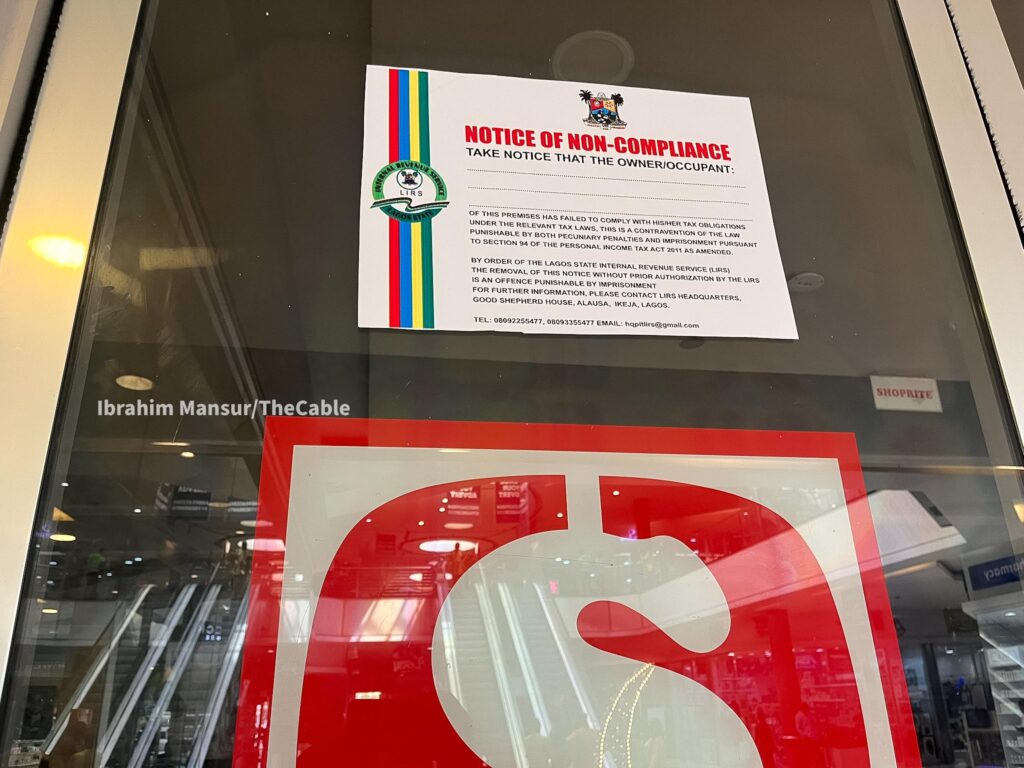
The service also warned that the seal must not be removed without authorisation from the tax authority, noting that doing so is “an offence punishable by imprisonment”.
Enquiries to Shoprite and the Lagos tax authority on the matter were not responded to.
Advertisement
In August 2020, Shoprite announced plans to exit the Nigerian market after recording a continuous decline in sales.
The exit was finalised when Ketron Investment Limited, a special purpose vehicle (SPV) Persianas Investment Limited, acquired the retail brand’s Nigerian operations.
Since the deal, the retail outlet appears to be struggling to keep operations up.
In 2024, Shoprite Nigeria shut down its store in Wuse, Abuja, citing the outlet’s “financial situation and the current business climate”.
Advertisement
On December 16, 2023, the retail business also announced its decision to close a major store in Kano over similar reasons.
Recently, there have been media reports of empty shelves in several outlets and the closure of stores in Ilorin and Ibadan.
Shoppers also reported scanty displays with large sections of groceries and wines missing at the Ikeja City Mall.
However, the Retail Supermarkets Nigeria Limited (RSNL), operators of the Shoprite franchise in Nigeria, has denied reports suggesting that it is shutting down operations in the country.
Advertisement
In a statement, the company said it was undergoing a “comprehensive business model reset” to respond to Nigeria’s current economic realities.
The organisation said 80 percent of its products are now sourced locally, adding that the new structure is designed to stabilise operations and reposition Shoprite for long-term growth.
Advertisement
‘MANY RETAIL BUSINESSES ARE STRUGGLING’
Advertisement
Speaking to TheCable on the matter, Uchenna Uzo, a consumer retail expert, said the company’s struggles reflect broader challenges in the economy.
“Not only Shoprite, a couple of retail businesses, especially the ones that came from abroad,” he said.
Advertisement
“Shoprite is now Nigeria-owned. It is no longer South Africa-owned. They have been struggling, and the struggle is really due to the economic situation, the turbulence we have had.
“A lot of inflation, high cost of importation of goods, tied down inventory. They have had a lot of inventory.”
Uzo said consumer behaviour has also shifted, with shoppers increasingly choosing smaller neighbourhood stores over large supermarkets.
On the tax issue, the expert acknowledged he is not aware of the situation, but said retailers are still adjusting to the new tax regime that will be implemented in January.
“A lot of retail businesses are still adjusting to how that will play out. Plus the fact that the way they invoice and the way they report their tax performance is going to be different,” he said.
“So, I am not going to say that Shoprite is at fault. Many retail businesses are in an adjustment period because of the shocks that we have faced in the economy.”
Uzo, however, expressed optimism that the economy will experience greater stability in the coming months.