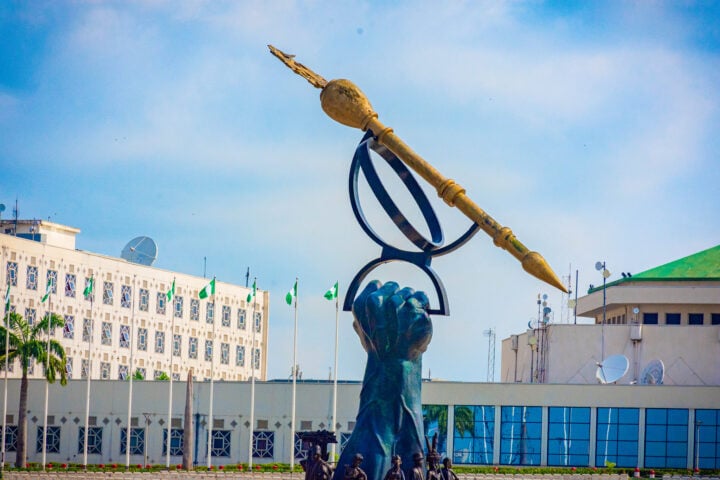
The national assembly
“You’re married. You should be with your husband, taking care of the children.”
Those were the words once directed to Chikas Kumle, a two-time political aspirant in Plateau state and executive director of the Women Development Monitoring Initiative (WDMI). Her experience reflects the stereotypes and social punishments Nigerian women endure when they attempt to enter politics.
A 2024 report ranked Nigeria among the bottom five countries for women’s representation in parliament, underscoring the nation’s democratic deficit.
With just 16 women in the 360-member house of representatives (4.44 %) and four in the 109-member senate (3.7 %), the national assembly remains a stark reflection of exclusion.
Advertisement
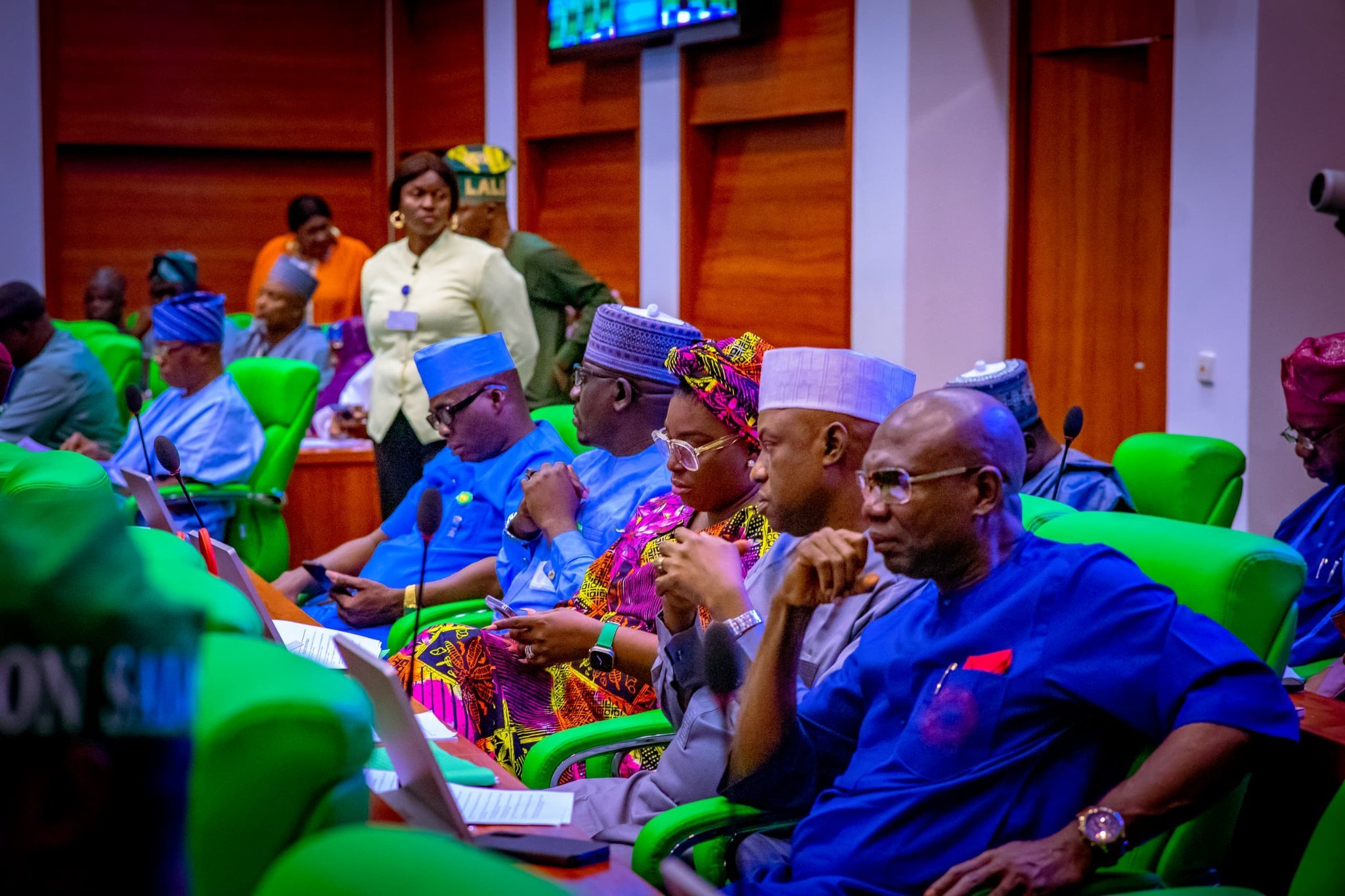
There are about 54 women across the 36 state houses of assembly, occupying just a fraction of the 990 available seats. Fourteen state assemblies currently have no female lawmakers.
These numbers are not mere statistics — they highlight the persistent barriers that keep women on the margins of power in Nigeria’s political landscape.
Advertisement
The path to political office for Nigerian women is a gauntlet of systemic and cultural obstacles. Yet, women like Kumle persist, breaking through a glass ceiling that doesn’t just block — it cuts.
A SYSTEM STACKED AGAINST WOMEN
Analysts say barriers to women’s political participation in Nigeria are both institutional and sociocultural, woven into the fabric of the country’s political culture.
A 2019 research identified a litany of challenges: high candidate registration fees, costly electoral campaigns, political party gatekeeping, political violence, sexual harassment, and patriarchal norms that cast politics as a male preserve.
Advertisement
According to the report, these barriers interlock to create a system where women are not just underrepresented but actively discouraged.
Experts say money remains one of the biggest obstacles, and that women, who are often excluded from elite business networks and patronage structures, typically begin their political journeys at a financial disadvantage.
Ibrahim Faruk, programme coordinator at Yiaga Africa, explained that deeply rooted patriarchal norms continue to shape expectations about who should lead, placing men in public roles and women in domestic ones.
“Our patriarchal culture and gender norms often dictate that men should lead public life while women focus on home and family. Such biases can be perpetuated by the media, political institutions, and even among voters, reducing support for female candidates,” Faruk told TheCable.
Advertisement
Faruk said that when political parties provide subsidised nomination forms for women, the gesture can have unintended consequences.
“This often weakens their negotiating power within the party,” he said, adding that leadership structures remain male-dominated, with limited support for women and “more tokenism than genuine commitment to gender inclusion”.
Advertisement
‘THERE IS A MENTORSHIP GAP’
Victor Terhemba, former programmes manager at Ready To Lead Africa, pointed to an overlooked factor: the mentorship deficit.
Advertisement
“It has become fashionable in policy circles and development spaces to discuss the underrepresentation of women in politics through a purely structural lens — patriarchy, electoral violence, financial exclusion, and systemic discrimination,” he told TheCable.
“While these are all real and pressing factors, I would like to offer a more grounded, if less politically correct, perspective.”
Advertisement
He argued that while male politicians benefit from robust patronage networks and godfatherism, women who succeed often do so in isolation.
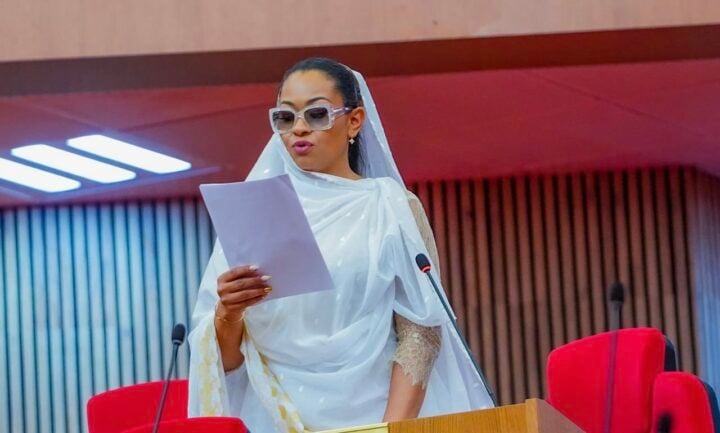
“We celebrate the likes of senators Aisha Binani, Stella Oduah, and Biodun Olujimi, but we must also ask: where are their proteges? How many young women can trace their political tutelage to these formidable women?” he asked.
Terhemba said without deliberate mentorship, the gains of trailblazing women will remain fleeting, failing to transform the political landscape.
KUNMLE: I WAS THE ONLY WOMAN ON THE BALLOT
For Kumle, these barriers are not abstract — they are her lived reality. Since 2011, she has been a force in Plateau state politics, contesting for the state house of assembly in 2019 and the house of representatives in 2023. In both polls, she faced a male-dominated field.
“The negative perception about women in politics is deeply ingrained,” she told TheCable, saying in 2019, she was denied the APC ticket due to godfatherism and candidate imposition.
Kumle said she had been very active in APC since its formation in 2015, but in 2019, the party imposed another candidate despite her loyalty. “That’s why I defected to SDP,” she said.
When Kumle moved to SDP, she secured the party’s nomination but faced another hurdle. “Even after earning the ticket, I faced challenges in vote protection. Our agents were compromised, and collation centres were attacked,” she said.
In 2023, Kumle returned to the PDP, buoyed by increased visibility and support, but faced a “monetised” primary election. She said that because politics had become so monetised, people expected to be given money at every opportunity.
Kumle explained that even after engaging with grassroots communities and addressing key issues, delegates often reduce the process to financial bargaining.
“When it’s time for delegates to choose, they ask: How much are you giving?” she said, asserting that the financial burden, combined with entrenched cultural biases, creates a cycle of exclusion that few women can break.
‘PHYSICAL, SEXUAL, AND DIGITAL VIOLENCE’
Observers say violence remains a significant risk factor for women in Nigerian politics, occurring in both physical and psychological forms.
The gender advocate recounted experiencing this while running for election. On many occasions, she received calls warning her not to show up at certain places, forcing her to reschedule her plans, change her routes, and reduce her public appearances for safety.
She recounted being verbally abused at meetings, anonymously threatened online, and repeatedly harassed — both physically and sexually.
“Multiple times, I was asked for sexual favours in exchange for support. People fabricate things I never said, forge messages, and circulate them online to damage my reputation,” she said.
Kumle described cyberbullying as “an evolving form of violence”, noting that social media, which should serve as a vital platform for political engagement, has instead become a space where women are shamed and silenced.
According to her, the psychological toll is significant and has driven many women to abandon their political ambitions. “Some women contest once and never return. But I won’t give up,” she said.
Adaora Sydney-Jack, executive director of the Gender Strategy Advancement International (GSAI), narrated a similar experience to Kumle’s when she ran for the Imo state house of assembly in 2019 on the Action Alliance platform.
“There was a lot of resistance from men in my community, not from the party itself. There were times I doubted if I could do it. I even felt that I wasn’t wanted in the space,” she said.
THE COST OF EXCLUSION
The presiding officers of the senate and house of representatives, Godswill Akpabio and Tajudeen Abbas, admitted that the marginalisation of women in Nigerian politics has profound implications for governance and representation.
Abbas described the underrepresentation of women as “disheartening” and acknowledged that women are “vital contributors.”
Akpabio called the exclusion of women a “missed opportunity for national advancement”, describing women as “better managers” and “firm decision-makers” whose participation can strengthen policymaking and national development.
Kumle said women bring a different lens to issues, and when they are excluded, half of the solution is missed.
WILL THE NATIONAL ASSEMBLY PASS THE RESERVED SEATS BILL TO BREAK THE BARRIER?
The national assembly is set to debate and vote on 44 constitutional amendment bills, including the reserved seats bill.
The bill seeks to create special seats for women in the national and state assemblies to ensure fairer representation and address structural imbalances in Nigeria’s political system.
In 2022, the national assembly rejected five gender bills that sought to expand opportunities for women in governance and society to address long-standing inequalities between men and women in the country.
One of the bills, titled ‘Expansion of the Scope of Citizenship by Registration’, aimed to amend the constitution to allow foreign spouses of Nigerian women to acquire citizenship by registration. Currently, only foreign spouses of Nigerian men enjoy this privilege.
Another bill, ‘Special Seats for Women’, proposed the creation of reserved seats for women in the national and state houses of assembly to boost female representation in governance.
A third bill, ‘Affirmative Action for Women in Political Party Administration’, sought to amend the constitution to ensure that at least 35% of executive committee members in political parties, at all levels, are women. This is intended to gradually increase women’s representation in leadership roles, paving the way for gender parity.
A fourth bill sought to grant women the right to obtain indigeneship in their husband’s state after at least five years of marriage to promote equality and fairness in citizenship rights.
However, both chambers rejected the bills in the ninth assembly.
Across the world, over 100 countries, including Saudi Arabia, employ some form of gender or electoral quota to either elect women or appoint them into political structures.
Since the inauguration of the 10th assembly, Akpabio, Abbas, and Benjamin Kalu, the deputy speaker, have repeatedly promised to ensure that some of the bills, especially the reserved seats, scale through in the ongoing constitutional amendment process.
The bill proposes adding one special seat for women in the senate for each of the 36 states and the FCT, one special seat for women in the house of representatives for each state and the FCT, and three additional special seats for women in every state house of assembly.
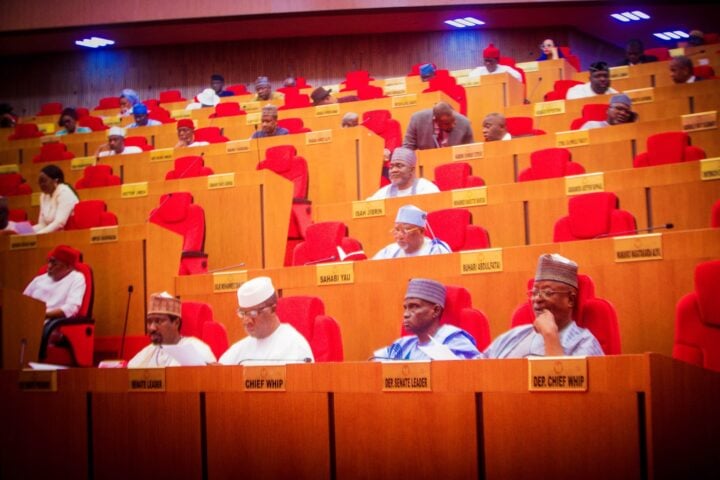
Adaora described the bill as a “historical correction for the bias and injustice women have faced for decades”, noting that the quota system would not only create an inroad for women’s voices, ambitions, and capacity to participate through a legislative framework, but also ensure that without it, the situation in 2027 could be far worse.
Osasu Igbinedion Ogwuche, chief executive officer of TOS Group of Companies and gender advocate, asked the national assembly to pass the bill to show that inclusion is not charity, but justice, and that representation is not a luxury but the very foundation of legitimacy.
“For generations, Nigerian women have carried this nation. They have raised our leaders, strengthened our communities, sustained our economy, and invested in our shared future. Yet, for too long, many decisions about our lives have been shaped in spaces where women’s voices were absent,” she told TheCable.
For Kumle, the bill is not just for women but for Nigeria’s democracy. “Reserved seats will level the field and encourage more women to step into leadership,” she said.
Kumle said legislative changes alone are insufficient, but that awareness is needed to help people understand why women are needed in politics.
Despite losing two elections, Kumle frames her journey as a success.
“I lost twice, but I built networks, gained trust, and opened doors. That is a win,” she said.