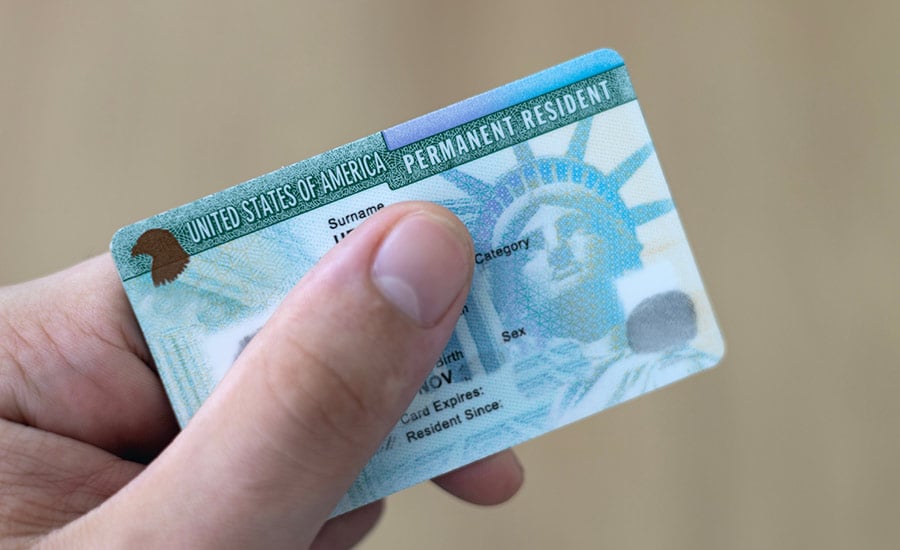
The United States government has expanded a suspension on legal immigration applications to include those by individuals from an additional 20 countries that President Donald Trump added to his travel restrictions list earlier this week.
In June, Trump signed an executive order imposing a full travel ban on nationals of 12 countries. He also placed heightened restrictions on people from seven countries.
Earlier in December, he then directed US citizenship and immigration services to completely freeze all immigration petitions including requests for American citizenship and permanent residency made by those already in the US who are nationals of the 19 countries he banned or restricted travel.
On Tuesday, Trump expanded the list of countries facing travel restrictions. Five new countries were fully barred while 15 countries were given partial restrictions.
Advertisement
Nigeria was among the 15 mostly African countries, including Angola, Antigua and Barbuda, Benin, Côte d’Ivoire, Dominica, Gabon, and The Gambia, slammed with a partial travel suspension.
Others listed are Malawi, Mauritania, Senegal, Tanzania, Tonga, Zambia, and Zimbabwe.
“Radical Islamic terrorist groups such as Boko Haram and the Islamic State operate freely in certain parts of Nigeria, which creates substantial screening and vetting difficulties,” the White House said, justifying Nigeria’s addition to the list.
Advertisement
“According to the Overstay Report, Nigeria had a B-1/B-2 visa overstay rate of 5.56 percent and an F, M, and J visa overstay rate of 11.90 percent.”
According to CBS news, a US official who requested anonymity, said the US has expanded its suspension of immigration cases to include the new nationalities added to Trump’s proclamation on Tuesday.
The suspension will now affect nationals of Burkina Faso, Mali, Niger, South Sudan and Syria, the new countries facing full travel bans.
It will also impact those from Angola, Antigua and Barbuda, Benin, Cote d’Ivoire, Dominica, Gabon, Gambia, Malawi, Mauritania, Nigeria, Senegal, Tanzania, Tonga, Zambia and Zimbabwe.
Advertisement
Many of those affected by the pause are likely to be legal immigrants who are currently in the US and are seeking to change their status or become citizens.