


BY ABDULRASHID SANI GIMI
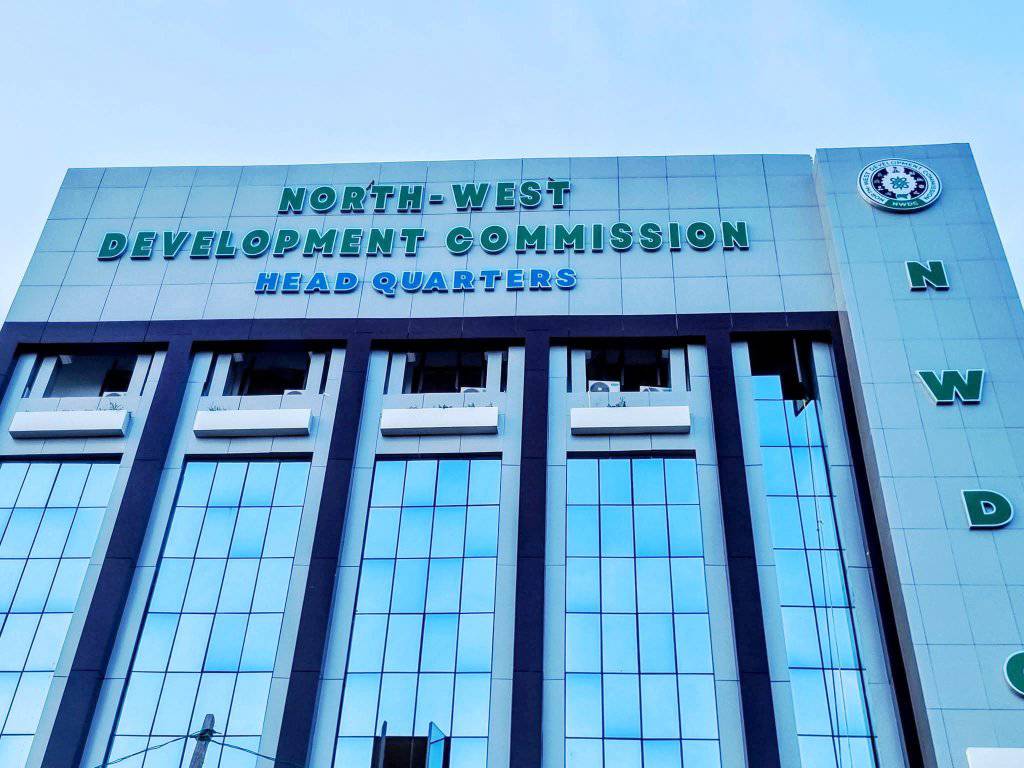
The North-West Development Commission (NWDC) was established to address one of Nigeria’s most pronounced developmental disparities. Encompassing seven states, 186 local government areas, and serving over 54 million people, the north-west represents nearly a quarter of the nation’s population. It is also the region most afflicted by insecurity, poverty, educational deprivation, climate pressures, and youth unemployment. In this context, the NWDC transcends the remit of a conventional intervention agency, functioning as a stabilisation mechanism whose effectiveness has direct implications for both the north-west and Nigeria’s broader stability, prosperity, and cohesion.
Almost a year after the appointment of its board, the commission has yet to attain full operational momentum. Oversight engagements with a joint committee of the national assembly revealed persistent internal governance tensions that have impeded progress. The managing director and chief executive officer, Professor Shehu Abdullahi Ma’aji, disclosed ongoing disputes regarding statutory responsibilities between the board and management. These disagreements have constrained decision-making and delayed the execution of essential initiatives.
Although such frictions are not unusual during the early stages of new public bodies, they should not obscure a more pressing concern: the non-release of the commission’s take-off grant. Without this critical financial foundation, the NWDC remains structurally limited in translating its statutory mandate into tangible and measurable developmental outcomes.
Advertisement
During oversight proceedings, the national assembly emphasised the vital importance of the commission’s mission. Lawmakers noted that the north-west bears a disproportionate share of Nigeria’s development challenges, including the highest numbers of out-of-school children, widespread banditry, kidnapping, drug abuse, arms proliferation, and environmental degradation. These challenges are not abstract; they are lived realities that disrupt livelihoods, displace communities, and escalate security expenditures.
The NWDC was established in 2024 specifically to tackle these complex and interconnected challenges. Its mandate is deliberately expansive, covering security, agriculture, education, infrastructure, health, youth and women empowerment, ecology, and mining. The commission’s approved budget, with roughly seventy-five per cent allocated to capital projects, demonstrates a commitment to action over bureaucratic inertia. Yet budgetary approval alone, without timely disbursement, represents legislative intention without practical implementation.
The managing director has underscored the foundational work already undertaken. These include engagement with state governors, participation in national and international development forums, the establishment of functional organisational structures, and partnerships with major development institutions such as the World Bank, African Development Bank, Islamic Development Bank, UNDP, JICA, GIZ, and the United Kingdom’s Foreign, Commonwealth and Development Office. Strategic initiatives, including the creation of a North-West Investment Company and the development of power, transport, and commodity exchange platforms, reflect foresight and readiness to deliver.
Advertisement
Nonetheless, strategic frameworks and partnerships cannot replace execution. Roads cannot be constructed, schools rehabilitated, security infrastructure deployed, nor agricultural productivity enhanced without adequate funding. The protracted delay in releasing the take-off grant has confined the commission to preparatory activities, reinforcing the perception that visibility has taken precedence over tangible impact.
The urgency of disbursing the take-off grant extends beyond administrative convenience; it is a matter of national interest. The north-west functions as Nigeria’s agricultural backbone, and instability in the region undermines national food security. Insecurity diverts federal security resources, while educational deprivation contributes to chronic unemployment and social fragility. Financial empowerment of the NWDC is not a regional concession but a strategic instrument of prudent national risk management.
Furthermore, the release of the grant would enhance accountability. Access to funds would enable the establishment of clear performance benchmarks, enforceable timelines, and meaningful legislative oversight. Continued withholding, by contrast, obscures responsibility and allows underperformance to be attributed to structural limitations rather than managerial competence.
The national assembly has made it clear that the commission’s grace period has elapsed. Lawmakers have clarified statutory roles, mediated disputes, and issued explicit warnings. It is now incumbent upon the executive branch to complement legislative oversight with financial enablement. Addressing governance challenges and releasing the take-off grant must proceed simultaneously, as development imperatives cannot wait for administrative perfection.
Advertisement
Equally critical is managerial cohesion. Harmonious collaboration between the board and management is indispensable for accelerating decision-making, optimising resource deployment, and delivering measurable results. Disunity at the top will only prolong delays, undermine public confidence, and restrict the commission’s capacity to fulfil its mandate. The administration deserves commendation for establishing regional development commissions as instruments of inclusive growth.
To consolidate this vision, legislation must now be matched with execution. The immediate release of the NWDC take-off grant, combined with strengthened managerial cohesion, would signal seriousness of purpose, restore public confidence, and enable the commission to transition decisively from strategic planning to tangible developmental outcomes.
Ultimately, the success of the NWDC will be measured not by the sophistication of its strategies but by the improvements in the lives of those it serves. For the north-west, the take-off grant represents a crucial opportunity to tackle entrenched challenges through coordinated action. For Nigeria, it is a timely and strategic investment in stability, productivity, and national cohesion that can no longer be deferred.
Abdulrashid Sani Gimi, PhD, writes from Kaduna state. He can be contacted via [email protected]
Advertisement
Views expressed by contributors are strictly personal and not of TheCable.