Ibrahim Muhammad
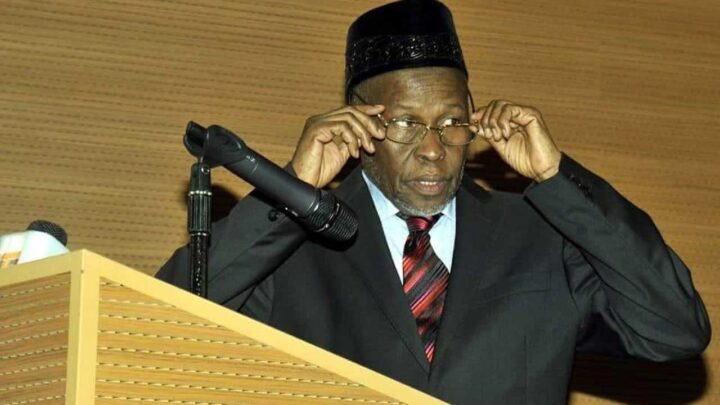
Fifteen days to his 72nd birthday, death struck the final gavel on the life of Tanko Ibrahim Muhammad, Nigeria’s 17th chief justice.
Muhammad died on Tuesday morning in Saudi Arabia, after a brief illness.
He was born on December 31, 1953, in Doguwa, Giade, a local government area in the present-day Bauchi state. He began his education at Giade Primary School, attending from 1961 to 1968, before proceeding to Government Secondary School, Azare, where he earned his West African School Certificate in 1973.
In 1976, he gained admission to study law at Ahmadu Bello University (ABU), Zaria, graduating in 1980. He subsequently attended the Nigerian Law School from 1980 to 1981, earning his call to the bar.
Advertisement
Muhammad returned to his alma mater for his postgraduate studies, where he earned his master’s degree in 1984 and later a PhD in 1998, further cementing his deep grounding in legal scholarship.
He began his judicial career in 1982, shortly after being called to the bar, when he was appointed as a magistrate. He rose to the rank of senior magistrate grade II, a position he held from 1984 to 1986. During this period, he also served as provost of the College of Legal and Islamic Studies in Bauchi from 1986 to 1989, combining judicial duties with the mentorship of aspiring legal minds.
In 1990, Muhammad was appointed chief magistrate of the high court of the federal capital territory, a role he occupied until 1991, when he was elevated to serve as a judge of the Sharia court of appeal in Bauchi.
Advertisement
His steady progression continued, and in 1993, he was appointed justice of the court of appeal, serving in that capacity until 2006, when he was appointed to the bench of the supreme court and was sworn in on January 8, 2007.
CONTROVERSIAL ENTRY AND EXIT AS CJN
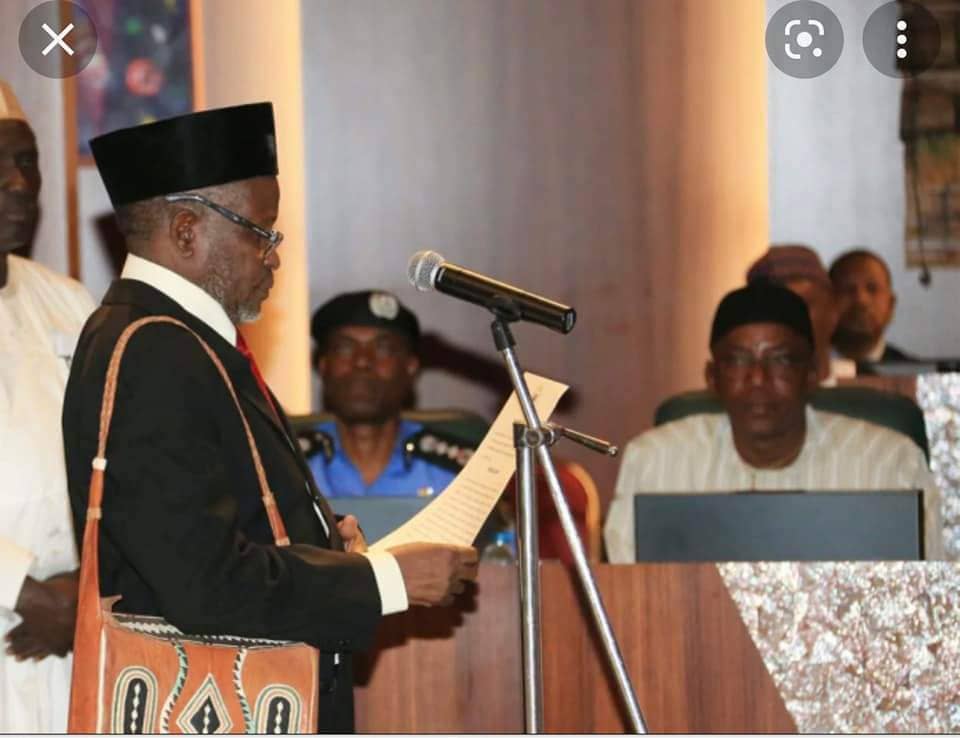
Muhammad rose through the ranks of the courts with little public fanfare until he was appointed CJN in 2019.
In January 2019, following the controversial suspension of then-CJN Walter Onnoghen by former President Muhammadu Buhari, Muhammad was appointed in an acting capacity and later made the CJN. The circumstances of his elevation were unprecedented and deeply polarising, especially coming just three weeks before the 2019 presidential election.
Advertisement
Many lawyers, civil society groups, and constitutional scholars argued that Onnoghen’s suspension violated due process and undermined judicial independence. Muhammad, by accepting the role, was immediately thrust into a political and legal storm he neither created nor could easily escape.
From the outset, his tenure was burdened by questions of legitimacy. Critics accused him of benefiting from an executive overreach that weakened the judiciary’s autonomy.
When Muhammad took the oath as CJN, he inherited a bench under intense scrutiny and a country wrestling with deep questions about justice, trust, and democracy.
DEFINING MOMENTS AS CJN
Advertisement
As CJN, Muhammad presided over the supreme court at a time when election-related litigation dominated Nigeria’s legal landscape. High-stakes governorship and presidential disputes routinely ended at the apex court. Judgements were often criticised for technical rigidity rather than being merit-based, which is reflective of justice and public interest.
Advertisement
One of the most widely discussed supreme court decisions during his tenure was a controversial electoral judgement affirming Hope Uzodinma of the All Progressives Congress (APC) as the governor of Imo state, overturning the earlier declaration of Emeka Ihedioha of the PDP as the winner by the Independent National Electoral Commission (INEC).
A seven-member panel upheld the appeal by Uzodinma on the basis that results from units excluded from collation would change the outcome. This judgement was highly debated in legal circles because the candidate declared the winner came fourth at the polls.
Advertisement
Advertisement
His period as CJN also overlapped with legal challenges to his own appointment, which were processed through the courts and dismissed on procedural grounds, and another instance when a case of alleged age falsification was brought against him.
RESIGNATION
Amid these high-stakes cases, his leadership was marked by judicial contention, including internal protests from colleagues about court administration and governance.
In a memo issued in June 2022, 14 justices of the apex court accused Muhammad of abandoning his responsibilities as the leader of the court. The judges also accused the CJN of going on foreign trips with his family while denying them the right to go on international trainings.
Muhammad resigned shortly after the memo became public knowledge, citing health reasons. Contrary details later emerged that the jurist was forced to tender his resignation after the justices threatened to stop sitting if he was not removed.
His resignation marked one of the most dramatic exits of a CJN in Nigeria’s history, probably only second to that of his predecessor.
Away from the courtroom and the public eye, Muhammad led a quietly private life, choosing to let his work on the bench define his public presence.
History found him all the same, placing him at the centre of Nigeria’s judiciary and inscribing his name permanently in the long, complicated story of justice in the country.