


BY MKPE ABANG
The politics of state creation in Nigeria has long been one of the most contentious and defining features of the country’s federal experiment. From the colonial amalgamation of 1914, which grouped disparate communities under administrative provinces, to the successive waves of state creation in 1967, 1976, 1987, 1991, and 1996, the quest for political recognition and equitable distribution of national resources has profoundly shaped Nigeria’s federal structure. While state creation has historically been justified as a mechanism for managing Nigeria’s ethno-regional diversity, correcting perceived imbalances, and fostering development, the process has also been marked by unevenness and selective inclusion. In this context, the case of Ogoja Province is particularly striking.
Established in 1914 as one of the colonial provinces at amalgamation, Ogoja once occupied a distinct position in Nigeria’s administrative map. Over the decades, however, Ogoja’s trajectory diverged sharply from those of other provinces created alongside it. While provinces such as Benin, Warri, Zaria, Kano, and Onitsha eventually metamorphosed into full-fledged states or were subsumed into newly created states, Ogoja remains today a mere local government area within Cross River State. This makes it the only one of the original provinces never to have attained the status of a state, a unique and glaring anomaly in Nigeria’s federal history.
The roots of this marginalisation lie in the politics of elite bargaining, regional dominance, and federal expediency. At critical junctures of state creation – from General Yakubu Gowon’s 12-state structure of 1967 to General Sani Abacha’s 36-state configuration in 1996 – Ogoja consistently lacked the political leverage to advance its claim, overshadowed by more dominant regions and elites. As a result, the people of Ogoja have been denied the direct benefits that come with statehood: federal allocations, infrastructural investments, and equitable representation in national governance.
Advertisement
This exclusion has had profound developmental consequences. As a non-state entity, Ogoja does not enjoy the financial allocations directly distributed to states from the federation account. Its infrastructural development lags behind that of other regions, and federal presence in terms of universities, industries, and healthcare facilities remains limited. Politically, the people of Ogoja are underrepresented in federally controlled appointments, perpetuating a cycle of exclusion that further weakens their voice in national affairs. The result is a region that, despite its historical significance and contributions to Nigeria’s political evolution, remains structurally marginalised.
This article therefore interrogates the historical roots, developmental consequences, and normative implications of Ogoja’s exclusion from Nigeria’s state creation trajectory. It argues that out of equity, moral justice, and historical balance, Ogoja Province deserves to be elevated to the status of a state. Such a move would not only address a long-standing historical anomaly but also strengthen Nigeria’s federal character, promote inclusiveness, and foster a greater sense of belonging among its diverse peoples. By situating Ogoja’s marginalisation within the broader politics of Nigerian federalism, this article seeks to demonstrate why Ogoja’s case remains one of the most compelling for future state creation exercises.
2. Historical Background of Ogoja Province
Advertisement
The history of Ogoja Province is deeply tied to the origins of Nigeria’s federal experiment and the colonial logic of amalgamation in 1914. When the British amalgamated the Northern and Southern Protectorates, they created provinces as administrative units to facilitate governance and consolidate indirect rule. Among these was Ogoja Province, located in the southeastern flank of the country, alongside other provinces such as Benin, Warri, Calabar, Kano, Zaria, Oyo, and Onitsha. These provinces served as the first institutional expression of regional and ethnic identity under colonial Nigeria, providing the foundations for subsequent debates over representation, resources, and autonomy.
2.1 Formation and Early Significance
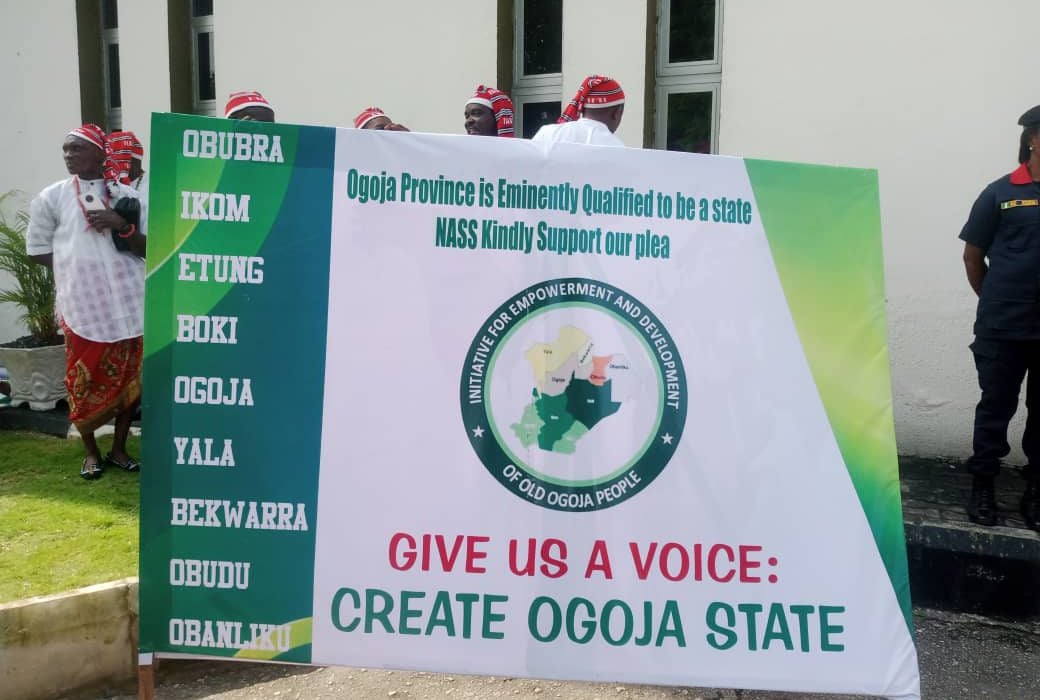
Ogoja Province was established in 1914 as part of the British colonial framework that grouped ethnic nationalities under larger administrative units. It encompassed a culturally diverse population, predominantly made up of minority groups such as the Bekwarra, Boki, Etung, Obudu, and Yala, each with distinct languages, traditions, and socio-political structures. Unlike larger provinces dominated by majority ethnicities, Ogoja stood out as a minority province, and this position would later shape its marginalisation within the Nigerian state.
In the colonial period, Ogoja’s administrative relevance derived from its location as a frontier province, linking the Cross River basin to the northern Benue corridor. It served as a node for trade, missionary activity, and limited colonial investment in infrastructure such as schools and health facilities. Despite this, Ogoja remained largely peripheral in terms of colonial resource allocation, overshadowed by provinces with stronger economic assets such as Kano, Lagos, and Benin.
Advertisement
2.2 Ogoja in the First Republic and Regional Structures
At independence in 1960, Nigeria’s provinces were subsumed into three large regions: Northern, Western, and Eastern. Ogoja was incorporated into the Eastern Region, dominated politically by the Igbo ethnic majority and the National Council of Nigerian Citizens (NCNC). This restructuring weakened the visibility of Ogoja, as its minorities found themselves subordinated to Igbo dominance within the regional structure (Osaghae, 1998). Calls for greater autonomy intensified among minorities, culminating in the Willink Commission of 1958, which identified the fears of domination among minority groups, including those in Ogoja Province (Willink Commission, 1958/2004). However, the Commission stopped short of recommending state creation, instead suggesting protective mechanisms within the federal system.
The failure to create a state for Ogoja and other minorities entrenched perceptions of marginalisation. While the Mid-West Region was carved out in 1963 to satisfy minority demands in the Western Region, no equivalent was granted to the minorities of the East. Thus, Ogoja entered the postcolonial era as a politically marginalised unit within an Igbo-dominated region.
2.3 Evolution of Provinces into States: The Exclusion of Ogoja
Advertisement
The most glaring aspect of Ogoja’s history lies in the fate of its peers. Provinces such as Benin and Warri became part of Mid-West Region in 1963, which later transformed into Bendel State and subsequently split into Edo and Delta States. Kano Province evolved into Kano and Jigawa States, while Zaria became Kaduna State. Onitsha and Owerri Provinces were subsumed into Anambra, Enugu, and Imo States, all of which were created in the 1976 and subsequent exercises.
In contrast, Ogoja Province never attained statehood. Instead, it was fragmented and eventually reduced to a local government area within Cross River State after the state creation exercises of 1967 (12 states under General Gowon) and 1976 (19 states under General Murtala Mohammed). Despite successive expansions of the federation – to 21 states in 1987, 30 in 1991, and 36 in 1996 – Ogoja was consistently excluded. By the end of the 20th century, nearly all provinces established in 1914 had metamorphosed into states, or multiple states, leaving Ogoja as the only province still denied recognition.
Advertisement
2.4 Historical Roots of Marginalisation
Several factors explain Ogoja’s persistent exclusion. First, the province lacked strong political elites with influence at the federal centre during key moments of state creation. The dominance of larger ethnic blocs – the Igbo in the East, Hausa-Fulani in the North, and Yoruba in the West – meant that minority provinces such as Ogoja were overshadowed in the calculus of federal restructuring. Second, the relatively small size and dispersed population of Ogoja weakened its bargaining capacity compared to provinces such as Kano or Benin. Third, federal state creation exercises were often driven by political expediency rather than principles of equity, with governments rewarding regions that offered political support while neglecting those perceived as marginal.
Advertisement
Thus, Ogoja’s history since 1914 reflects a pattern of structural neglect: initially as a minority province within the Eastern Region, and subsequently as a marginalised periphery within Cross River State. Unlike other provinces that leveraged ethnic mobilisation or elite networks to secure statehood, Ogoja’s minority character rendered it perpetually disadvantaged in the politics of federal restructuring.
2.5 Implications for Contemporary Nigeria
Advertisement
The historical background of Ogoja Province underscores why its exclusion remains a glaring anomaly in Nigeria’s federal evolution. While the logic of state creation was intended to promote equity, representation, and development, Ogoja’s case reveals the unevenness of this process. The fact that every other 1914 province has been transformed into one or more states, while Ogoja remains a mere local government, is not only a historical curiosity but also a moral and political injustice. This exclusion has reinforced perceptions of neglect among the people of Ogoja and has deepened their demand for recognition as a state in its own right.
3. The Roots of Marginalisation
The continued exclusion of Ogoja Province from Nigeria’s state creation trajectory cannot be explained merely as a historical accident. Rather, it is the product of deep-seated political, structural, and elite-driven dynamics that have consistently disadvantaged Ogoja at critical junctures of federal restructuring. While other provinces leveraged ethnic majorities, strategic positioning, and elite representation to secure statehood, Ogoja’s minority status, weak bargaining power, and peripheral location within the Nigerian political economy entrenched its marginalisation.
3.1 Ethno-Regional Politics and Majority Domination
The foremost factor underpinning Ogoja’s marginalisation lies in the dominance of majority ethnic groups within Nigeria’s political system. From independence, Nigerian politics has been defined by the “big three” – Hausa-Fulani, Yoruba, and Igbo – whose demographic weight and political influence ensured their control over regional and federal structures. Ogoja, composed of minority ethnic groups in the southeastern periphery, lacked both the demographic scale and national clout to compete with these blocs.
In the Eastern Region, where Ogoja was subsumed, Igbo elites monopolised political power through the NCNC, side-lining minority interests. Although the Willink Commission (1958/2004) acknowledged the fears of domination among minorities in Ogoja, Calabar, and other areas, its recommendations for safeguards fell short of granting statehood. By contrast, minority groups in the Western Region succeeded in securing the Mid-West Region in 1963, largely due to political bargaining and the willingness of the federal government under Tafawa Balewa to weaken the dominant Action Group in the West. The absence of similar federal incentives in the East left Ogoja minorities without statehood, cementing their marginalisation.
3.2 Weak Elite Representation at Critical Junctures
Another critical factor has been the weakness of Ogoja’s political elite at key moments of constitutional negotiation and military-led state creation. State creation in Nigeria has rarely been a product of transparent criteria; instead, it has reflected elite bargaining and military discretion. During the Gowon administration’s 1967 restructuring into 12 states, Northern and Mid-Western elites successfully lobbied for inclusion, while Ogoja lacked nationally influential figures capable of advancing its claims.
Similarly, during the 1976 and 1996 state creation exercises, lobbying power was decisive. Regions with strong elites embedded in the military or close to ruling administrations succeeded in carving out new states, while areas with weaker networks were excluded. Ogoja’s elite were largely confined to regional politics within Cross River State, lacking access to federal patronage networks that determined outcomes. This absence of effective representation meant that Ogoja’s case, however legitimate, was consistently side-lined in favour of regions with stronger political lobbies.
3.3 Structural Peripheralisation within Cross River State
The structural configuration of Cross River State further entrenched Ogoja’s marginalisation. Since the creation of Cross River in 1967 (out of the former Eastern Region), Ogoja has remained on the periphery of state politics, overshadowed by the dominance of Calabar and other southern parts of the state. The allocation of political offices, infrastructural projects, and federal appointments has disproportionately favoured southern constituencies, leaving Ogoja with little leverage.
This internal subordination weakened Ogoja’s bargaining position at the federal level. Unlike other minority regions such as the Niger Delta, which mobilised around oil resources to demand recognition, Ogoja lacked resource leverage to compel federal concessions. Its status as a peripheral minority within both state and federal structures entrenched its political invisibility.
3.4 Geopolitical Expediency and Federal Calculations
The politics of state creation in Nigeria has often been shaped less by equity than by expediency. Military regimes in particular used state creation as a tool for consolidating power, rewarding loyal constituencies, and diffusing opposition. Ogoja’s exclusion reflects its limited utility in these calculations.
During Gowon’s restructuring in 1967, the primary aim was to weaken the secessionist Eastern Region by fragmenting it into East-Central, Rivers, and South-Eastern States. While Rivers and South-Eastern States were created to empower strategic minorities (Ijaw, Efik, and Ibibio), Ogoja was subsumed into South-Eastern State without independent recognition. Later exercises followed similar patterns, with state creation tailored to balance power among dominant blocs or appease politically sensitive regions. Ogoja, lacking both demographic weight and economic resources, was repeatedly deemed expendable in the calculus of federal stability.
3.5 Institutional Weakness and the Failure of Protective Mechanisms
Institutional mechanisms meant to protect minorities have proven inadequate in addressing Ogoja’s marginalisation. The Willink Commission (1958/2004), while acknowledging the fears of minorities, failed to recommend new states, instead suggesting constitutional safeguards. These safeguards proved insufficient, as regional governments remained dominated by majorities. Post-independence institutions, such as the Federal Character principle introduced in the 1979 Constitution, have also failed to address structural imbalances in state creation.
In effect, Ogoja has been trapped by institutional inertia: recognised as a minority deserving of protection but denied the structural remedy of statehood that has been granted to other minority groups across Nigeria.
3.6 The Politics of Silence and Fragmented Mobilisation
Finally, Ogoja’s marginalisation has been reinforced by the absence of sustained, unified mobilisation for statehood. While there have been occasional agitations for an “Ogoja State” or “North Cross River State,” these movements have lacked the coherence and national visibility of comparable struggles, such as those of the Niger Delta minorities. Internal fragmentation among Ogoja’s ethnic groups further weakened their collective bargaining power. This “politics of silence” meant that federal authorities could ignore Ogoja’s claims without fear of destabilisation, unlike in regions where resource-based militancy or large-scale protests forced concessions.
3.7 Historical Patterns of Exclusion
The marginalisation of Ogoja is thus the cumulative outcome of ethno-regional domination, weak elite bargaining, structural peripheralisation, federal expediency, institutional inadequacy, and fragmented mobilisation. These interlocking dynamics ensured that, despite being one of the original provinces of 1914, Ogoja remained invisible in the calculus of state creation. Unlike other provinces that leveraged political, demographic, or resource assets to secure statehood, Ogoja’s minority status and lack of leverage rendered it consistently excluded.
This historical exclusion provides the foundation for the contemporary developmental and political deficits faced by Ogoja, which will be examined in the next section.
4. Developmental Consequences of Exclusion
The exclusion of Ogoja Province from Nigeria’s state creation process has not been a merely symbolic injustice. It has produced far-reaching developmental consequences that continue to undermine the socio-economic wellbeing of its people. Unlike other provinces that evolved into full-fledged states with direct access to federal allocations, infrastructural projects, and political representation, Ogoja has remained structurally disadvantaged. Its position as a mere local government within Cross River State denies it the fiscal autonomy, institutional capacity, and political leverage that statehood confers. This section examines the developmental deficits that stem from Ogoja’s exclusion.
4.1 Fiscal Disadvantage and Denial of Federal Allocations
One of the most tangible consequences of Ogoja’s exclusion is its inability to access federal allocations directly. Under Nigeria’s federal system, the Federation Account Allocation Committee (FAAC) distributes funds monthly to states and local governments, with states receiving significantly larger allocations to fund governance, infrastructure, and development.
Whereas other former provinces such as Benin (now Edo and Delta States) or Kano (now Kano and Jigawa States) have benefited from direct fiscal transfers as states, Ogoja is limited to the small share allocated to local governments within Cross River State. This fiscal disadvantage severely constrains developmental planning and denies the people of Ogoja the kind of federal presence enjoyed by regions that secured statehood. Moreover, because Cross River State must balance competing constituencies, Ogoja’s allocations are often diluted in favour of the more politically dominant southern parts of the state.
4.2 Absence of Federal Projects and Institutions
Closely tied to fiscal exclusion is the lack of federal projects and institutions in Ogoja. Across Nigeria, state capitals often host universities, federal medical centres, highways, airports, and industrial initiatives as part of federal investments in state development. In contrast, Ogoja has consistently been bypassed in the siting of such projects.
For example, while Calabar hosts the University of Calabar and other federal institutions, and Uyo (capital of Akwa Ibom, which was created from Cross River State in 1987) boasts multiple federal establishments, Ogoja remains without a single major federal university, teaching hospital, or industry. The absence of such institutions has constrained educational access, health infrastructure, and job creation in the region. This neglect underscores the extent to which statehood serves as a gateway to federal presence, and the denial of Ogoja’s statehood translates directly into developmental exclusion.
4.3 Marginalisation in Federal Appointments and Representation
Another significant consequence of Ogoja’s exclusion is underrepresentation in federal appointments. Nigeria’s federal character principle, enshrined in the 1979 and 1999 Constitutions, mandates equitable distribution of political offices across states. However, because Ogoja is not a state, it cannot benefit from this framework.
While states like Kogi, Ebonyi, and Bayelsa, created in 1991 and 1996, immediately gained visibility through ministerial positions, ambassadorial postings, and appointments in federal parastatals, Ogoja’s people remain subsumed under Cross River State, where competition for appointments is intense. Consequently, Ogoja elites rarely occupy top federal positions, reinforcing the perception of systemic neglect. The absence of statehood thus translates into political invisibility at the national level, weakening the capacity of Ogoja communities to shape federal policy or attract patronage.
4.4 Infrastructural Backwardness and Socio-Economic Stagnation
The fiscal, institutional, and representational exclusions described above have combined to produce infrastructural backwardness and socio-economic stagnation in Ogoja. Roads remain poorly developed, health facilities are underfunded, and industries are virtually absent. Compared to other regions that were once provinces but are now states, Ogoja exhibits striking developmental disparities.
For instance, Edo and Delta States (formerly part of Benin and Warri Provinces) boast industrial zones, airports, and universities funded by federal allocations. Kano and Jigawa, similarly, benefit from major infrastructural projects and federal support. In contrast, Ogoja has remained dependent on meagre local government resources, insufficient for large-scale infrastructural development This comparative stagnation highlights how statehood in Nigeria is not only a political marker but also a developmental advantage.
4.5 Federal Neglect and the Reinforcement of Marginalisation
The cumulative effect of fiscal disadvantage, absence of federal projects, underrepresentation in appointments, and infrastructural backwardness is a cycle of marginalisation. Ogoja’s exclusion from state creation perpetuates its invisibility in national politics, which in turn leads to further neglect in policy formulation and resource allocation. This cycle reinforces the perception among Ogoja’s people that they are second-class citizens within the Nigerian federation.
Such perceptions have implications for national integration. Federal neglect breeds alienation and undermines confidence in the fairness of the Nigerian state. As Eghosa Osaghae (1998) notes, exclusion in federal systems often fuels demands for restructuring and recognition. In the case of Ogoja, persistent neglect strengthens the moral and political argument for correcting this anomaly through the creation of an Ogoja State.
4.6 Exclusion as a Developmental Deficit
In sum, Ogoja’s exclusion from statehood has had far-reaching developmental consequences. It has denied the region direct federal allocations, deprived it of federal projects and institutions, limited its representation in national politics, and perpetuated infrastructural stagnation. Unlike other provinces that evolved into states and enjoyed the developmental dividends of federalism, Ogoja remains trapped in a cycle of marginalisation. This exclusion is not merely an oversight of history but a structural barrier to development, equity, and justice.
The next section will situate these developmental consequences within the broader normative framework of equity, justice, and historical balance, arguing that Ogoja’s case is one of the strongest for future state creation in Nigeria.
5. Equity, Justice, and Historical Balance
The exclusion of Ogoja Province from Nigeria’s state creation trajectory is not merely a historical curiosity; it is a profound injustice that raises questions of equity, moral fairness, and national cohesion. While state creation has often been justified in Nigeria as a mechanism for balancing diversity, promoting inclusion, and addressing fears of domination, Ogoja remains the only 1914 province that has not been elevated to statehood. In the context of Nigerian federalism – where virtually every other comparable province has been transformed into one or more states – the continued denial of Ogoja’s statehood constitutes a glaring anomaly that undermines the principles of fairness and national integration.
5.1 Equity in Nigerian Federalism
The principle of equity has long been invoked as a justification for state creation in Nigeria. From the Willink Commission’s acknowledgment of minority fears in 1958 to the military decrees of Yakubu Gowon (1967), Murtala Mohammed (1976), and Sani Abacha (1996), successive exercises in state creation were premised on correcting structural imbalances. Yet, Ogoja was consistently excluded from these redistributive exercises.
Equity demands that regions historically disadvantaged should be given priority in subsequent reforms. Ogoja’s exclusion becomes even more striking when juxtaposed with the proliferation of states from other provinces. Benin and Warri, for instance, evolved into Bendel and later Edo and Delta States. Kano Province now exists as Kano and Jigawa States. Meanwhile, Ogoja – established alongside them in 1914 – remains confined to local government status within Cross River State. For a federation committed to fairness, such disproportionality is indefensible.
5.2 Moral Justice and Correcting Historical Wrongs
Beyond equity, the case for Ogoja resonates deeply with the principle of moral justice. For over a century, Ogoja has contributed to Nigeria’s political evolution but has been systematically side-lined in state creation exercises. The neglect cannot be justified on demographic, cultural, or historical grounds, since smaller provinces with fewer people and less strategic significance have since attained statehood.
Moral justice requires rectifying this long-standing anomaly by granting Ogoja its rightful place as a state. The people of Ogoja have endured decades of marginalisation, lacking access to the federal allocations, institutions, and representation that their peers elsewhere enjoy. Addressing this injustice would not merely serve Ogoja but would reinforce Nigeria’s moral credibility as a federation that values inclusivity.
5.3 Historical Balance and National Integration
The logic of state creation in Nigeria has always been tied to the broader goal of national integration. By creating more states, successive governments sought to weaken secessionist tendencies, reduce domination by large ethnic groups, and integrate minorities into the federal structure. However, Ogoja’s exclusion undermines this integrative logic. Instead of reinforcing unity, it perpetuates perceptions of exclusion and alienation.
From a historical standpoint, Ogoja’s recognition as a state would complete the unfinished business of federal restructuring. It would close the chapter on the only province left behind in Nigeria’s state creation history, thereby achieving a sense of historical balance. Just as the creation of Bayelsa in 1996 symbolised recognition of the Ijaw struggle, an Ogoja State would symbolise the federal government’s commitment to correcting century-old inequities.
5.4 Comparative Equity: Why Ogoja’s Case Is Stronger
It is instructive to note that many of Nigeria’s smallest and relatively less developed provinces have already attained statehood. Bayelsa, for example, was created in 1996 with a population smaller than Ogoja’s. Ebonyi, carved out in the same year, was justified on the grounds of minority equity, despite lacking the historical pedigree of Ogoja Province.
By every measure of fairness – history, population, cultural diversity, and political significance – Ogoja has a stronger claim to statehood than many regions that currently enjoy it. Its continued exclusion suggests not a lack of merit but a failure of political will and elite representation.
5.5 Statehood as a Path to National Cohesion
Granting Ogoja statehood would have significance beyond the region itself. It would demonstrate Nigeria’s commitment to fairness and inclusivity, reinforcing faith in the federal system among marginalised communities. By addressing this historical injustice, the Nigerian state would send a message that no group is permanently excluded and that federalism remains a dynamic tool for managing diversity.
Furthermore, statehood would empower Ogoja to access federal allocations, attract infrastructural investments, and secure representation in federal appointments. This would not only enhance local development but also strengthen Nigeria’s unity by integrating a historically excluded region into the mainstream of governance.
5.6 Completing the Circle of Justice
Equity, moral justice, and historical balance converge in the case of Ogoja. The denial of statehood to Ogoja for over a century is both an anomaly in Nigerian federalism and a violation of the principles of fairness and inclusion. Correcting this injustice is not simply about creating another state; it is about healing a historical wound, completing the circle of Nigeria’s state creation history, and reinforcing the sense of belonging among all its peoples.
Thus, among all regions in Nigeria, Ogoja stands out as the most deserving candidate for statehood – not only for its own sake but for the sake of Nigeria’s national cohesion and moral integrity.
6. The Case for Ogoja State Creation
The demand for Ogoja State is not a mere political agitation but one rooted in history, equity, strategic logic, and national cohesion. Unlike many contemporary calls for new states, Ogoja’s claim is distinguished by its historical pedigree as one of the original provinces created in 1914, its enduring exclusion from Nigeria’s state creation exercises, and its accumulated developmental disadvantages. Granting Ogoja statehood would therefore serve as both a corrective measure to address historical injustice and a proactive step towards strengthening Nigeria’s federal balance.
6.1 Historical Legitimacy
Ogoja Province was one of the original provinces created at amalgamation in 1914. While virtually all its peers – Benin, Warri, Kano, Zaria, Onitsha, and others – have since metamorphosed into one or more states, Ogoja remains the only one denied statehood. Its historical status as a province confers legitimacy on its demand for recognition as a state.
The logic of state creation in Nigeria has often been to address grievances of minorities and correct perceived structural injustices. The creation of the Mid-West Region in 1963, Bayelsa State in 1996, and Ebonyi State in 1996 all followed this pattern of redressing historical exclusion. Ogoja’s case is stronger than many of these precedents because it represents not just a minority agitation but the correction of the last outstanding anomaly in Nigeria’s state creation history.
6.2 Strategic Significance
Beyond history, Ogoja possesses strategic significance that strengthens its case for statehood. Geographically, it serves as a link between southeastern Nigeria and the Middle Belt, connecting the Cross River Basin with Benue State. Its diverse cultural heritage – Bekwarra, Yala, Boki, Etung, and Obudu – reflects Nigeria’s pluralism and reinforces the principle of minority protection.
Economically, Ogoja has agricultural potential, including vast arable land and cash crops, that could support state viability if backed by federal investment. Its proximity to the Cameroon border also makes it geopolitically important, as border states often serve as frontlines for trade, security, and cross-border diplomacy. Federal recognition of Ogoja as a state would therefore not only empower a historically marginalised region but also enhance Nigeria’s security and economic integration.
6.3 Developmental Necessity
The developmental deficits arising from Ogoja’s exclusion underscore the necessity of statehood. As argued in Section 4, Ogoja lacks federal institutions, direct allocations, and infrastructural investments. Without statehood, it cannot access the fiscal transfers, federal projects, and representation that drive development in other regions.
By creating Ogoja State, the federal government would unlock new opportunities for development such as the establishment of a state capital with federal investments in roads, health, and education; allocation of federal universities, teaching hospitals, and industries to reduce underdevelopment; and, access to federal character-based appointments, ensuring Ogoja representation at national levels. Thus, statehood would not only redress past neglect but also catalyse socio-economic transformation for the people of Ogoja.
6.4 Equity and Justice in Comparative Perspective
A comparative perspective further strengthens Ogoja’s case. States like Bayelsa and Ebonyi, created in 1996, had smaller populations and less historical legitimacy but were granted statehood in recognition of equity and minority rights. If equity justified their creation, it provides an even stronger rationale for Ogoja, which has endured exclusion for over a century.
Moreover, the fact that Ogoja remains the only 1914 province without statehood creates a moral obligation for federal authorities. By denying Ogoja recognition, the Nigerian federation perpetuates a structural injustice that contradicts its own principle of federal character. Creating Ogoja State would not only achieve parity with other provinces but also symbolise the completion of Nigeria’s federal evolution.
6.5 National Cohesion and Integration
The creation of Ogoja State would also serve Nigeria’s broader goal of national cohesion. Federalism in Nigeria is often criticised for perpetuating inequality and exclusion, fuelling alienation and separatist tendencies. Recognising Ogoja would demonstrate that no group is permanently excluded, reinforcing faith in the federal system among marginalised communities.
Furthermore, Ogoja’s location as a minority enclave within Cross River has historically subjected it to domination by larger groups. By elevating it to statehood, Nigeria would empower minorities, reduce internal tensions, and create a more balanced federation. This would enhance legitimacy for the Nigerian state, particularly in an era where demands for restructuring and decentralisation are intensifying.
6.6 Policy Recommendations
To actualise Ogoja’s statehood, the following policy steps are recommended:
1. Constitutional Review: The National Assembly, in partnership with the National Conference on Constitutional Reform, should prioritise Ogoja’s case in future deliberations on state creation.
2. Minority Rights Agenda: Civil society and minority rights groups should elevate Ogoja’s exclusion as a central example of structural injustice in Nigeria’s federal system.
3. Political Lobbying: Ogoja elites and stakeholders should strengthen alliances across ethnic and regional blocs to build national consensus for Ogoja State, learning from the strategies of Bayelsa and Ebonyi agitators.
4. Developmental Advocacy: The case for Ogoja should not be framed only in historical terms but also in developmental ones – emphasising how a new state would enhance agriculture, trade, and security along the Nigeria–Cameroon border.
5. Federal Recognition: The federal government should symbolically acknowledge Ogoja’s historical exclusion, signalling intent to address it in future reforms.
6.7 The Unfinished Business of Federalism
The creation of Ogoja State, therefore, represents the final step in correcting Nigeria’s uneven state creation history. It is an act that would satisfy historical legitimacy, redress developmental neglect, enhance equity, and reinforce national cohesion. Unlike many contemporary calls for new states driven by elite expediency, Ogoja’s claim is grounded in undeniable historical fact and normative justice.
By elevating Ogoja to statehood, Nigeria would not only address a century-old anomaly but also reaffirm the principle that every community matters in the federal project. This is the unfinished business of Nigerian federalism – a test of whether equity and justice can prevail over expediency and domination.
7. Historical and Contemporary Agitations for Ogoja State
The struggle for Ogoja State has not been passive. From independence to the present, leaders from Ogoja Province and beyond have consistently agitated for its recognition as a state within the Nigerian federation. Although these efforts have not yet yielded the desired outcome, they reveal both the resilience of the Ogoja people and the growing consensus across Cross River State that the creation of Ogoja State is a matter of equity, justice, and necessity.
7.1 Early Mobilisation in the First Republic
Agitations for recognition began in the First Republic, when Ogoja elites joined other minorities in the Eastern Region to protest against Igbo domination within the NCNC-controlled government. Following the Willink Commission of 1958, Ogoja leaders repeatedly demanded statehood as a remedy for minority fears of marginalisation (Willink Commission, 1958/2004). Although the Commission acknowledged their grievances, its refusal to recommend new states left Ogoja minorities without institutional redress.
During the debates leading to independence, Ogoja leaders, including voices within the Calabar-Ogoja-Rivers (COR) State movement, pressed for the creation of a state that would encompass minority provinces of the East. While this agitation produced the Rivers and South-Eastern States in 1967, Ogoja itself was left behind, subsumed under the new South-Eastern State.
7.2 The Military Era and Renewed Demands
The successive state creation exercises of the 1970s and 1990s witnessed renewed demands for Ogoja State. Under General Yakubu Gowon’s 12-state structure of 1967, Ogoja leaders submitted memoranda advocating for recognition, but the federal government prioritised strategic fragmentation of the Eastern Region to weaken Biafra, leaving Ogoja without a state.
Again, during the 1976 Murtala Mohammed/Obasanjo exercise, and the subsequent exercises under Generals Ibrahim Babangida (1987, 1991) and Sani Abacha (1996), memoranda were submitted by Ogoja leaders and community groups. Yet, while other minorities such as the Ijaw (Bayelsa State, 1996) and Ebonyi (1996) were granted recognition, Ogoja was again excluded. This repeated exclusion deepened the sense of injustice among its people.
7.3 Civilian Administrations and Continued Advocacy
In the Fourth Republic, Ogoja elites intensified calls for recognition. Several legislators from northern Cross River consistently raised the demand in constitutional review processes at the National Assembly. Civil society groups and traditional rulers in the Ogoja area also organised petitions, public forums, and cultural campaigns to press the case for Ogoja State.
One of the most notable aspects of this advocacy is that it has transcended partisan politics. Leaders from different political affiliations – PDP, APC, and others – have united on the Ogoja cause. This rare consensus underscores the depth of grievance and the widespread support for statehood among the people of the area.
7.4 Contemporary Support and Governor Bassey Otu’s Endorsement
In recent years, the agitation for Ogoja State has gained renewed legitimacy with the open endorsement of Senator Bassey Edet Otu, the current Governor of Cross River State. Despite being an indigene of Southern Cross River (Calabar zone), Governor Otu has championed the demand for Ogoja State, arguing that it is a matter of fairness and balance within the state and the federation. His support demonstrates that the call for Ogoja State is not merely a sectional demand but one embraced by the broader Cross River community.
Governor Otu’s position reflects a remarkable development that manifests the complete agreement among Cross River citizens that Ogoja State is both necessary and just. Leaders from the central and southern senatorial zones of the state have joined voices with northern Cross River leaders to demand statehood, sending a powerful message to Abuja that Ogoja’s case is not divisive but unifying.
7.5 Implications of Broad-Based Consensus
The fact that Ogoja State is supported not only by its own people but also by leaders from across Cross River has profound implications. First, it eliminates fears of inter-zonal rivalry within the state, replacing them with solidarity for justice. Second, it enhances the legitimacy of the demand at the national level, as the agitation cannot be dismissed as parochial or self-serving. Third, it situates Ogoja’s claim as a consensus issue, comparable to past successful agitations for Bayelsa and Ebonyi States, which were supported by broader regional coalitions.
This broad-based consensus, coupled with Ogoja’s historical legitimacy, strengthens the argument that Ogoja State is not merely desirable but necessary to complete Nigeria’s federal project.
8. Conclusion
The history of Ogoja Province is emblematic of the contradictions in Nigeria’s federal experiment. Created in 1914 as one of the original provinces at amalgamation, Ogoja has, for over a century, remained the only province denied statehood, even as its peers – Benin, Warri, Kano, Zaria, Onitsha, and others – have metamorphosed into multiple states with direct access to federal allocations, institutions, and representation. This long-standing exclusion represents a structural injustice that has compounded Ogoja’s developmental disadvantages, undermined its political visibility, and reinforced its marginalisation within both Cross River State and the Nigerian federation.
The consequences of this exclusion are profound. Ogoja has been denied the direct fiscal transfers that drive state-level development, bypassed in the siting of federal institutions, and marginalised in political appointments due to its subsumption under Cross River State. These deficits have translated into stunted socio-economic growth, infrastructural backwardness, and diminished opportunities for its people. More critically, they have perpetuated a sense of alienation, undermining the promise of inclusivity that federalism is meant to guarantee.
Yet, Ogoja’s case is not only about grievances; it is about equity, justice, and historical balance. By every measure – historical legitimacy, population, cultural diversity, and strategic location – Ogoja deserves statehood. Equity demands it, since Ogoja is the last of the 1914 provinces left behind. Moral justice requires it, to correct the century-long denial of recognition. Historical balance makes it necessary, to complete Nigeria’s state creation process and reinforce its claim to fairness in managing diversity.
What makes Ogoja’s case even more compelling is the broad-based consensus that now surrounds it. From the early agitations of the COR State Movement to the consistent demands of Ogoja elites in successive constitutional reviews, the struggle has been long and determined. Today, with the endorsement of Governor Bassey Otu – himself from Southern Cross River – Ogoja State has become a unifying cause for the entire state, transcending ethnic, zonal, and partisan divides. This consensus reflects the recognition that Ogoja’s exclusion is not only an Ogoja problem but a Cross River and Nigerian problem, requiring urgent redress.
The creation of Ogoja State would serve multiple purposes. It would redress historical injustice, granting Ogoja parity with its peers. It would unlock developmental opportunities, enabling direct access to federal allocations and infrastructural investments. It would enhance representation, ensuring that Ogoja contributes directly to Nigeria’s governance through ministerial, ambassadorial, and bureaucratic appointments. Finally, it would strengthen national cohesion, sending a powerful message that no community is permanently excluded and that Nigeria’s federalism retains the capacity to adapt to the demands of justice and equity.
A Call to Action
The time has come to resolve the unfinished business of Nigerian federalism. Ogoja’s demand for statehood is not a plea for privilege but a call for fairness. It is not about creating yet another administrative unit, but about correcting an anomaly that has festered for more than a century. It is about giving meaning to Nigeria’s oft-repeated commitment to inclusivity, federal character, and minority protection.
Policymakers at the National Assembly, constitutional review committees, and the Presidency must prioritise Ogoja in future state creation exercises. Civil society, intellectuals, and minority rights advocates must continue to amplify Ogoja’s cause as a test case for Nigeria’s moral credibility. And the people of Cross River and Nigeria at large must embrace Ogoja’s statehood as a step towards justice, balance, and national integration.
If Nigeria truly seeks to build a just and equitable federation, it must create Ogoja State. Anything less would mean leaving unresolved the clearest symbol of exclusion in its federal history. To deny Ogoja statehood is to perpetuate inequality; to grant it is to reaffirm Nigeria’s unity, fairness, and democratic promise.
Abang, PhD, foreign policy and public diplomacy specialist, eminent communication expert and consummate public relations professional, wrote in from Abuja, via [email protected]
Views expressed by contributors are strictly personal and not of TheCable.