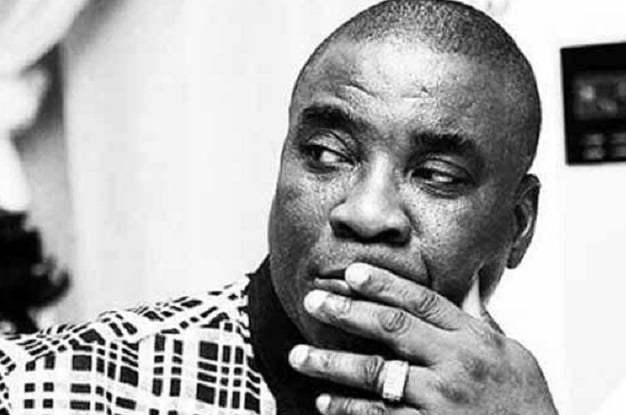
KWAM 1
BY ARIWOOLA SAMUEL AKINWALE
Among Africans, the Ijebus are a distinguished people known for industry, resilience, valour, prudence, and enterprise. These traits are evident in the Ijebus’ entrepreneurial and business success. They remain some of the wealthiest groups in Africa today.
Since the Awujale of Ijebu, Oba Sikiru Adetona, joined his ancestors about five months ago, his throne has remained vacant while the Awujale’s Council oversees the kingdom.
Fuji musician King Wasiu Ayinde Marshal (KWAM 1) recently declared his interest in the throne. This has sparked reactions in some quarters.
Advertisement
When the interest of Wasiu Ayinde became known, his hit album “Funky Fuji Medley” came to my mind, where he subtly hinted at his long-held ambition for the throne of Awujale. In that song, released circa 2013, he eulogised kingship thrones generally and affirmed that if obaship aligns with his destiny, he would one day become one. Well, 12 years later, that intention is almost seeing the light of day.
But the bid for the throne among the family members of Fusengbuwa, whose turn it is to produce the next king, has opened up fresh politicking and concern. Among the family members, one name now rings louder, even outside of the royal family.
The Awujale throne, which KWAM 1 vies for, shares a similar model for ascension with many places in Yoruba land. The council of kingmakers traditionally selects a king from eligible families. In recent times, this model now suffers from politicking, like everything we do. I refer to this as the ‘Oyo-Mesi’ model.
Advertisement
This is in contrast with the Ibadan model, where kings rise from their family ward through the kingship hierarchy. Indigenous families in Ibadan put their best foot forward—rising from Mogaji through 22 different stages before becoming an Oba along the civilian line, or 23 stages from the military (Balogun) line. It’s a safe and very predictable system.
The Ibadan model is different from the ‘Oyo-Mesi’ model found in parts of Ijebu, Egba, Ife, Ondo, Igbomina, Ibarapa, and other parts of Yoruba land. It’s public knowledge that our governors are the kingmakers of today, especially in the first model I talked about.
The power of governors is captured in an interview with the Nigerian Tribune granted by the Oluwo of Iwo land, Oba Rasheed Akanbi, about two years ago. He stated: “Tell me one king that Ifa picked in Yoruba land. The person who is picked by the governor is the one God has ordained to be the king. There is no Oba in Yoruba land that will say Ifa picked him. It is after the governor picks you that you become a king. Ifa doesn’t have any power over the governor. Maybe you watch too much Nollywood movies. Even during our forefathers, they would make the most powerful person at that time king…”
So, we know the Ijebu’s case would not be different. Governor Dapo Abiodun of Ogun State is the chief kingmaker here; the council of kingmakers are subordinate to his authority in practice. This is not to say that governors often muddle the process. No! But the power lies in their hands and has constitutional backing.
Advertisement
Our governors oversee chieftaincy and customary laws under residual lists stated in the Nigerian Constitution. Hence, the state governments have the power to appoint and terminate the “employment” of traditional rulers.
When Seyi Makinde, Oyo state governor, was dissatisfied with the way the Oyomesi were going about their choice of decision in the last selection process of the Alafin of Oyo, he consulted an Ifa priest, Wande Abimbola, for divination to know the mind of the gods. Today, Oba Akeem Owoade is the sitting Alafin, following that consultation.
But this practice is not foolproof; in present-day Nigeria, Ifa could “speak” the voice of the politicians in power. In fact, federal interference is not impossible in some cases.
This politicking explains the reason for the outrage from some members of the Fusengbuwa family. Some of the family members have been using different media to dissociate themselves from KWAM 1.
Advertisement
In a public outing, however, using the platform of his music, KWAM 1 traced his ancestry through the Fidipotemole lineage of the Fasugbenwa Family. Moreover, he noted, the late Oba Sikiru Adetona would not have made him the Olori Omoba Akile Ijebu (the head of children of Akile Ijebu) if he had not descended from the line. He further stated that anyone challenging him should meet him at the ‘popo’ (the road).
The last word—popo—is the point! Of course, he used that as a metaphor for contestation, contact, and connection.
Advertisement
This is where the politics lies. Whoever is interested in this would have to find their way (road) through the power corridor, the council of kingmakers (Igbimo Afobaje), the governor, and sometimes the presidency. The Igbimo’s influence is strong but not in the same measure as the state and federal might.
The Kano Emirship illustrates this far more clearly. That emirate now appears like a temporary affair dictated by the government in power. When Emir Sanusi Lamido was dethroned and banished from the emirate by the government of Abdullahi Ganduje in 2020, he was replaced by his cousin, Emir Aminu Ado Bayero. Now, Sanusi Lamido is back on the throne following the completion of Ganduje’s tenure. The coming of Governor Aba Yusuf enabled his return, while the former was ousted. The question is: what happens next if the power in the state switches hands? In an indirect manner, Abuja was also hinted to have pressed the buttons that shaped those decisions in the Kano Emirship, especially the Buhari’s government. There are precedents to all of this.
Advertisement
Under General Sani Abacha, Alhaji Ibrahim Dansuki was removed in 1996 as the Sultan of Sokoto for what appeared to be the Sultan’s independent-minded nature. The late ebullient Oba Adediran Adeyemi was ousted and banished from Oyo Kingdom to Lagos in 1957 after a fallout with the deputy leader of Action Group, Bode Thomas. Also, both Obas Kosoko and Akitoye became pawns in the hands of the colonial governments, in their war of attrition against each other for the Eko kingdom circa 1845-51.
This is how low the traditional office has sunk in the hands of our politicians historically, and there are many more cases that are unmentioned. This desecration of the thrones (among other factors) explains why we now have some rogue elements in traditional offices.
Advertisement
Records available online showed an Oba recently sentenced for fraud syndication; one was seen wrapping narcotics in his palace. We have also seen skit makers among our Obas. Sometimes one appears showing his bedrooms with women, or dancing to Davido’s music to show he’s atune with the time.
As for the Awujale’s throne, here are four possible scenarios: One, both the kingmakers and the governor affirm KWAM 1; two, he’s rejected by the family and the council. Three, political override by Abuja or Abiodun, favouring Wasiu or another candidate. Fourth, a stalemate that leaves the throne vacant through prolonged court cases.
All things being equal, where the pendulum swings in Ijebu is obvious by now. ‘Bobo’ (this is for the initiated) might be the next Awujale. Let the hearer listen to what the spirit is saying to the curious.
Ariwoola Samuel Akinwale wrote this piece from Lagos. He can be contacted via [email protected]
Views expressed by contributors are strictly personal and not of TheCable.