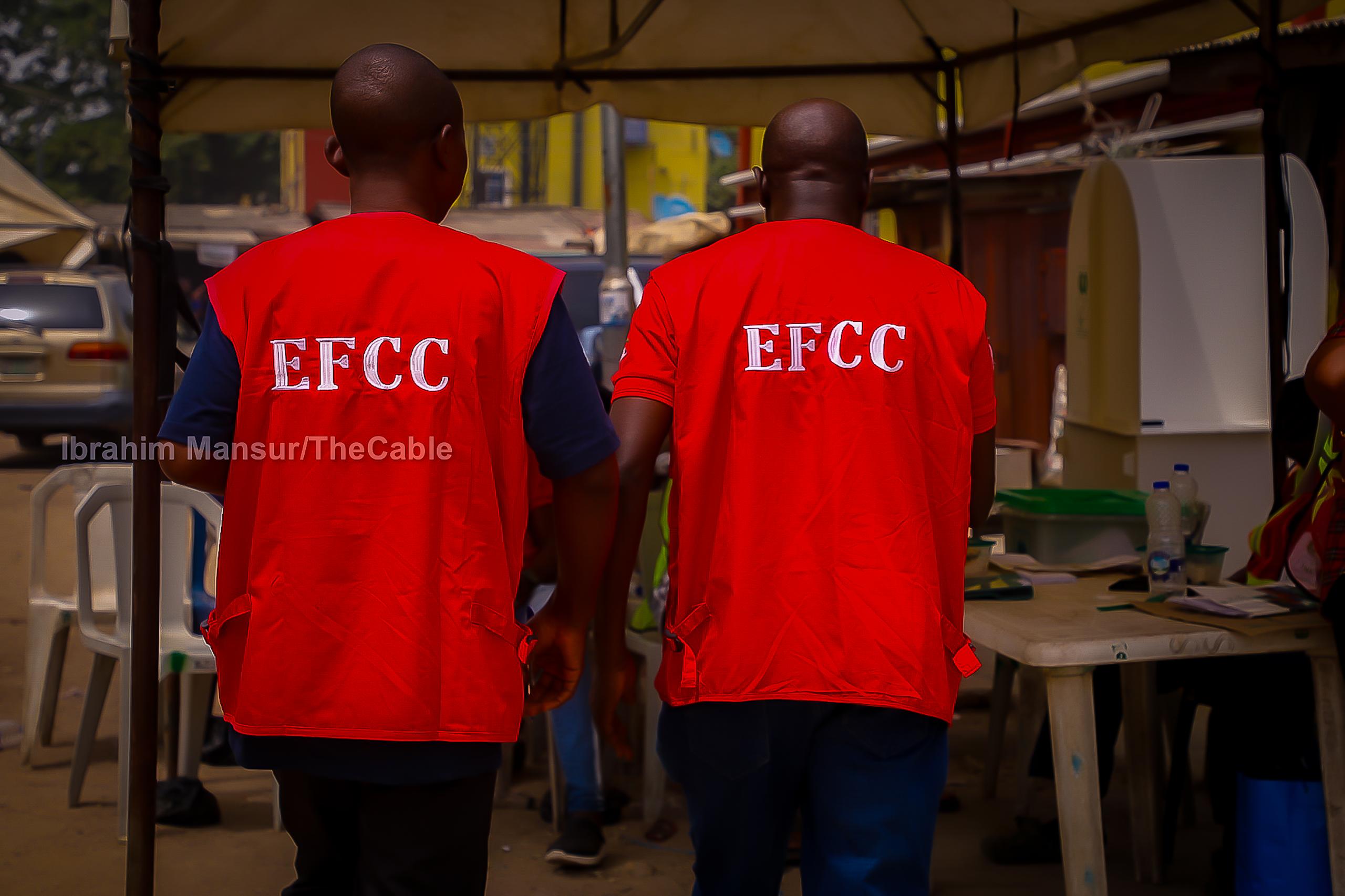
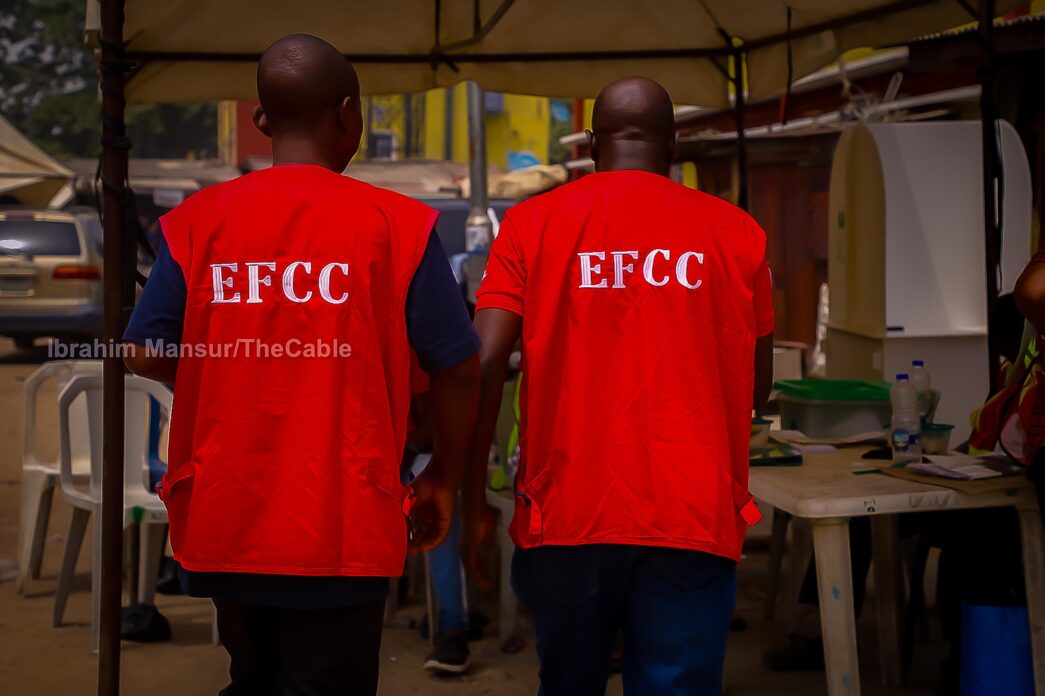
EFCC operatives | File photo
A coalition of opposition leaders has accused the federal government of weaponising anti-corruption agencies to intimidate and weaken political opponents, warning that the trend poses a serious threat to Nigeria’s multiparty democracy.
In a joint statement titled “Anti-Corruption, Not Anti-Opposition”, the opposition figures said key state institutions, particularly the Economic and Financial Crimes Commission (EFCC), the Nigeria Police and the Independent Corrupt Practices and Other Related Offences Commission (ICPC), are increasingly being perceived as tools for political persecution.
In the statement signed by David Mark, chairman of the African Democratic Congress (ADC); former Vice-President Atiku Abubakar; Lawal Batagarawa, former minister of state for defence; Bode George, a member of the board of trustees (BoT) of the Peoples Democratic Party (PDP); Peter Obi, former presidential candidate of the Labour Party (LP); and John Odigie-Oyegun, former national chairman of the All Progressives Congress (APC), the opposition politicians said Nigerians and the international community must be alerted to what they described as a gradual erosion of institutional independence.
“We are compelled by duty to nation and conscience to issue this statement to alert our compatriots and the international community to the unfortunate and gradual slide of our country into a state where key national institutions… are increasingly perceived as tools of political intimidation, selective justice and systematic persecution of opposition leaders,” the statements read.
Advertisement
The opposition leaders alleged that state power is being deployed “not for prevention of economic crimes, but for persecution of perceived political adversaries” to weaken opposition voices ahead of the 2027 general election.
They also warned against a “covert, undemocratic agenda” to force opposition-controlled states into the ruling party through intimidation rather than electoral competition.
“Recent defections of opposition governors into the ruling party have reinforced public suspicion that political pressure, not ideological or personal persuasion, is driving this realignment,” the opposition politicians said.
Advertisement
The political leaders further accused the EFCC of selective enforcement, arguing that allegations against members of the ruling APC are often ignored, while opposition figures are subjected to investigations and media trials.
They referenced a comment attributed to Adams Oshiomhole, former APC national chairman, who once said, “Once you have joined APC, all your sins are forgiven,” noting that the remark has come to symbolise public distrust in the fairness of anti-corruption enforcement.
“Whether intended as political rhetoric or not, this statement has come to symbolise a troubling reality: allegations against members of the ruling party are routinely perceived to be overlooked, while even unsubstantiated accusations against opposition figures are vigorously pursued,” they said.
They noted that the perceived erosion of the EFCC’s independence undermines public trust and could fuel instability as the country approaches another election cycle.
Advertisement
“The president must recognise that evident social and political injustice could snowball into mayhem as the nation approaches another election cycle. This trend must be halted immediately if the nation must be spared a major catastrophe,” they warned.
Among their demands, the opposition figures called for the immediate depoliticisation of the EFCC and a return of the agency to its statutory mandate.
“The operations of the EFCC must be urgently shielded from political interference and must not serve the whims and caprices of any president, party or political faction,” they said.
They also urged Nigerians to resist any attempt to turn the country into a one-party state.
Advertisement
“Nigerians must remain eternally vigilant to ensure that the President does not transform the country into a de facto one-party state,” they said.
The opposition leaders further proposed the establishment of an independent review body to examine public accounts from 2015 to 2025, saying it would expose patterns of selective prosecution and recommend reforms to strengthen anti-corruption institutions.
Advertisement
They called on Nigerians across political, ethnic and religious lines to defend democracy, warning that silence could endanger the nation’s future.
“Now is the time for all of us to rise in defence of our cherished multiparty democracy, and indeed, in defence of the very soul of our nation,” they added.
Advertisement