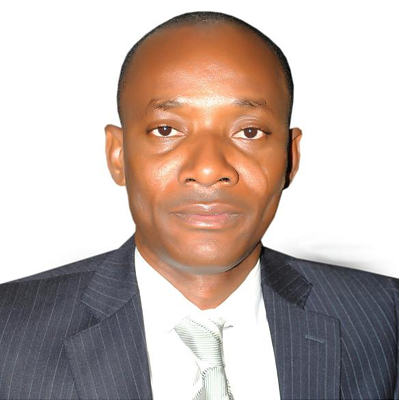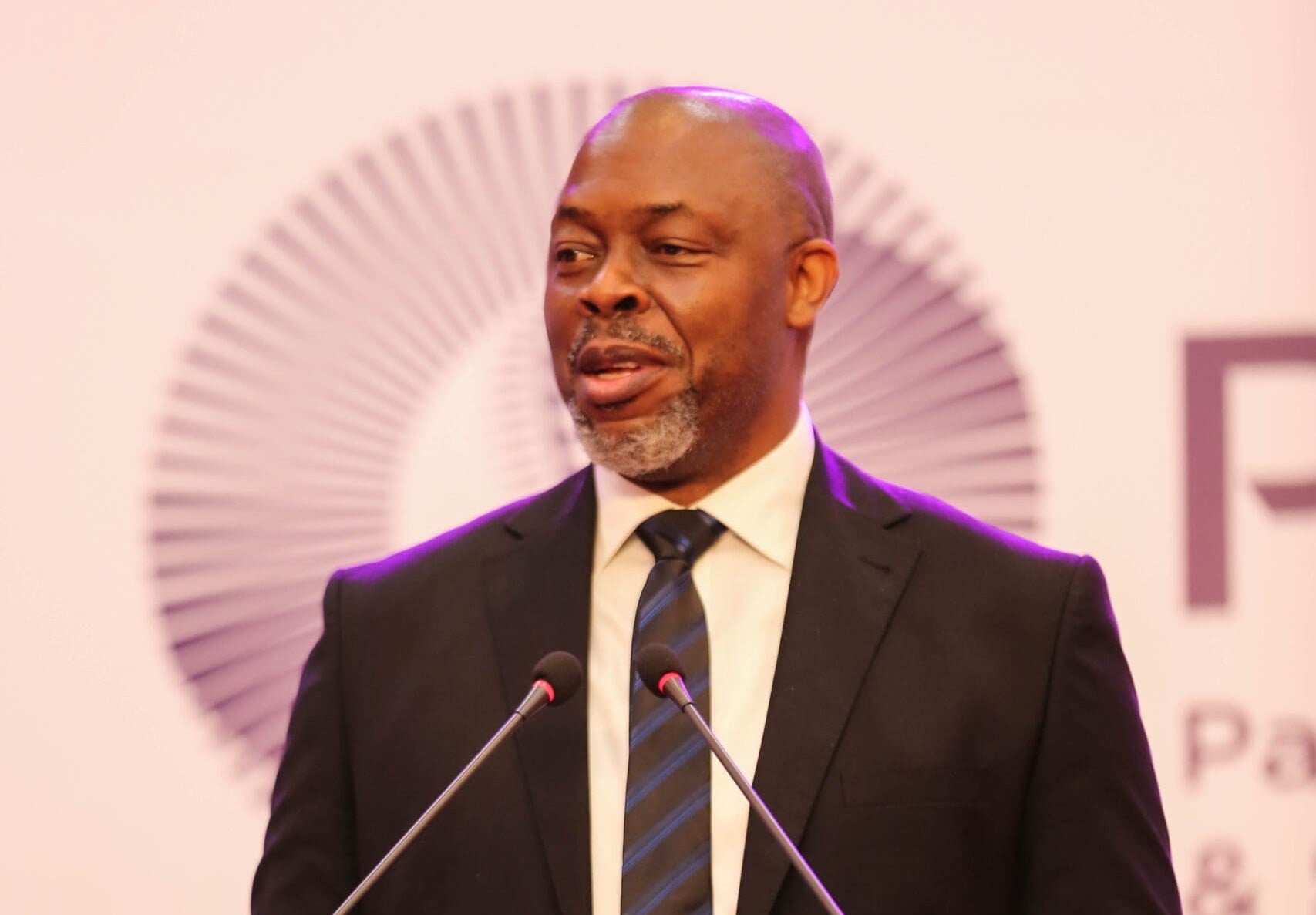
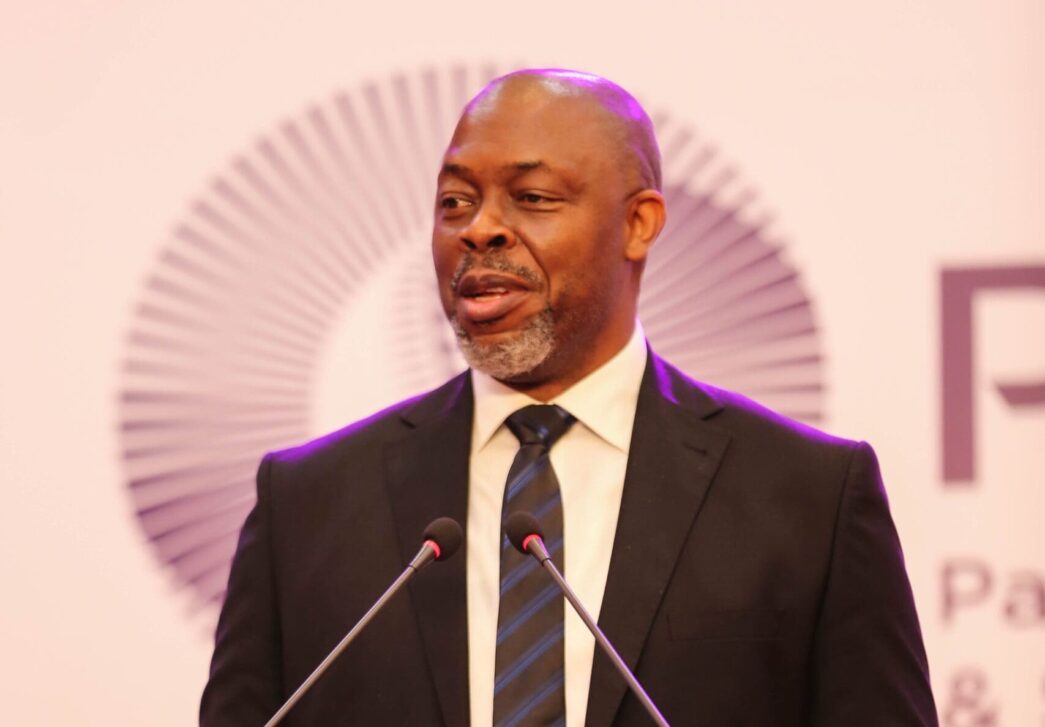
Mike Ogbalu, chief executive officer (CEO) of the Pan-African Payment and Settlement System (PAPSS)
Mike Ogbalu, chief executive officer (CEO) of the Pan-African Payment and Settlement System (PAPSS), says the platform has connected 19 African countries and 160 commercial banks, with plans to expand coverage to about 40 countries.
In 2022, the African Export-Import Bank (Afreximbank) launched the PAPSS, a financial market infrastructure, to enable cross-border payments in local currencies across different markets on the continent.
Speaking on Tuesday at the inaugural and official launch of PAPSS Cowry conference on worldwide and regional payment in Lagos, Ogbalu linked the vision behind the payment system to Africa’s long history of fragmentation.
He said the continent’s trade challenges can be traced to the 1884 Berlin conference, where 14 countries “divided Africa like a cake”, creating borders that split ethnic groups and created 41 national currencies that struggled to interact.
Advertisement
The CEO said Africa’s post-independence leaders recognised this early, noting that one of the first resolutions of the Organisation of African Unity (OAU) in 1963 was the call for an African payment and clearing union — “the foundation of what PAPSS has now become”.
“We created it as an ecosystem that would have all of us together in a way that we are able to enable and empower each other, rather than compete with each other,” he said.
According to Ogbalu, PAPSS now enables cross-border payments in local currencies in not more than 120 seconds, while completing anti-money laundering checks, sanctions screening and fraud management within the same window.
Advertisement
“We’ve created this Pan-African payment rail that today has connected about 19 countries and we are looking forward to expanding this to about 40,” he said.
“And today, [it] has 160 commercial banks that are connected on this platform, and these are 160 of the leading and the best commercial banks across the continent.
“We are also now enabling fintechs and tech companies across the continent to be able to make payments in one market and terminate it in the other market.”
The CEO said the payment system has lowered transaction processing costs to “as low as 10 percent” of existing alternatives — a shift he said is already improving margins for banks.
Advertisement
“Most importantly, we have built this infrastructure so that a tech company also, in one part of Africa that has an innovation, is able to plug its innovation in one part of Africa and is able to actually do business with every other part of Africa,” Ogbalu added.
Beyond institutions, he said the system was designed to empower small businesses seeking access to regional markets.
The PAPSS chief said Cowry, the newly launched PAPSS event, would serve as a platform for Africans to exchange ideas and define what payments should look like “in our own language”.
He urged stakeholders to “partner, co-create and own” the system, saying sovereign payments are critical for Africa’s economic survival.
Advertisement
‘PAPSS STANDS AT CENTRE OF AFRICA’S FINANCIAL INFRASTRUCTURE’
Also speaking, Haytham El Maayergi, executive vice-president (EVP) of global trade bank at Afreximbank, says the PAPSS stands at the centre of Africa’s new financial infrastructure.
Advertisement
He said the system eliminates unnecessary foreign exchange (FX) conversions, cuts settlement time from days to seconds and reduces costs significantly.
“It brings, certainly, the liquidity and the confidence to African businesses, from SMEs to major corporates,” he added.
Advertisement
Maayergi said the payment system is also powering new tools such as the PAPSS African currency marketplace, which allows corporates to manage liquidity and optimise currency positions across African markets.
Advertisement