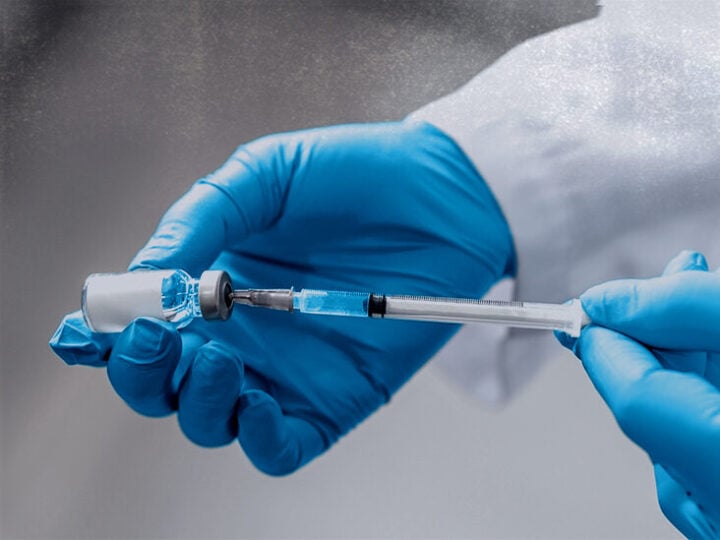
The National Primary Health Care Development Agency (NPHCDA) says 202,860 children have so far received the malaria vaccine in Kebbi and Bayelsa.
Rufai Ahmed, director of disease and immunisation at NPHCDA, announced the figure during a media briefing in Abuja on Tuesday.
“We started the malaria vaccination in Kebbi and Bayelsa because those were the states we identified as having a high burden. So far 202,860 children in Kebbi and Bayelsa have been reached with malaria vaccines,” he said.
In December 2024, the federal government began malaria vaccination in Kebbi and Bayelsa after it received 846,000 doses of the R21 vaccine from Gavi, the vaccine alliance organisation.
Advertisement
Muyi Aina, NPHCDA executive director, said experts advised the government to focus on the highest priority locations, which led to the exercise beginning in the two states.
The R21/Matrix-M, developed by scientists at Oxford University, and endorsed by the World Health Organisation (WHO), is used for the prevention of malaria in children.
On the agency’s wider immunisation strategy, Ahmed said the NPHCDA has made particular efforts to identify and vaccinate Nigeria’s estimated 2.1 million “zero-dose” children, who have not received any routine vaccines, especially the pentavalent vaccine, by age one.
Advertisement
He said zero-dose children are found nationwide, from urban slums to remote rural areas, but are heavily concentrated in Sokoto, Kebbi, Zamfara, Kano, Jigawa and parts of the north-east, especially in communities affected by insecurity.
To bridge the gap, he said NPHCDA has launched targeted outreach programmes, expanded house-to-house enumeration of children under five, and integrated routine immunisation with other community health services.
“We have developed a strategy called ‘IEV’ — Identify, Enumerate and Vaccinate. It means going house to house, listing children by name and tracking them until they are vaccinated,” he said.
“Between July last year and October, we reached over 500,000 zero-dose children.”
Advertisement
‘WE USE MILITARY IN DIFFICULT AREAS’
Ahmed disclosed that in communities affected by banditry and insurgency, NPHCDA relies on the support of vigilantes, traditional leaders and, in the most insecure locations, the military.
“In the areas that are significantly compromised, services are very limited,” he said.
“We work with vigilantes. In the real difficult areas, we use the military. We work with the military; they go into these areas and help us.”
Advertisement
Also speaking, Ngozi Nwosu, director of primary health care systems development at NPHCDA, said states have recruited 5,670 frontline health workers between January 2024 and December 2025, while 27,086 community-based health workers have been engaged across 16 states.
Nwosu said the agency has trained over 70,000 frontline health workers as part of a major upskilling drive and is promoting measures to retain staff, including improved remuneration, accommodation at primary health centres and rural posting allowances.
Advertisement
She added that the introduction of an e-learning platform is helping workers acquire skills through short, scenario-based mobile lessons.
Advertisement