BY LEKAN OLAYIWOLA
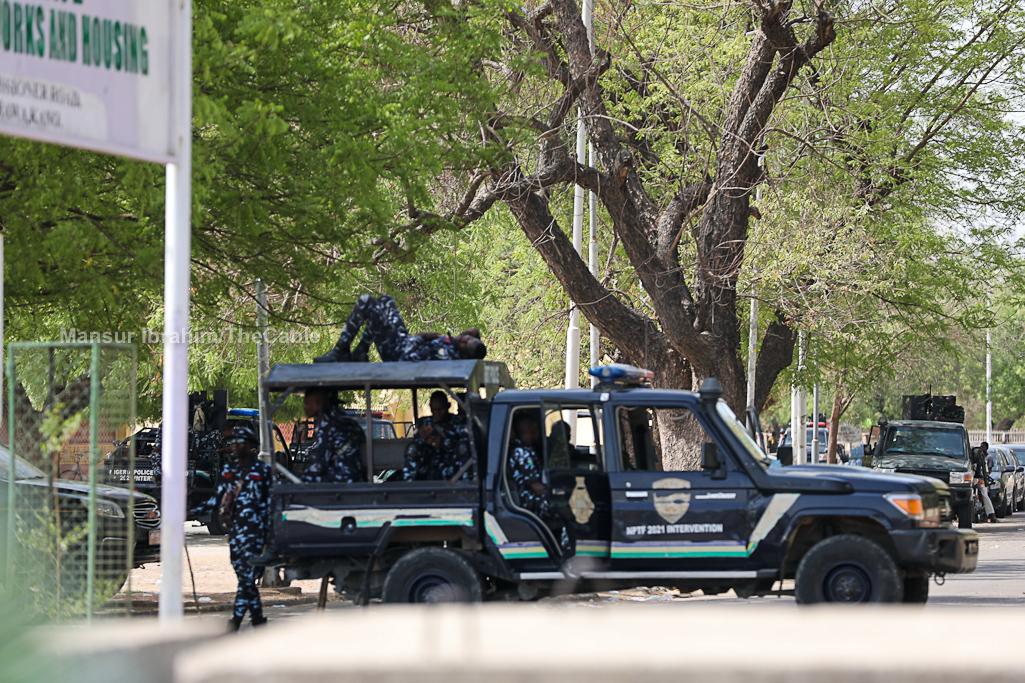
While an elite’s convoy moves with several armed escorts, a family in Kaduna may wait hours after reporting a kidnapping, hoping an overstretched police unit arrives. This illustrates Nigeria’s security inequity. With a police-to-citizen ratio below the UN threshold and nearly 30 per cent of officers assigned to VIPs, protection is uneven, shaping public trust and perceptions of fairness.
The mismatch between threats and policing allocation erodes confidence and fuels resentment. The President’s directive to redeploy officers from VIP duty addresses a long-standing concern, but past attempts in 2009, 2012, 2019, and 2022 show entrenched expectations, poor coordination, and officers’ reluctance to lose economic and social incentives.
The Structural Logic behind VIP Protection
Advertisement
Over the last two decades, VIP policing has evolved beyond an operational task into an informal institution of political reassurance. It is not simply about providing security, but a mechanism for maintaining political cohesion, signalling loyalty, and sustaining coordination networks across government and business sectors.
The assignment of officers to VIPs often ensures that key decision-makers remain accessible and that sensitive information flows through trusted personnel. Recognising the adaptive function of VIP protection helps clarify why the practice endures despite repeated reform efforts. VIP escorts also carry symbolic significance. Civil society studies and ethnographic research show that many requests stem from protocol rather than specific threats.
In a status-sensitive society, the visible presence of armed protection functions as a marker of office and authority, signalling power to constituents, rivals, and subordinates. For many citizens, the sight of an escort is an implicit confirmation that the officeholder commands respect and commands state resources, reinforcing social hierarchies.
Advertisement
Socio-Economic Realities around VIP Posting
For many officers, VIP deployment provides supplementary income—stipends, fuel support, and occasional gifts—that help bridge gaps created by salaries that have not kept pace with inflation. In practical terms, VIP attachments often constitute one of the few avenues for predictable extra financial benefits, which can offset the challenges of working in under-resourced communities.
Removing such postings without strengthening welfare provisions creates understandable anxiety, even among officers committed to public safety. In essence, VIP deployment functions as both a career incentive and a form of risk-sharing: officers perceive the protection detail as safer, better compensated, and socially prestigious. Any reform strategy that ignores these economic and social realities risks being resisted silently and subversively, leading to partial compliance or circumvention.
In Nigeria, escorts serves as a quiet signal of inclusion, assurance, or continuity. Their presence conveys political loyalty, protects against bureaucratic or partisan pressures, and signals that the officeholder is “connected” to influential networks. Their withdrawal, if not clearly explained and applied consistently, may be perceived as a political message rather than an operational adjustment.
Advertisement
Why Previous Reforms Stalled
Past directives reveal predictable implementation barriers. Redeploying officers requires coordination across multiple commands, which introduces opportunities for uneven application. During this process, exemptions inevitably accumulate, stemming from legitimate security concerns, official travel schedules, or political events.
Over time, these exemptions dilute the intent of reform, leaving only partial shifts and creating the appearance of compliance without substantive change. The lack of a robust monitoring framework further exacerbates this dynamic, allowing local commanders to maintain discretionary authority over officer assignments, often in response to informal pressures from powerful figures.
Governors, judges, legislators, and other officeholders often face genuine risks from criminal gangs, political rivals, or communal conflicts. Their appeals for continued protection are rooted not in privilege but in experience. Without a transparent framework that allocates protection based on verified threat levels, a blanket withdrawal policy naturally encounters friction.
Advertisement
Moreover, the complex interplay between federal and state security responsibilities in Nigeria, where policing authority is shared but unevenly funded, complicates enforcement. Reform must therefore contend with decentralised political authority, varying threat environments, and the legacy of informal practices that have become institutionalised over decades.
Reforming Incentives to Make Change Durable
Advertisement
The current directive can succeed where others have stalled by reshaping the incentives that sustain VIP deployment. Welfare reform is foundational. When officers have stable, predictable compensation, access to health care, pension security, and improved working conditions, the economic case for VIP attachment diminishes. This strengthens the professional appeal of community policing roles, making officers more willing to serve in frontline deployments, including high-risk rural or urban areas. This reorients policing culture toward public service rather than elite accommodation, fostering professionalism, accountability, and equity.
A threat-graded protection model would further depoliticise decisions. Kenya applied such a framework after 2017, reducing VIP protection allocation by roughly 40 per cent while maintaining security for high-risk officials. South Africa uses periodic audits to review assignments, ensuring that escorts remain tied to specific events or verified threats.
Advertisement
These examples demonstrate that rebalancing is possible when risk assessment is transparent, data-driven, and institutionalised. For Nigeria, such a framework would require integrating intelligence analysis, local policing data, and operational planning into a unified decision-making process, ensuring that resources are allocated rationally rather than arbitrarily.
Towards Institutional Design
Advertisement
Centralising and digitising escort approvals would reduce pressure on police leadership and limit discretionary interference. A digital log recording each assignment, including duration, justification, and renewal, introduces clarity and accountability. Standardised protocols reduce informal bargaining and patronage, while regular audits ensure deployments remain time-bound. Transparent reporting strengthens public confidence in fairness and impartiality.
Equally crucial is strengthening community policing: visible patrols, faster response times, and consistent local engagement signal real improvements. Citizens who see tangible police presence are more likely to support reduced VIP-specific deployments, recognising equitable security delivery. Over time, trust in law enforcement grows, political pressure for symbolic protection diminishes, and community policing reinforces legitimacy, allowing officers to prioritise preventive and responsive tasks over status-driven assignments.
A Pathway to Ending Security Inequity
Ending VIP policing does not mean denying legitimate protection. It means allocating safety rationally and transparently, rather than through informal norms, personal connections, or economic necessity. By aligning welfare reform, institutional design, risk-assessment frameworks, and public expectations, Nigeria can build policing where officials and citizens feel genuinely protected.
Reforms must be phased and closely monitored, blending top-down directives with local accountability and active stakeholder engagement. Though transformation will take time, it is achievable. If implemented with care, the current directive could deliver lasting change. To ensure policing becomes a public good rather than an elite privilege, transparent, evidence-based reforms are essential—rebuilding public trust and shaping a system that serves all Nigerians for generations.
Lekan Olayiwola is a peace & conflict researcher/policy analyst. He can be reached at [email protected]
Views expressed by contributors are strictly personal and not of TheCable.