BY JUNAIDU MAINA
“If you want to bring a fundamental change in people’s beliefs and behaviour, you need to create a community around them where those new beliefs can be practised, expressed, and nurtured.” Malcolm Gladwell
Nigeria’s renewed push to revive grazing reserves is both timely and necessary. Rising farmer–herder conflicts, shrinking rangelands, climate pressure, insecurity, and rapid population growth have rendered the current production system untenable in many parts of the country. Few Nigerians would dispute the urgency of the reforms currently being undertaken by the Federal Ministry of Livestock Development.
History offers a clear—and uncomfortable—warning: grazing-reserve development alone will not transform Nigeria’s national herd. In recent years, misuse of infrastructure and rising rural insecurity have forced many pastoralists out of formerly developed grazing reserves. Some of these reserves have become ungoverned spaces and refuge for non-state armed actors and sites of accelerating environmental degradation under climate change pressure—an unmistakable case of the tragedy of the commons.
Advertisement
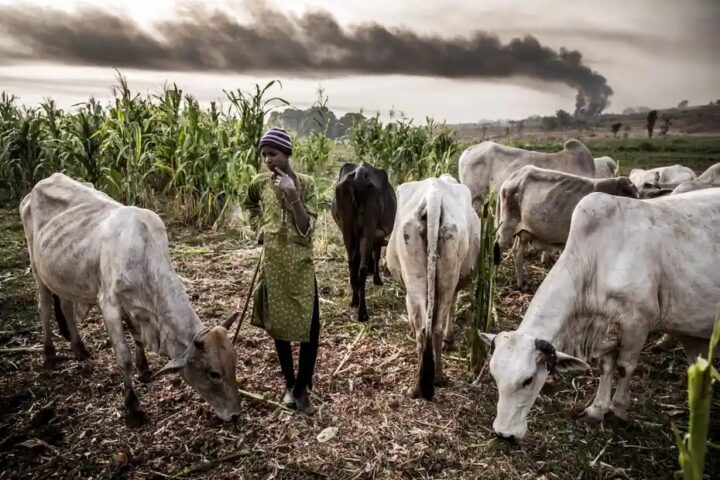
Given the size of Nigeria’s national herd, the country’s roughly 417 grazing reserves—covering about 4.5 million hectares—cannot accommodate all cattle. They should therefore be seen as proof-of-concept for sedentary intensive cattle production.
Nigeria Has Been Here Before
After the enactment of the 1965 Northern Nigeria Grazing Reserves Law, governments at all levels—backed by donors and the World Bank—had carried out one of Africa’s boldest efforts to settle nomadic pastoralists. Across the 19 northern states, grazing reserves were gazetted and equipped with pastures, water, roads, veterinary clinics, and management structures. Pastoralists were urged to settle—and many did.
Advertisement
The expected large-scale transformation of the national herd within grazing reserves never materialised. Instead, many pastoralists remained outside, increasingly settling as agropastoralists—acquiring land or negotiating access with host communities, often with cattle partly owned by local investors. Clusters of such settlements now exist nationwide—not only in the North—including the Iseyin–Igangan axis in Oyo, the Adada–Nkpologu–Adani–Iggah corridor in Enugu, and the Awgu–Nkanu–Abakaliki axis in Ebonyi states, alongside peri-urban farms around major cities, some with exotic breeds
Yet national herd productivity remains low, off-take rates have stagnated, and even modest private investments—peri-urban farms and agropastoral herds—have been undermined by cattle rustling and increasing threat of open-grazing bans. As a result, private capital has stayed away from cattle production, leaving Nigeria dependent on milk imports and unable to meet domestic beef demand.
For most small-scale producers, cattle remain assets of status and security rather than production units. As a result, even where infrastructure improved, private investment and modern herd management were absent—the production model remained unchanged. However, as the saying goes, even after a poor harvest, there must be sowing.
Poultry Tells a Different Story
Advertisement
Nigeria’s poultry sector offers a powerful contrast. In the 1970s, poultry production was largely a village-based, family activity—dominated by scavenging birds, high mortality, and low output. Its eventual transformation was not driven by large government estates or expansive public infrastructure, but by deliberate State-level facilitation and targeted private-sector investment.
State-owned Poultry Production Units (PPUs) served as demonstration hubs, translating commercial poultry practices into scalable models for small-scale producers—particularly women—thereby fostering inclusive, market-oriented livestock transformation.
Entrepreneurs—individuals, families, and companies—invested private capital and adopted improved commercial breeds, biosecurity, formulated feeds, appropriate housing, systematic record-keeping, rapid production cycles, and were serviced by private veterinarians. Losses were measured, profits mattered, and production decisions were guided by market signals, input costs, and disease risks.
Today, poultry is Nigeria’s most commercialised, scalable, and resilient livestock subsector. In Nigerian lingo, commercial poultry has acquired “federal character”—widely adopted across states—while coexisting peacefully with rural family poultry, thereby expanding Nigerians’ culinary choices. This is a classic, home-grown technology transfer.
Advertisement
Reinventing Grazing Reserves and Out-of-Reserve Production Systems
Nigeria’s livestock reform must go beyond the easy provision or rehabilitation of physical infrastructure alone. Experience shows that facilities without changes in production biology, incentives, and market orientation yield little impact. Grazing reserves should be reimagined as commercially driven livestock production zones, underpinned by modern management.
Advertisement
They should be revitalised through targeted rehabilitation of key infrastructure and herd restocking for pastoralists affected by rural banditry, the establishment of large-scale cow–calf and start-up ranches, and management by organised producers and investors via cooperatives and out-grower schemes, all fully integrated. However, part of each reserve should be retained as a permit-based last-resort refuge during the dry or cropping season for communal use.
Agropastoral herds and peri-urban farms outside grazing reserves should also be upgraded and promoted as scalable models of dairy and beef cooperatives, linked to cow–calf ranches through out-grower schemes to also become a regular source of quality breeding stock for new start-up farms.
Advertisement
Properly restructured, reinvented grazing reserves and upgraded agropastoral systems can drive sedentarisation, reduce long-distance transhumance, ease conflict, and unlock investment.
Monoculture and Social Re-engineering
Advertisement
Historically, pastoralists paid jangali (cattle tax) and other levies in return for state protection—an essential bargain for mobile communities whose livelihoods depended on security. The collapse of local governance, compounded by the abolition of jangali, eroded this social contract. This dismantled the regulatory structure of peaceful transhumance and pushed pastoralists toward self-help and informal security, contributing to rising criminality.
In the past, social safety nets also existed. When a pastoralist lost his herd to disease or natural disasters such as drought, he settled temporarily as a crop farmer, rebuilding his stock through hard labour and support from relatives. Once his herd recovered, he returned to pastoralism—sometimes abandoning his crops altogether. This reality underpins the saying that “when a pastoralist loses his cattle, he degenerates into a crop farmer.” For him, success lies in handing over a larger and improved herd to the next generation—a belief he continues to protect.
Pastoralism relies on highly refined skills—navigation, animal handling, and movement tracking—that once helped herders recover lost or stolen cattle in systems where low-level rustling was historically managed. Under insecurity and weak governance, these same skills have been hijacked by criminal actors and repurposed for organised crime, notably kidnapping—a classic case of criminal specialisation. As the Broken Windows theory reminds us, crime spreads when left unchecked. The national security implications are profound and demand urgent, sustained policy action.
In conclusion, cattle may be harder, but the lesson is the same: apply the principles that transformed poultry or accept stagnation. Without this shift, grazing reserves—no matter how well rebuilt—will remain monuments to good intentions, not drivers of national herd transformation.
Junaidu A. Maina can be contacted via [email protected]
Views expressed by contributors are strictly personal and not of TheCable.