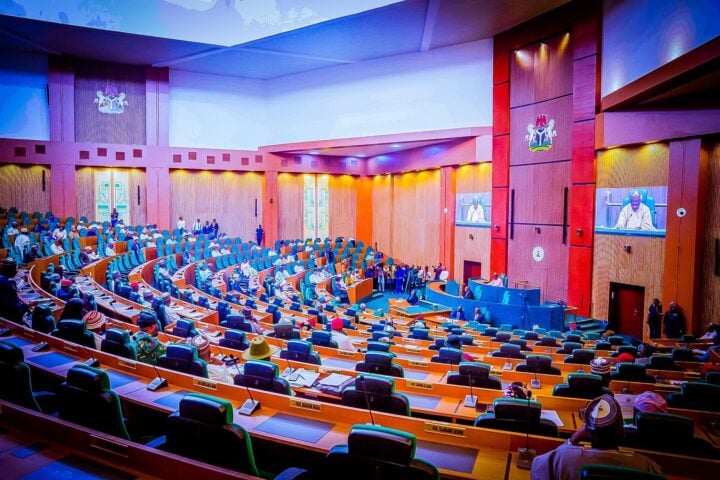
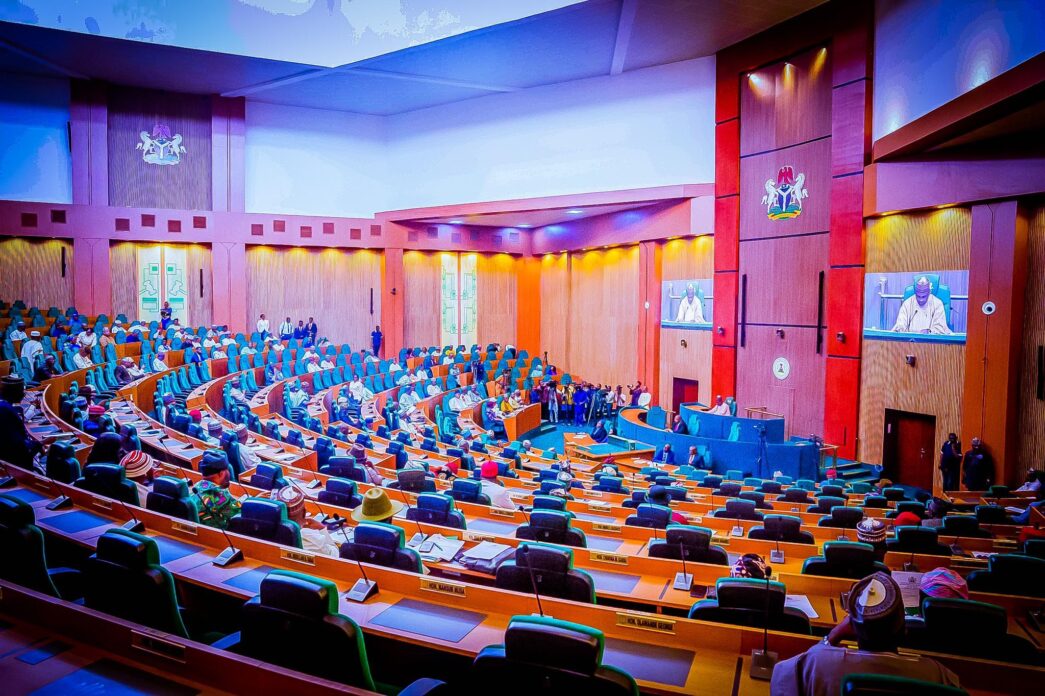
The house of representatives
Saidu Abdullahi, a member of the house of representatives, says the committee on finance could not conduct a thorough review of the 2026–2028 medium-term expenditure framework (MTEF) due to the last-minute submission to the parliament.
Abdullahi, who is the deputy chairman of the committee, spoke during Wednesday’s plenary after Tajudeen Abbas, speaker of the house, queried the panel’s report on MTEF.
Last Thursday, President Bola Tinubu transmitted the 2026-2028 MTEF and fiscal strategy paper (FSP) to the national assembly for consideration and approval.
On Tuesday, the committee on finance held an interactive session with heads of ministries, departments and agencies (MDAs) on the MTEF.
Advertisement
On Wednesday, James Faleke, house committee chairman on finance, presented a report on the MTEF to the house for consideration.
Faleke said the executive proposed projected crude oil benchmark prices of $64.85, $64.30, and $65.50 per barrel for 2026, 2027, and 2028, respectively, but the committee reduced them to $60 for 2026, $65 for 2027, and $70 for 2028.
He attributed the reduction to the global geopolitical tensions in Europe and the Middle East and the sensitivity of the global crude oil price.
Advertisement
Faleke said the projection for domestic crude oil production for 2026, 2027 and 2028—1.84 mbpd, 1.88 mbpd and 1.92 mbpd—proposed by the executive should be sustained.
The lawmaker said the projected exchange rates for 2026, 2027 and 2028, which are N1,512, N1,432.15 and N1,383.18, respectively, should be sustained in line with the Central Bank of Nigeria’s (CBN) policy to stabilise the naira and promote effective fiscal and monetary policy coordination.
He said the inflation rate projections for 2026, 2027 and 2028, which are 16.5 percent, 13 percent and 9 percent, respectively, should be sustained based on the commitment of the nation’s monetary policy authority to moderate inflationary pressure.
He said the gross domestic product (GDP) growth rates projected at 4.68 percent, 5.96 percent and 7.9 percent for 2026, 2027 and 2028, respectively, should be sustained in anticipation of the gains from tax reforms.
Advertisement
Faleke said the 2026 budget framework, which proposes total spending of N54.46 trillion—including N34.33 trillion in revenue, N17.88 trillion in domestic and foreign borrowings, and N15.52 trillion for debt service—should be retained.
He said the pensions, gratuities, and retirees’ benefits, estimated at N1.376 trillion, should be sustained, alongside the fiscal deficit, which stands at N20.13 trillion.
The lawmaker said the capital expenditure (excluding transfers) of N20.131 trillion, statutory transfers of N3.152 trillion, and a sinking fund projected at N388.54 billion should be sustained, adding that the total recurrent (non-debt) expenditure of N15.265 trillion, as well as special interventions of N200 billion for recurrent spending and N14 billion for capital projects, should also be maintained.
ABBAS’ OBJECTION
Advertisement
However, the speaker expressed reservations about the plan, noting that the $60 oil benchmark proposed by the committee would result in a deficit and would impact projected revenue from the oil and gas sector.
“This would affect the N54 trillion 2026 budget being proposed. I thought your committee should have identified ways to increase domestic revenue or advised that any resulting deficit be covered through domestic and international loans. Leaving it as it is makes the work incomplete,” Abbas said.
Advertisement
Faleke defended the committee’s proposal, saying the government expected the tax reforms to take effect from January, which would increase revenue.
But Abbas countered the lawmaker, saying he should not assume.
Advertisement
“The executive must have also factored in the increase in revenue coming from the revised tax laws before they even brought their MTEF,” the speaker said.
“That is fundamental. If we still believe the $54 trillion is realistic, it is our responsibility to determine where we accommodate the shortfall.”
Advertisement
‘WE DIDN’T DO DETAILED WORK’
Abdullahi said the limited time available to the committee to review the MTEF, due to the president’s request for expedited consideration, prevented it from carrying out a detailed assessment.
“You will recall that about two weeks ago, we met with the economic management team, including the minister of finance and budget and the director-general of the budget office,” he said.
At that meeting, I noted that it was not appropriate for the committee to receive key documents so close to the deadline,” he said.
“Under the Fiscal Responsibility Act, we ought to have received this document in September, but it only arrived last week. This delay has denied the committee adequate time to conduct a detailed analysis of the proposals.”
Following the exchange, the house, at Faleke’s request, stepped down consideration of the report until Thursday.