BY OLÚFÉMI TÁÍWÒ
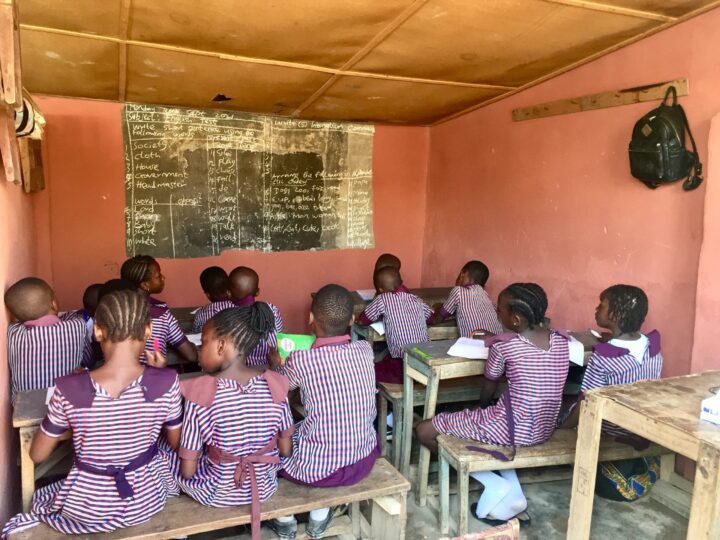
I have been monitoring the many reactions to the announcement of a momentous change in public policy on November 13, 2025, by the Honorable Federal Minister of Education of Nigeria, Dr. Tunji Alausa. According to the minister, the federal government has scrapped, countrywide, the policy that mandated that schools teach our children in primary schools or the first three years of basic education in our respective mother-tongues. The preponderant reaction has been condemnatory. I hasten to point out that at least one commentator has welcomed the reversal in this report.
Much has been made of the irony involved in the announcement being made at a gathering on Language in Education hosted by the British Council in Abuja. This, for many, was emblematic of the colonial mentality that continues to afflict us sixty-five years after independence. Shame on us, many conclude, that we continue to be under the thumb of colonialism and daring to reject our inheritance while promoting that of our erstwhile colonisers.
A graver reaction that excoriates the minister and the government he works for turns on the insistence that language is the quintessence of our sheer humanity and our very identity when it comes to our respective human tribalisms, be those Yorùbá, English, or Mongolian.
I am in full agreement with those who accuse the minister of a singular lack of self-awareness respecting the aegis under which he announced the momentous decision. It is the graver objections that I wish to address in this discussion. I am convinced that this is one of those situations where we are summoned to careful consideration and deep thinking before reacting to the scrapping of the policy under reference.
Advertisement
I would like to submit that the decision to scrap the policy of using mother-tongues in basic education is the right one. But, doubtless, it is based on the wrong reasons. In the rest of this piece, I challenge us to examine whether our much-ballyhooed—if some of the responses to the announcement are any guide—commitment to basic education in our mother-tongues rests on any solid ground beyond talk and our usual practice of investing in symbols while failing to give any serious thought to substance.
It is quite laughable of the minister to give as his reason for scrapping the policy the poor performances of students in various post-primary examination regimes conducted in the English language. Additionally, he suggests that our need to accelerate the expansion of science and technology’s footprints in our public life is being hampered by the policy. As all critics have pointed out, the minister has not offered serious evidence of the causal connection he assumes between the said poor performances and mother-tongue-inflected basic education. Unfortunately, in a similar lack of self-awareness, as afflicts the minister, many critics, too, who criticize him for not providing evidence to support his indictment of mother-tongue education have likewise not provided any evidence of mother-tongue education’s refutation of the minister’s assertion. They, instead, continually refer to the Six-Year Primary Education Project that was designed and executed by the Faculty of Education at the old University of Ife, now Obafemi Awolowo University, Ile-Ife, Nigeria, in the late sixties of the last century. Yes, later studies did confirm that no harm was done but I do not recall any big claim, short of extending its scope and moving on to secondary levels, regarding it being a huge causal factor in explaining the success of its recipients at higher levels. What is of moment is that this mutual engagement in evidence-less positions is not a promising way to go.
Let us now go into our main case for the claim that it is the right decision albeit motivated by the wrong reasons. I would not like to be misunderstood. I remain as committed as anyone else to having our mother tongues become central to not only our education system but also to our life in general—economic, social, political, name it! Any attempt to misread what I argue here as a lack of interest in, or support of mother-tongue education will be a mischief or sheer lack of understanding.
Advertisement
Let us be clear. There is no doubt that the ability to use language is one quality that sets us apart from our fellow inhabitants of the animal kingdom. But it is utterly fallacious to insist that any of humanity’s tribal tongues make its inheritors human. Conversely, it is no less fallacious to say that to deny us access and ability to use our tribal language takes away our humanity. I am arguing that what makes us human is the ability to use language, simpliciter. The adjectivized human that results from our acquisition of specific tribal tongues remains exactly that. That is, what language we use does not constitute our sheer humanity, only that language’s specific iteration of it. This fallacy has enjoyed too much unchallenged reign for too long. It is time to rest it. No, stopping Nigerian children from going to school in the language of their respective human tribe does not detract one bit from their humanity! Yes, it may impair their functioning as members of their original tribe but it, simultaneously, enables them to assume functioning membership of other tribes of humanity. They remain human.
What is more, there is no greater testament to the unicity of humanity than the fact that humans become very proficient in languages other than the ones they were born or originally socialized into for any number of reasons—migration, adoption, etc.—without having their human status eviscerated in any significant way. Even enslaved people who were turned into chattel in north America deployed that defining human capacity for acquiring and using language to become co-owners and often enough better users of the enslavers’ tribal language and turn it into some of the most profound accounts of what it is to be human and this they did while referring back to their original African antecedents for complex identities.
I conclude, based on the preceding, that the humanity of not a single Nigerian child is in danger of diminution, much less loss, on account of their not having access to the languages of their respective tribes. I am, for the purposes of this discussion, ignoring the presence of the demographic made up of those Nigerian children for whom English is their mother tongue!
Amílcar Cabral is more plausible on this score when he makes two points that need to be better known and appreciated when it comes to the matter of language and its place in our lives. Contrary to the “language is humanity” orthodoxy we just repudiated, Cabral argues that “language is an instrument that man created through labour, through struggle, in order to communicate with others.” If Cabral is right—he is not alone in this as many in the field from linguistics to philosophy would attest—then our argument should be about how well our chosen language serves this primary function. It needs be stressed that communication involves much more than conversation, singing, and liturgies. They also involve our communicating our explorations of the secrets of nature, both inside and outside us. In other words, language is pivotal in our engagement with science as the best tool to unravel nature and its ways.
Advertisement
This is what informed Cabral’s very startling claim concerning the legacy of Portuguese colonialism in his country. “We have to have a real sense of our culture. Portuguese [the language] is one of the best things that the tugas [the local term for Portuguese] left us, because language isn’t evidence of anything, but an instrument for men to relate with one another, a means for speaking, to express realities of life and the world.” This is the crux of our case here.
Once we get past the anxieties about identity that dominate the thinking of our intellectuals—definitely, not of ordinary folk—we can see how and why the termination of a policy that was built on nothing more than vapour and ideological self-deception plus a large dose of identitarian braggadocio may turn out to be the pause we need to take a hard look at what we are not doing.
How serious are we about mother-tongue education even at the most basic level in Nigeria? To start with, the unseriousness of the policy is easily seen in the reality that it is built on a WAZOBIA model of the country and the concurrent disenfranchisement of the hundreds of other mother tongues that dominate Nigeria’s linguistic space. Does any of the minister’s critics ever spare a thought for the fate of the country’s myriad so-called minor languages? Did anyone ever seriously consider that there was basic education in Edo, Urhobo, Itsekiri, Igala, Nupe, Gbagyi, Kamberi, or Efik, while the policy lasted? Or should we persist in the imperial begging of so-called minor cultures across the land?
The situation is much worse than we care about or permit ourselves to think. Our formal education model at the present time requires much more than colloquial competence in our languages and orality to deliver it. Yet, once we get beyond the so-called major languages, how many of the remaining languages have scripts that can be deployed in instruction at the most basic level of education? Meanwhile, as far as I know, no government at any level in our country has any programmes dedicated to creating scripts for the many non-major languages in our land. Should this not bother us if we are serious about mother-tongue education? The shame lies in the fact that the only organization that continues to invest huge sums of money and other resources into creating scripts for some of our so-called minor languages is the Bible Society of Nigeria. No doubt, we can adapt their scripts to wider pedagogical purposes beyond religion and for this, we ought to be grateful to the Society.
Advertisement
A few years ago, Algeria decided to replace French with English as the second official language in their land. At the same time that this declaration was announced, 5,000 teachers of English were introduced into the education system. There you have a country that is in earnest about its education and the language in which life is delivered not to talk of communication across board beyond the education system.
I wish I could say the same about us. When several years ago, a Lagos State governor decreed that all students in the state’s schools should learn Yorùbá, it offered me an opportunity at that time to ask the questions that I am now willing to share with a larger audience beyond the friend to whom I originally offered them. The questions are now more urgent in light of the current situation.
Advertisement
I do not recall that governor announcing at that time the introduction of a new cohort of teachers of Yorùbá into the education system to facilitate the widespread tuition in the language that his policy would entail. I may have missed calls by those who are now fulminating about the scrapped policy asking the governor then: how was his policy to be delivered? And Yorùbá is one of the so-called major languages! I concluded then that that directive was a feel-good, “let’s promote our culture” proclamation built to fly on pneumatic power!
That is not even the worst part of it. Had our culture and mother-tongue promoting governor been willing to flood the system with teachers, I submit that he would have had to conjure them. How many graduates of Yorùbá language and literature do we produce annually? Of those, how many go into the teaching profession? It may be time to do a census of how many graduates of Yorùbá we produce annually and how many of those can we, going forward, expect to go into teaching? Meanwhile, we must simultaneously have some sense of how many students will need tuition in the language and at what levels annually so that we can begin to think about reward procedures to encourage otherwise reluctant students to take a chance on teaching Yorùbá as a preferred career. When we shall have established these figures, we hit the biggest problem of all: what resources, e.g., scholarships, do we provide for those who may want to take the plunge but do not think it is prudent to go into debt for such a course of study? How many of our critics of the scrapping of the policy would gleefully embrace their wards who tell them of their desire to study Yorùbá in college?
Advertisement
My take on the scrapping of the ill-conceived mother-tongue basic education policy is that it allows us the opportunity of a RESET, a needed pause to ask hard questions of how badly we handle issues of the gravest importance because we are easily swayed by symbol while we shun substance or refuse to let it get in the way of empty kudos for wishes that are no more than pure gas! I wish the preceding were the reasons adduced by the minister for the policy change. They would have offered better reasons for what, I remain convinced, is the right decision.
Táíwò teaches at the Africana Studies and Research Center, Cornell University, Ithaca, New York, U.S.A. He can be reached at [email protected].
Advertisement