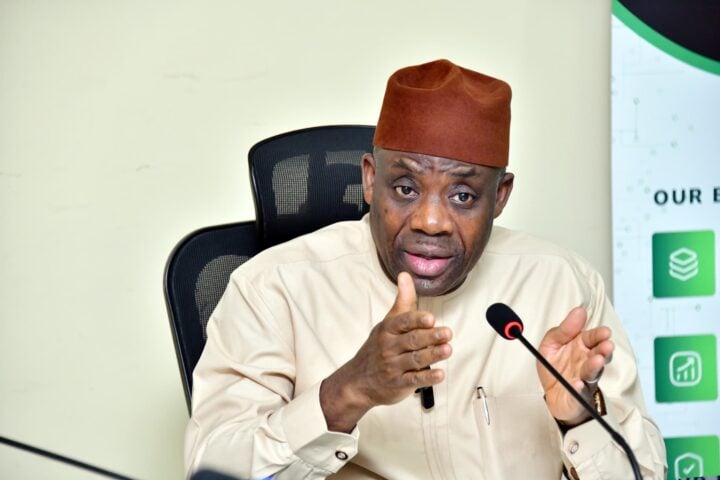
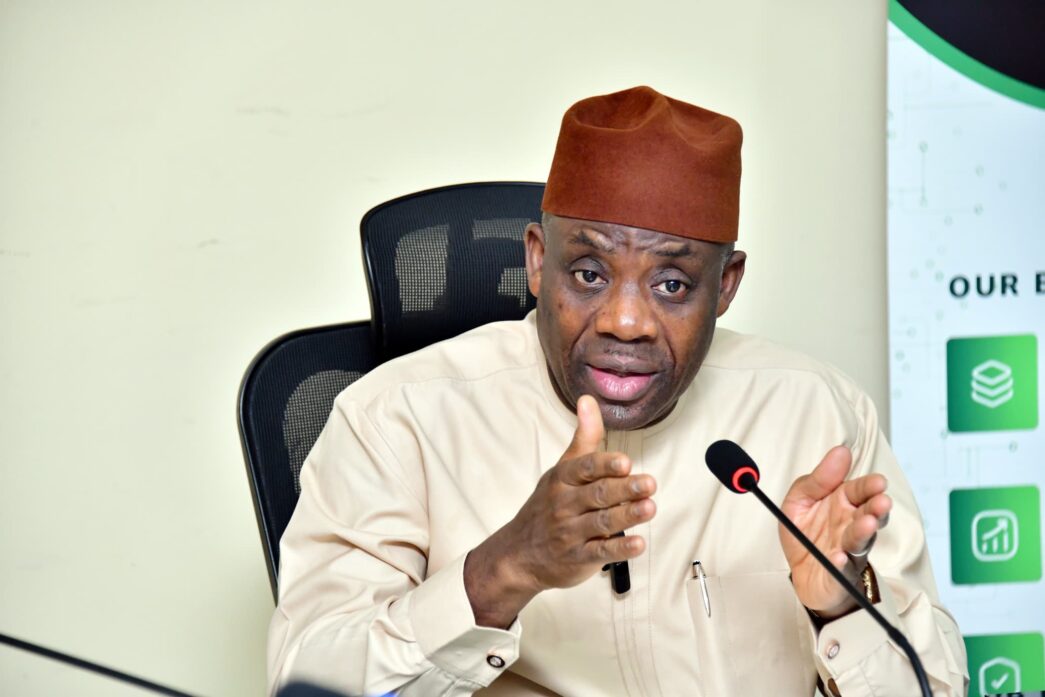
Tunji Alausa, minister of education
The senate has summoned Tunji Alausa, minister of education, and Amos Dangut, head of the national office of the West African Examinations Council (WAEC), over new guidelines for the 2025/2026 senior secondary certificate examination (SSCE).
The resolution followed a motion sponsored by Sunday Karimi, senator representing Kogi west, who said the guidelines altered subject requirements for the senior secondary students preparing for the 2025/2026 May/June examinations.
Karimi warned that the sudden changes to the guidelines could lead to mass failure, noting that candidates would be compelled to sit for papers for which they were not adequately prepared.
“The guidelines require that all SS3 students nationwide are required to adopt the new curriculum immediately, despite the fact that the guidelines were initially scheduled to operate in the next two years and be applicable to pupils who are currently in SS (senior secondary school) one and who are scheduled to write WAEC SSCE in 2027/2028,” he said.
Advertisement
“Subjects such as computer studies, civil education and ‘all previous trade subjects’ have been removed from the WAEC (West African Examination Council’s) senior secondary school certificate examination, as the courses are no longer offered nor to be examined in the exams slated for May/June 2026, despite years of preparation by senior secondary school pupils in Nigeria.
“With the removal of these three subjects (computer studies, civic education and all previous trade subjects), all pupils across all specialisations and combinations (be it sciences, humanities or business courses) are left with a maximum of just six courses each, despite the examination council’s requirement of a minimum offering of eight and maximum offering of subjects/courses for WAEC senior secondary certificate registration and examination.
“This implies that each pupil will have between two and three courses to be examined upon in May/June next year, despite never offering the courses before and with abysmal preparation.
Advertisement
“Although the introduction of new trade subjects such as beauty and cosmetology, fashion design and garment making, livestock farming, computer hardware and GSM repairs, solar photovoltaic installation and maintenance, and horticulture and crop production are commendable, insisting that students without prior education on these subjects should be examined thereon in May/June 2026 will have negative implications on the students’ exams and quality of examination results and standards.”
Adams Oshiomhole, senator representing Edo north, cautioned against imposing the new guidelines on the current SS3 class.
“We wake up and think of an idea and begin to implement it. For a new subject to start, the citizens should be well-informed to prepare for it,” Oshiomhole said.
“Do we have enough teachers? Have we prepared the laboratories? That evidence doesn’t exist. We don’t have to plan in a manner that will cause us embarrassment.”
Advertisement
Idiat Adebule, senator representing Lagos west, said the matter should be thoroughly investigated, noting that the national council on education is usually involved in such decisions.
Solomon Adeola, senator representing Ogun west, said students must be properly taught before being examined.
“Students need to have prior knowledge of the new subjects before they can be examined on them by WAEC. So, the minister of education has some questions to answer,” Adeola said.
Senate President Godswill Akpabio queried the removal of computer studies and civic education from the subject list.
Advertisement
“Everything is going digital. So why are we removing computer studies and civic education?” he said.
“The children need to know their national anthem and their civic obligations to their nation.
Advertisement
“In any case, we should conduct a proper investigation to be sure that this information is even correct.”
The matter was referred to the senate committee on basic and secondary education to report back to plenary in two weeks.
Advertisement