Tajudeen Abbas
BY LEKE BAIYEWU
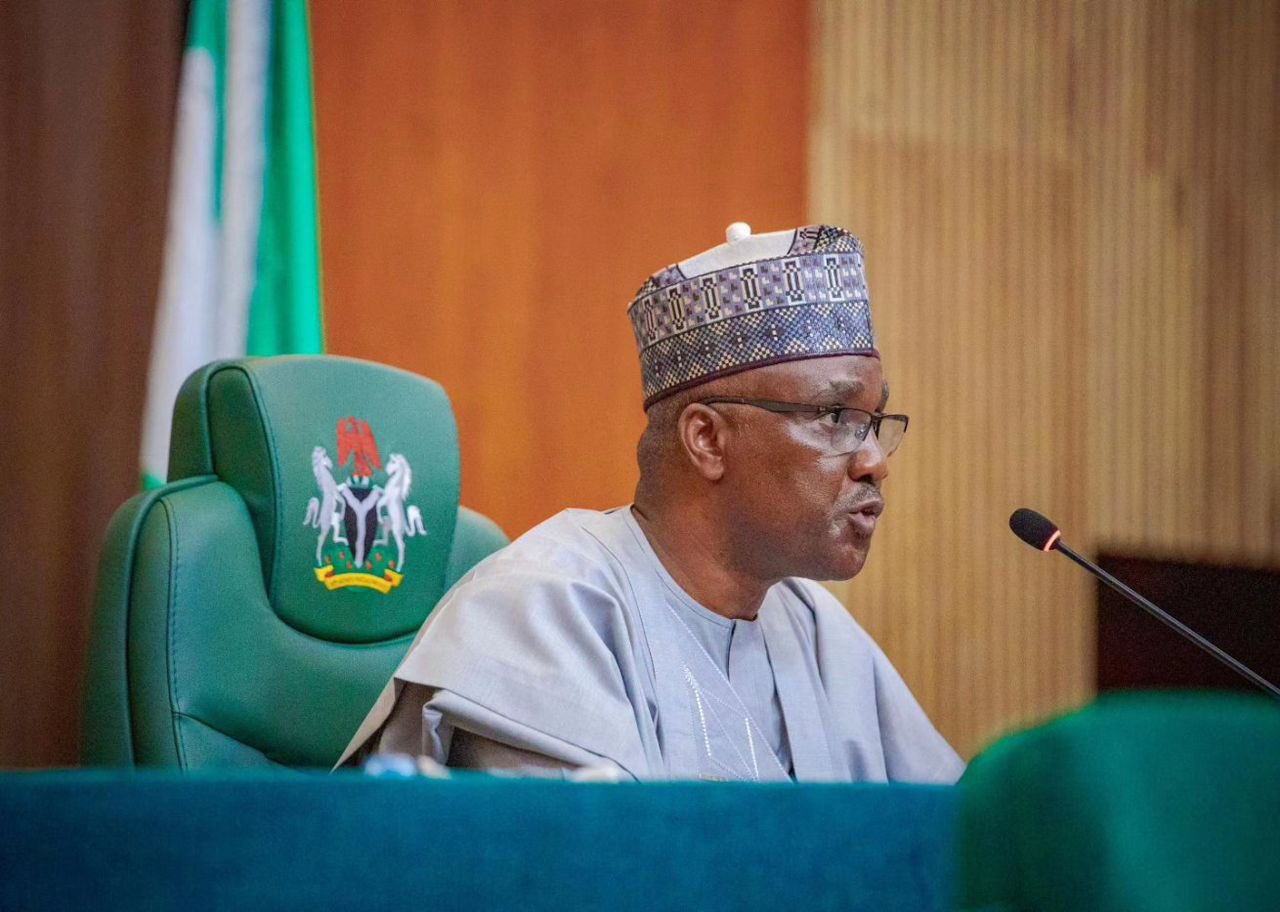
Nigerians are on the verge of reaching a major milestone in the nation’s history as the national assembly is about to vote on bills seeking various amendments to the 1999 Constitution. Among these amendment bills is the Special Seats Bill (HB1349), which seeks to empower women in politics and governance. This particular legislation has attracted a lot of attention, especially with the particular interest shown by the speaker of the house of representatives, Abbas Tajudeen. Speaker Abbas has taken the campaign for gender equality and justice to different fora, both local and international. Indeed, the Speaker has worn his ‘He-for-She’ toga with pride and candour.
What are the proposals really all about? The Speaker succinctly explained the proposal on July 23, 2025, when addressing stakeholders at the Town Hall and Strategic Round Table on the Reserved Seats for Women Bill. He said, “As you are all aware, the statistics on women’s under-representation are dismal. That is why the current proposals before the National Assembly on greater women’s inclusion are both urgent and pragmatic. There are several related bills before the National Assembly, and we must understand their precise content. HB 1189, HB 1349, and HB 1421 each propose, in addition to the current three senators from each state and one senator from the Federal Capital Territory, one additional senator for each state and for the FCT who shall be a woman.
“For the House of Representatives, HB 1189 and HB 1421 propose, in addition to the current 360 members, two additional members for each state and the FCT who shall be women, while HB 1349 proposes one additional Member for each state and the FCT who shall be a woman. For the State Houses of Assembly, both HB 1189 and HB 1349 propose one additional member from each of the three senatorial districts in the state who shall be a woman. To accommodate these changes, all three bills propose that the Independent National Electoral Commission shall divide each state into two federal constituencies to be occupied by women.”
Advertisement
He added, “Another proposal, HB 1811, seeks to establish six special seats in the House of Representatives for each of two special interest groups: women and persons living with disabilities, distributed evenly across the six geopolitical zones. It further provides that aspirants to these special seats shall meet all other qualifications for regular seats. It recommends a regional electoral college for each geopolitical zone, comprising all national officers of the association from the states within the zone, to determine the final representatives for the special seats.
Speaker Abbas explained that a woman aspirant might be required to campaign across an area larger than a single federal constituency, possibly the size of a whole senatorial district or even more. This, he stated, is a significant challenge in logistics, finance, and time, especially for first-time aspirants who often face resource constraints.
He said there is also the practicality of asking INEC to divide three senatorial districts into two special federal constituencies for women. He asked, “Which parameters would guide such a division: population, geography, existing constituency boundaries, or administrative convenience?” He noted that each option has consequences for fairness, feasibility, and acceptability.
Advertisement
The Speaker would later inaugurate the 52-member National Strategic Advocacy Committee charged with the responsibility of leading advocacy for the passage of HB1349 at the federal and state levels. Ever since then, there has been a series of town halls and stakeholder engagements, strategic meetings, webinars, and publicity. Chairman of the House Committee on Women Affairs and Social Development, Hon. Kafilat Ogbara, chaired the special panel, while the Special Assistant to the Speaker on Women Affairs, Yeside Olasimbo, served as the coordinator. That move kick-started a large-scale, nationwide mobilisation of support and goodwill for the bill.
Since his assumption of office, the Speaker has made profound statements that depict his passion for gender-based legislation and issues. Besides, he created the Committee on Women in Parliament in addition to the existing Committee on Women Affairs and Social Development—the first time in the history of the House. On February 15, 2024, when the European Union Delegation to Nigeria and ECOWAS visited his office, Speaker Abbas sought the assistance of the EU on women’s empowerment.
At the inauguration of the House Special Committee on the Review of the 1999 Constitution on February 26, 2024, the Speaker, again, emphasised the role of women in society. As the House joined the world to celebrate International Women’s Day on March 8, 2024, Speaker Abbas said, “It is my hope that the ongoing review of the 1999 Constitution will empower women and place them in a better place in the polity. As a passionate ‘He-for-She,’ I want to restate my commitment to the causes that seek to engender more involvement of women in politics and governance.”
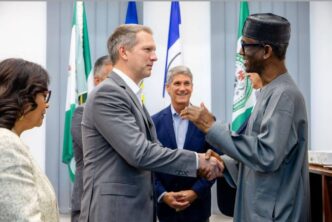
On March 14, 2024, the Speaker hosted 19 EU Ambassadors to Nigeria at his office, where he told the diplomats, “We reflected on what happened in the 9th Assembly…on why some of these very important bills did not see the light of day. We have decided now to map strategies, to ensure that, first and foremost, the bills that have to do with women are well accepted by the National Assembly—first and foremost.”
Advertisement
Later on July 23, 2024, the Speaker signed a Memorandum of Understanding with the Office of the United Nations Committee on the Elimination of Discrimination Against Women Nigeria Member (OCEDAWNM).
Not done yet, Speaker Abbas, in his keynote address at the International Legislative Dialogue on Women and Constitution Amendment Process in Nigeria on October 28, 2024, stated that, “Our goal is to ensure that Nigerian women, an essential part of our nation’s social and economic fabric, secure their rightful place within our governance framework. Empowering women is not only a moral and democratic imperative but also a strategic economic necessity.”
As a follow-up to the international dialogue, a delegation of women in politics visited the Speaker on October 29, 2024, and he, again, expressed his optimism that the House would pass the bills. “I feel sad we are convening this meeting here and that we are hearing pleas from our mothers for what is rightly theirs. If I had known that this was the purpose for this meeting, I would have told you to go home and sleep—and even snore; that this House will deliver on its promises to you,” he had said.
He added that, “This time around, history will be made. This 10th House and the 10th Senate will make it happen. I, as the Speaker, am very confident that all of us—the 360 members—are on board with this,” stressing, “I am confident that this is doable. And if we can’t achieve it with the ongoing efforts, then it will be a work in progress. But for what we are here for right now, it’s a done deal as far as the House is concerned.”
Advertisement
If members of the House and the Senate are convinced enough to vote for reserved seats for women, it will be a paradigm shift in Nigeria’s political history. Speaker Abbas has done so much to lobby, motivate, convince, inspire, and mobilise lawmakers for this significant proposed legislation, and many members have keyed into and shared in his passion for gender inclusion.
Beyond his personal efforts, several local and international organisations and technical partners joined the campaign and co-sponsored advocacy on the bill. They include the Policy and Legal Advocacy Centre (PLAC), Gender Mobile, FillHerGap, United Nations Development Programme (UNDP), UN Women, among several others.
Advertisement
Indeed, the buck does not stop at the National Assembly’s table; the sub-national—state houses of assemblies—must concur with the federal parliament on constitutional bills. To meet the constitutional requirement, at least two-thirds of the state Houses of Assembly—24 out of 36—must approve bills passed by the National Assembly.
It is important to note that governors have a great influence on the state Houses of Assembly. They have been enjoined to look towards the far-reaching benefits of having women as part of governance, particularly in parliament at the federal and state levels.
Advertisement
Equally significant are the spouses of National Assembly members, female ministers and lawmakers, governors’ wives, political parties’ women leaders, gender advocates and activists, civil society organisations and the media. These are categories of individuals and groups who join Speaker Abbas in this major campaign for Nigerian women.
Therefore, Speaker Abbas has been urging, reaching out to, and pleading with all stakeholders to look at the bigger picture—above any sentiment—and let this bill pass once and for all. In the end, it will be a win for democracy, civil rights, and justice.
Advertisement
Baiyewu is the chief press secretary to the speaker of the house of representatives
Views expressed by contributors are strictly personal and not of TheCable.