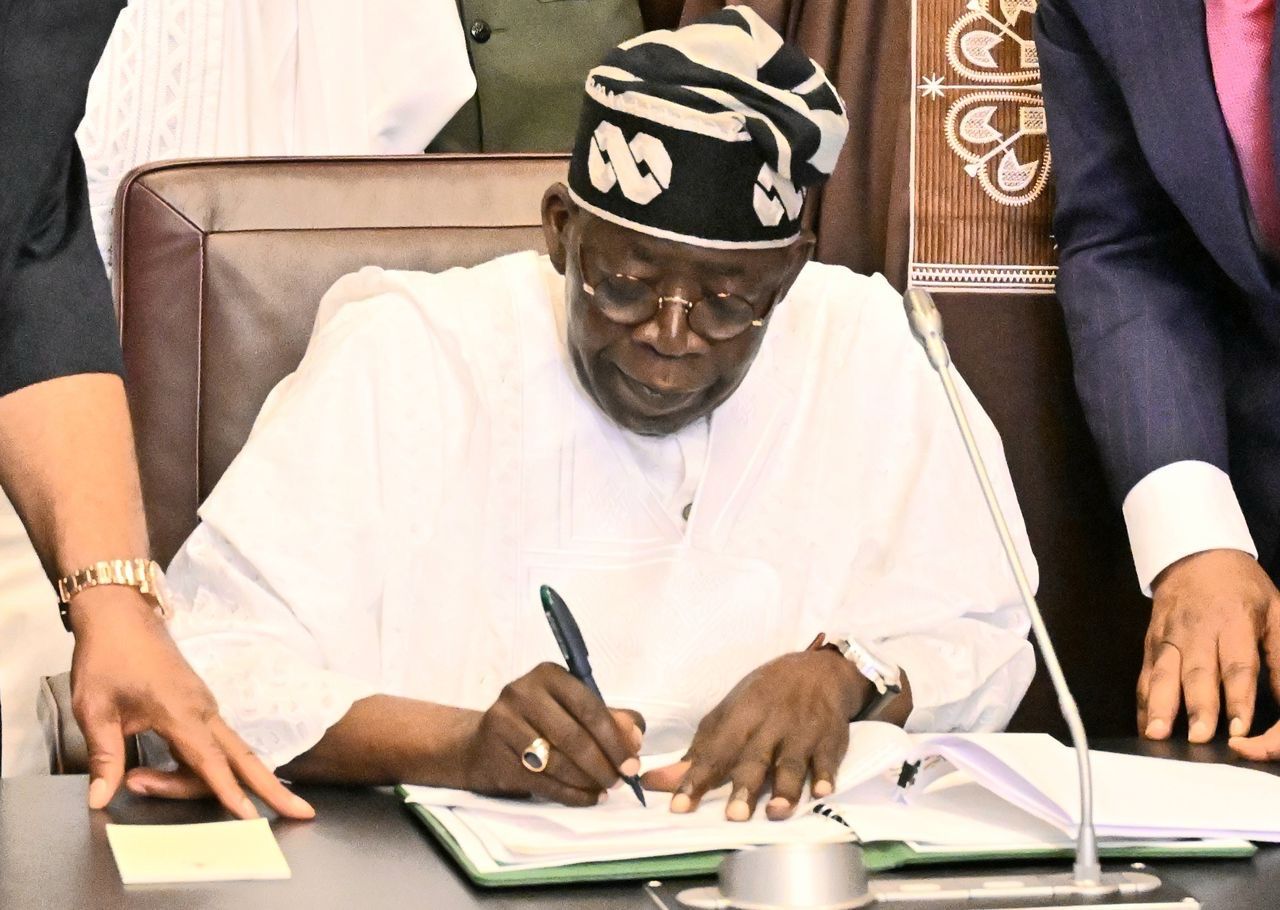
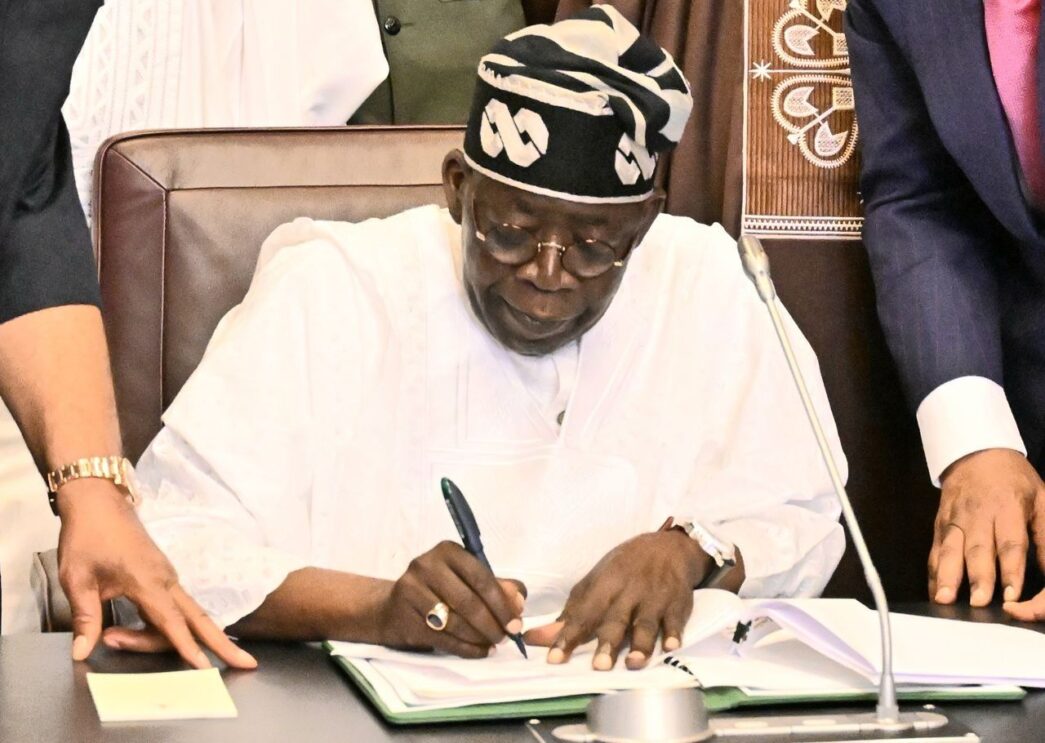
No one should be surprised at the level of controversy that President Bola Ahmed Tinubu’s ambassadorial list of 35 nominees, whose names have been sent to the Senate for confirmation has generated in Nigeria. Former Ambassadors were recalled in September 2023, and now it has taken two years and two months for the government to announce new ambassadors, against the background of loud protests about the face-off with US President Donald Trump, over alleged Christian genocide in Nigeria.
The general argument was that if the government had appointed Ambassadors before now, and the country was represented in the US by an Ambassador Plenipotentiary, not by a junior Charge d’Affaires, the US-Nigeria religious issue may not have escalated so badly. As part of the efforts to address this charge, the administration has now hurriedly dug up a list and initiated a conversation about ambassadorial postings. In April 2025, it had been reported that the Federal Government was screening persons to be posted to the country’s diplomatic posts. Some of the names reportedly on that old list, are now in the list that has been made public in November 2025. Perhaps if there had been no diplomatic issues with the United States, we would still have been waiting for Godot.
Ambassadors represent the sovereign, and they are also the personal representatives of a Head of State in a receiving country, with the responsibility to promote the country’s interest abroad, build and foster relationships, trade and business, gather information, negotiate agreements, assist Nigerians in the country, and communicate with special interests in the receiving/host country and advise the sending/home country on foreign policy. My favourite book on the subject is the book generally considered the Bible of Diplomacy, namely R.G. Feltham’s Diplomatic Handbook which covers the broad scope of diplomacy as a serious business of international law and relations. With its announcement of 35 ambassadorial nominees, the Tinubu administration has finally acknowledged the seriousness of the business of diplomacy, but the main criticisms are noteworthy: one, that it is a list of persons of questionable pedigree, character and temperament, two, that it is a patronage list which seeks to reward party chieftains, foot-soldiers, political families, expired politicians and boys looking for jobs; three, that the list does not reflect the quality and depth of talent available in Nigeria, and four, that it is so underwhelming, it should be withdrawn.
Nonetheless, an ambassadorial posting is a prestigious assignment. It is a great honour to fly one’s nation’s flag in a foreign flag. Besides, the title of Ambassador is retained for life, and you get addressed as “Your Excellency” for the rest of your life even if you stopped being Excellent. Ambassador Joe Keshi, Nigeria’s former Consul General in Atlanta, USA, submits that the list is composed of the good, the bad and the ugly as in the 1966 Western film epic, starring Clint Eastwood. He is right. Character is important in diplomacy, and this is the main issue that has been raised with President Tinubu’s list of nominees.
Advertisement
For obvious reasons, there may be no reason to panic. The nomination of a person as an ambassador is merely the first step in a process. The nominee goes through security screening by the sending country. Nigerians in their preliminary reactions argue that the Nigerian security system cannot be trusted to do any diligent screening. They claim that that they have found on the list, persons of questionable pedigree: persons who have no principles, professional political jobbers who stand for nothing, wife beaters, corrupt politicians, party hacks, with only a small percentage of career ambassadors making the list, and that if proper screening had been done, certain personalities should never have shown up on that list. But there is a second step: the nominee’s name is submitted to the Senate for further screening and confirmation. Here, the Senate Committee on Foreign Affairs is expected to further re-examine the nominee, ask every possible question, assess the person’s temperament and evaluate objections by the public, and on the basis of this, take a decision. In a value-based process, the filtering process at this level should filter out the bad and the ugly.
Whereas Nigerians may be aware of this, they claim that they are skeptical of the present National Assembly, an Assembly that seems to dance to the dictates of the Executive arm of government and particularly the Presidency. But even if Senators rubber stamp the President’s list, the Foreign Affairs Ministry would still have to request an agrement – that is an official consent to the nomination by a receiving/host government, signaling a mutual agreement that the person so nominated is acceptable to the receiving country. There are no obligations here, the receiving country is at liberty to either accept or reject the proposed diplomat without offering any explanation, upon which the sending country would either have to offer a replacement or downgrade the receiving post. Nigerians may draw consolation from this. Even if the system at home is compromised, it would be difficult to do so at the receiving end. It is by the way, a process that may take months, and a lot of diplomatic negotiations. The persons on Tinubu’s list may not jubilate too early. They should not count their chickens before they are hatched. The various embassies in the country are listening posts. The current public debate about the various nominees is important to the extent that they provide cheap and free intelligence on the basis of which the foreign missions will advise their home states. Nigerians cannot bribe the embassies. The level of diligence however varies from one mission to the other.
There is yet another dimension: the nominee may choose to decline the nomination either on health grounds or for any other reason. Professor Bolaji Akinyemi famously rejected his nomination as Ambassador to the United States under Presidents Umaru Yar’Adua and Goodluck Jonathan. On the contrary, we have also had a Justice Sylvanus Nsofor who at 83, was excited to be nominated as a non-career ambassador. He died in Maryland, US, at 85, three years after his appointment. The least that Nigerians can do is to campaign vigorously and urge persons who may have been nominated and who know that they are not fit or good enough to step down. Self-knowledge is a virtue, and every man must be true to himself. Nigerians are unfortunately too desperate. Nigerians need capable men and women as diplomats. The kind of situation at home whereby it is easier for touts, and persons with dubious wealth to get to high places should not be exported to the international arena. Diplomacy is meant to advance the country’s estimation in the eyes of the world, not to lower it. In a country of over 200 million people, and with a rich resource of talented people, the Tinubu administration should not settle for the lowest of the pack. In many of the countries abroad, there are Nigerians who are already embedded in foreign systems, with a deep knowledge of culture, history and community who could be recruited to represent their home country. Sending village people, whose only credential is that they belong to the right political party or that they once did the President a favour or had gone to him to beg him and his wife for forgiveness and help misses the point entirely. In choosing non-career ambassadors, there are Nigerians in Diaspora who are qualified and competent.
Advertisement
It is now up to the National Assembly to prove itself or disappoint the country. They must put Nigeria’s interest first. Nigerians will be pleasantly surprised if they were to reject the “Baba so pe” (Our Father has directed…and so be it) or “Emi lo kan” (It is my Turn) principles. No nominee must be asked to take a bow. There must be no sentiments. No emotions. An ambassadorial appointment is not a chieftaincy title. It is a call to duty. The screening must be done in the open, in the full glare of the public. The President may have powers under Section 171 (2c) of the 1999 Constitution to appoint or fire ambassadors but public opinion/perception should be considered in the screening process. Nigeria belongs to all of us. We have a stake in ensuring that nobody goes out there to embarrass the rest of us. Incidentally, President Bola Ahmed Tinubu’s foreign policy approach is based on a doctrine of 4Ds – Diaspora. Development, Demography, Democracy and Global Impact. It was a policy approach championed by the incumbent Foreign Affairs Minister, Ambassador Yusuf Tuggar. How much of that policy does any of the nominees seeking to become Ambassadors understand? Do they think it is a useful policy or they just want to be an ambassador for the sake of the title? There are ambassadors who served under the Buhari administration – about 83 of them – who have already established contacts in various countries abroad for Nigeria. Is there a review system to identify some of them and return them to duty, especially the career ones, instead of changing diplomats every Eke market day?
President Tinubu recalled 83 diplomats in September 2023. He has now named only 35 nominees. Nigeria has 109 missions abroad including 76 embassies, 22 High Commissions and 11 Consulates. Is he going to name more persons? If so, he should be thoroughly guided by current responses from the public. But what would have been preferrable is a proper review of the country’s foreign diplomacy process: a rationalization of the number of missions, the welfare of diplomats and a deepening of capacity at the Ministerial level to monitor the missions. There is no point having an ambassador in every post. For example, one Ambassador can cover the Scandinavian countries. One person can oversee Niger and Chad, or Togo, Cameroon and Chad. Things became so poor in Nigerian missions abroad at a point that the embassies could not pay for utilities. Many diplomats could not travel with their families because they had to share apartments with their colleagues. Funding from the home state was irregular. The ambitious and aggressive ones among our diplomats became traders, using diplomatic privileges to make quick profit. It is only luck that has saved this country so far that we have not had a scandal that would be a cause celebre in international diplomacy, that cannot be covered up! We can trim the bureaucracy.
The plight and interest of career ambassadors should be treated as paramount. Diplomacy may be political, but it is also a professional calling. The convention is a 70: 30 ratio in favour of career diplomats. The dream of every professional is to get to the top in their line. The politicization of diplomacy frustrates the ambition and dreams of those who have chosen it as a vocation. It can be doubly depressing to see outsiders crowd one’s space, and watch them dominate just because they have political connections. This kills morale. In a random review of President Tinubu’s list, most of the persons are not from the Foreign Affairs Ministry – the lowest ratio in recent years. The people from the intelligence sector even seem to have a better deal. Is this an open admission of the known fact that the golden season of Nigeria’s Ministry of Foreign Affairs is long gone?
So much talk about Nigeria’s diplomacy since President Tinubu named his proposed ambassadors. We end this commentary with the well-worn view, nonetheless important, that domestic policy drives foreign policy. Nigeria’s standing in the world will be determined not solely by Tinubu’s ambassadors, but by a full reflection of how Nigeria treats its people at home. Do the people have enough to eat? Do they feel safe? Are they well taken care of? Are the children well provided for? Do the people trust their government? In the age of modern diplomacy, as different from traditional diplomacy, the reproducibility of technology, the rise of artificial intelligence, globalization, the increasing role of non-state actors and the multiplication of wicked problems over-testing the wisdom of the community has created new frontiers in world diplomacy. Nigeria must learn to measure up!
Advertisement
Views expressed by contributors are strictly personal and not of TheCable.