


BY JAMILU HAFIZ
The story of Kaduna State over the past two and a half years is, in many ways, the story of a place that refused to surrender to despair. A state once weighed down by insecurity, balkanised communities, and an atmosphere inhospitable to investors, Kaduna has undergone a historic rebirth under the calm, reformist, and strategically minded leadership of Governor Uba Sani. Today, global partners who once viewed Kaduna with trepidation are reassessing the state, not as a frontier of instability, but as a renewed frontier of opportunity; one increasingly defined by investment-readiness, security stabilisation, and development diplomacy that is attracting unprecedented international attention. At the centre of this reawakening is a Governor who has not only stabilised the polity but has also stepped up efforts to position Kaduna as the top destination for Foreign Direct Investment in Nigeria.
A watershed moment arrived on September 10 when the United Kingdom made a consequential announcement: Kaduna State had been formally reclassified from “Red” to “Amber” in the UK Government’s travel advisory. For a country like the United Kingdom; whose assessments of travel risk carry enormous weight in diplomatic, commercial, and humanitarian circles, this was an emphatic vote of confidence. More than a bureaucratic shift, it symbolised Kaduna’s emancipation from the shadows of years of volatility and insecurity. The announcement was made by Ms. Cynthia Rowe, the UK Foreign, Commonwealth and Development Office’s Development Director, during the signing of a new Mutual Accountability Framework between the FCDO and the Kaduna State Government. Her declaration was simple yet seismic: British citizens were once again free to travel to Kaduna State. In the room that day, the significance of her words was unmistakable; not only for what they said about the past, but for what they signalled about the future.
This reclassification did not emerge from chance, but from a deliberate architecture of peacebuilding that Governor Uba Sani and his administration have nurtured with patience, persistence, and clarity of purpose. Through what is now widely described as the Kaduna Peace Model: an approach that fuses both kinetic operations and non-kinetic dialogue, the Governor has rallied traditional rulers, religious leaders, security agencies, vigilante groups, and grassroots institutions into an ecosystem of shared vigilance. Today, communities once written off as theatres of conflict are reclaiming the rhythms of normal life. Markets in Birnin Gwari are buzzing again, schools have reopened in areas once under threat, and farmers are returning to their farmlands with renewed optimism. The peace is not accidental; it is engineered.
It is this restored stability that underpins the wave of investor interest sweeping into Kaduna. With peace returning, infrastructure expanding, governance reforms deepening, and human capital improving, Governor Uba Sani has intensified his global outreach to secure the kind of investment that can translate stability into prosperity. His international engagement has been purposeful, not performative. Whether in his strategic missions to Kuwait or China, or in his robust collaborations with the UK, the Governor’s objective has remained the same: positioning Kaduna as West Africa’s emerging investment powerhouse.
Advertisement
One of the clearest manifestations of this investment-focused diplomacy is Kaduna’s strategic partnership with the Kuwait Fund for Arab Economic Development. In Kuwait City, Governor Uba Sani held high-level engagements with the Fund’s Director General, Dr. Waleed Al-Bahar, who described Kaduna as “a model for sustainable development-focused governance” and reaffirmed the state’s status as the first Nigerian subnational beneficiary of the Fund’s support. This endorsement was not bestowed casually; it was anchored in the measurable progress of the Reaching Out-of-School Children (ROOSC) Programme, a USD $62.8 million initiative supported jointly by the Kuwait Fund, Islamic Development Bank, Education Above All, Global Partnership for Education, and Save the Children. The programme is one of the most ambitious education recovery efforts in Nigeria; a response to the alarming number of out-of-school children in the North.
The results have been impressive. So far, 79,275 out-of-school children have been identified and mapped across 14 local governments. Of these, 13,756 have already been enrolled; surpassing the Year One target of 10,000. The programme has trained 1,300 teachers, distributed more than 35,000 learning kits, and commenced civil works to rehabilitate 170 schools and construct 102 new ones. These are not token achievements; they are structural interventions that are laying the foundation for a more literate, productive, and competitive workforce. In an era when investors place a premium on the quality of human capital, Kaduna is signalling loudly that it is prepared for the industries of the future.
But nowhere is the Governor’s global investment diplomacy more visible than in his unfolding partnership with the Government of the People’s Republic of China. On December 6, 2025, the Governor arrived in Beijing at the invitation of the Chinese Government to advance and finalise negotiations on the USD $200 million Model Integrated Poultry Development Project; a project conceptualised as one of the most ambitious agribusiness ventures in West Africa. The numbers tell a compelling story: once operational, the facility is projected to generate over USD $450 million annually and create more than 350,000 direct and indirect jobs across the poultry value chain. This is not merely a farming enterprise; it is a multi-layered industrial complex with the potential to reshape Kaduna’s agro-economy, stimulate exports, deepen food security, and anchor Kaduna’s transition into a continental hub for modern agribusiness.
Advertisement
The significance of the mission was underscored by the calibre of delegation accompanying the Governor; a Federal Government team led by the Director-General of the Nigeria–China Strategic Partnership, Mr. Joseph Tegba. The joint delegation signalled that the project is not just a state initiative; it is a national priority. In Beijing, Governor Sani’s engagements were far-reaching. With China Communications Construction Company (CCCC), he held comprehensive discussions and toured flagship projects that illustrate the engineering might of one of the world’s biggest construction conglomerates. At the company’s headquarters, the Governor received a warm welcome, with the Global Managing Director, Mr. Yu He, noting that the Kaduna delegation was the first official Nigerian team ever hosted at the facility. That symbolic milestone showcased the increasing gravitational pull of Kaduna within Nigeria’s economic landscape.
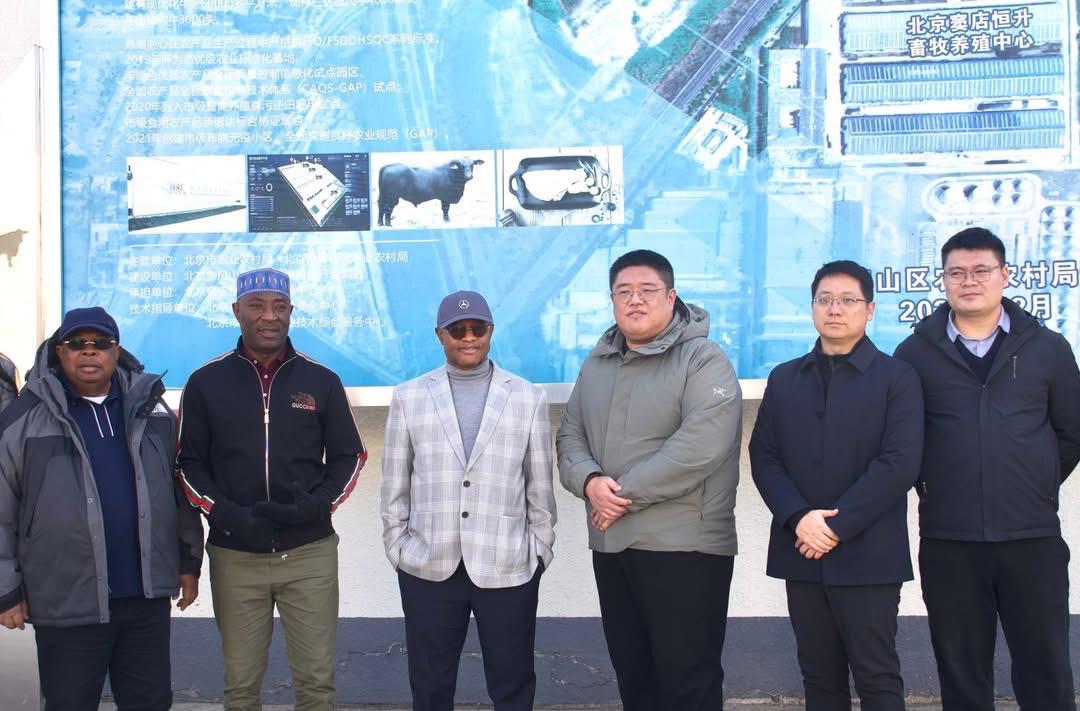
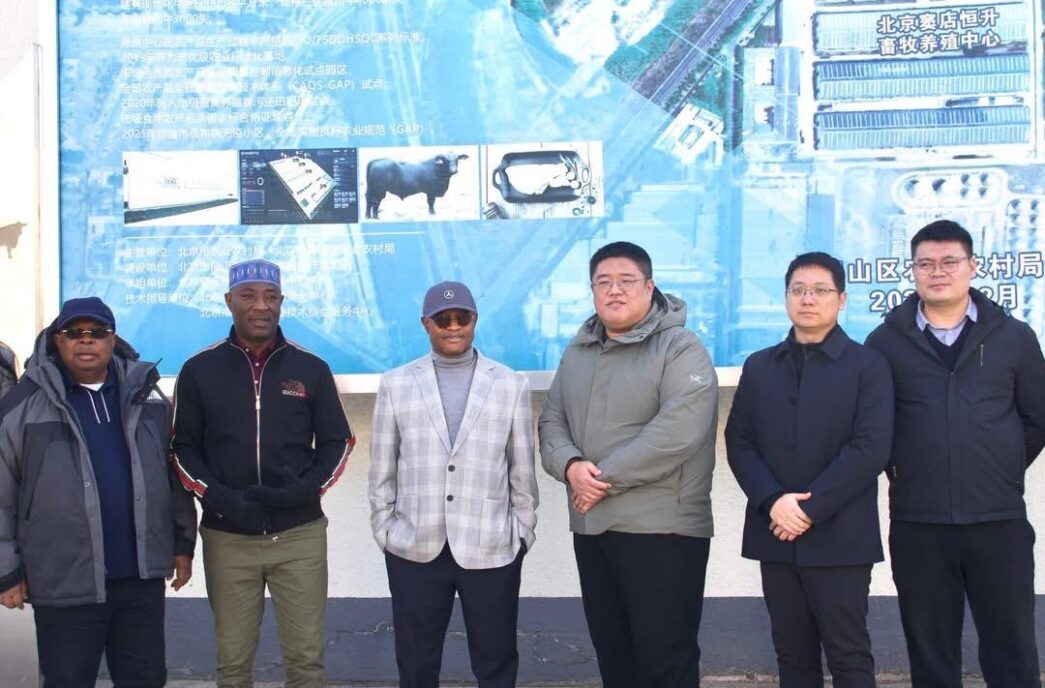
Mr. Yu He commended Kaduna’s development vision, aligning his admiration with China’s appetite for long-term, mutually beneficial investment. He reaffirmed CCCC’s commitment not only to delivering the poultry project on schedule but to exploring deeper investment collaborations across multiple sectors of Kaduna’s economy. During the visit, Governor Sani also toured the world-class Beijing Doudian Yisheng Halal Meat Industry Co., Ltd., where he gleaned insights that will inform Kaduna’s efforts to modernise its livestock sector. For a state with some of Nigeria’s largest livestock assets, the application of technology and global best practices in meat processing, animal health, and cold-chain logistics holds transformative potential.
This blend of diplomacy, technical engagement, and investment promotion reflects a governor who understands that FDI does not fall from the sky; it is earned through credibility, stability, and proactive international outreach. Kaduna, under Uba Sani, now embodies these attributes. Stability has returned, institutions are being strengthened, and governance is becoming more transparent. His administration’s flagship governance reforms: Local Government Transparency, Accountability and Sustainability (LFTAS), Issue-Based Initiatives, and Community Development Charters, are giving citizens more voice than ever before in determining development priorities. Investors notice these things. Credible governance is a currency in the global economy, and Kaduna is converting it efficiently.
Internally, Kaduna’s investment proposition is also reinforced by sweeping improvements in its human development landscape. In health, Kaduna is the only state in Nigeria that has upgraded 250 primary healthcare centres from Level 1 to Level 2, dramatically expanding access to maternal and child care. More than 2,000 health workers have been recruited, solving chronic shortages and strengthening service delivery. In education, Kaduna has climbed from 12th to 7th place in national WAEC rankings, driven by massive investments in school infrastructure, teacher training, and student support. The Kaduna Vocational and Skills Development Institute, now with more than 30,000 students, has become one of the country’s leading engines for skills transformation. It was no surprise when Vice President Kashim Shettima recently praised Kaduna as a national model, urging other states to emulate its forward-looking approach to skills development and job creation.
Advertisement
Infrastructure is another cornerstone of the Governor’s investment-readiness strategy. Kaduna’s road revolution has been unprecedented in scale and reach. In Phase One, the administration completed or advanced work on 85 roads covering 785 kilometres. In Phase Two, more than 50 additional roads and bridges were launched, spanning 550 kilometres. Rural communities long abandoned places and communities are now connected to markets, healthcare facilities, and urban centres. In many of these places, the inauguration of new roads triggered emotional scenes of celebration from residents who had resigned themselves to decades of neglect. Infrastructure fuels commerce; commerce attracts investment; and investment accelerates development. Kaduna is demonstrating this principle with clarity.
Through his Executive Order on Financial Inclusion, Governor Sani has also brought more than 2.5 million people into the formal financial system; leveraging digital tools, mobile money agents, and community-level mobilisers. This is a massive leap forward for a state where cash-dominant, informal economies had historically limited access to credit, insurance, and scalable enterprise. Today, small businesses, farmers, artisans, and young entrepreneurs can access financial services that give them the security and leverage to grow. A financially included population is a magnet for investors; it signals a stable consumer market and a more reliable labour force.
Agriculture, which contributes more than 42 percent of Kaduna’s GDP, is receiving some of the largest budget allocations in the state’s history. More than 10 percent of the 2026 budget has been dedicated to the sector, with investments targeted at mechanisation, climate-smart technologies, irrigation expansion, processing centres, storage facilities, and youth and women empowerment. These interventions reduce post-harvest losses, increase productivity, and expand value-addition, all critical to attracting agribusiness investors.
Taken together, these reforms, investments, and diplomatic engagements form the foundation of Kaduna’s new identity; a state that is not only ready for investment but hungry for it. Governor Uba Sani has stepped up efforts across multiple domains: security, infrastructure, human capital, agriculture, financial inclusion, peacebuilding, and global partnerships, to rebuild Kaduna’s reputation from the ground up. And the world has taken notice. From Westminster to Beijing, from Kuwait City to Abuja, the emerging consensus is clear: Kaduna is rising.
Advertisement
What distinguishes the Governor is not only his vision but the discipline with which he executes it. While others rely on rhetoric, he relies on results. While some deepen divisions, he builds coalitions. And while many leaders succumb to the politics of the moment, Uba Sani is governing with an eye on the future, on the kind of Kaduna that will attract investors not through incentives alone, but through credibility, stability, and opportunity.
Kaduna’s journey is far from complete, but it is undeniably on a new trajectory; one that is garnering admiration at home and abroad. Under Governor Uba Sani, Kaduna is not only reclaiming its place in Nigeria; it is stepping confidently onto the global stage as a rising destination for investment, innovation, and inclusive development. In a world hungry for stability and opportunity, Kaduna is positioning itself as the place where both can be found.
Advertisement
Hafiz, a development expert and University teacher resides in Zaria, Kaduna state.
Advertisement
Views expressed by contributors are strictly personal and not of TheCable.