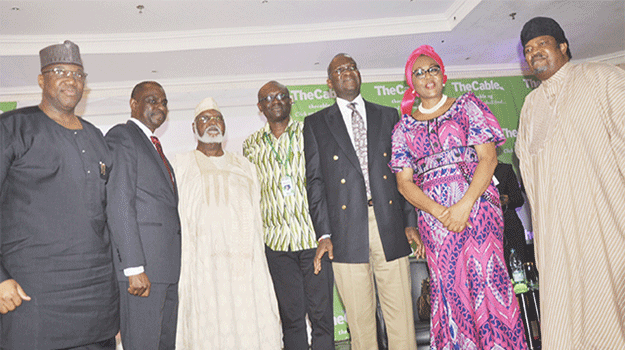
“When they do good things, we will say it. We are not mad people who will see good things and say that it is bad, but we are also not sycophants who will see bad things and say that it is good” – Yinka Odumakin
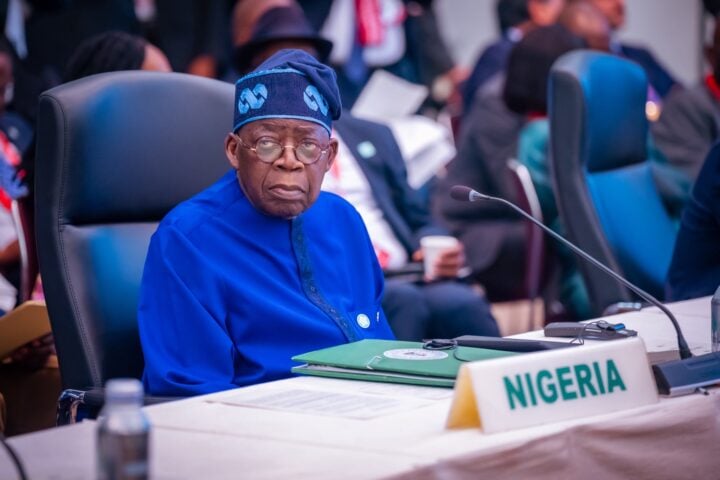
When I commended President Bola Ahmed Tinubu last week for directing the withdrawal of police escorts from VIPs — a long-overdue step toward prioritising national security over elite convenience — some uninformed critics quickly labelled me a praise singer. They clearly do not understand that constructive citizenship requires balance. I am not one of the president’s bootlickers, and I do not intend to become one. I will commend him when he does well and criticise him where his administration has performed poorly. That is the essence of responsible commentary.
Unfortunately, when it comes to the government’s handling of Nigeria’s diplomatic representation and tackling insecurity challenges, there is little to praise about this government. At present, it appears aimless, befuddled, confused, disjointed and erratic.
Nearly two years after recalling all ambassadors, the Tinubu administration left Nigeria without representation in several strategic countries, including the United States. This diplomatic negligence and vacuum became glaring when US President Donald Trump delivered stinging remarks about Nigeria. With no ambassador in Washington to shape narratives, lobby policymakers, or counter damaging rhetoric, the country appeared voiceless on the global stage. Many Nigerians argued that the absence of an envoy exposed the nation strategically.
Advertisement
Only after public uproar did the Tinubu administration suddenly release a list of ambassadorial nominees, which included names like Reno Omokri and Femi Fani-Kayode. These are names already widely reported months earlier by the media. So the core question remains: Why did Tinubu delay ambassadorial appointments for nearly two years? If the list was ready months ago, why withhold it? And must a Donald Trump insult be what finally forces action?
But the timing is only part of the problem. The credibility of some nominees has drawn even sharper criticism.
One of the most contentious names is Reno Omokri — a figure who had, in the past, made highly negative public remarks about President Tinubu, comments many Nigerians viewed as deeply insulting to the office of the president. Critics ask: How does a man who once questioned the president’s integrity now become one of his diplomatic representatives? Diplomacy relies on trust, stability, and coherence. Appointing someone with such a public history of hostility to the president raises legitimate questions about judgment.
Advertisement
The situation echoes the appointment of Daniel Bwala as presidential spokesman. Bwala once vowed that even “30 years in office” would not enable Tinubu to achieve anything meaningful. Today, he speaks for the same administration he once derided. This dramatic turn has left many Nigerians asking how the government expects the public to take its messaging seriously.
These appointments, in the eyes of critics, suggest either a lack of internal coherence or an indifference to how leadership decisions affect national credibility.
More contradictions emerge in the security sector. President Tinubu recently declared that all his ministers were “performing well,” insisting that no cabinet shake-up was needed. Yet, shortly after, Abubakar Badaru — the minister of defence — left the cabinet, with the official explanation citing “health grounds.” Within the Tinubu administration, critics often interpret “health grounds” as a polite exit — a way to remove an official without openly admitting failure. Badaru’s departure has reinforced the perception that the government’s public statements do not always reflect internal realities.
Then came another sudden move: the president’s directive withdrawing police escorts from VIPs, with a promise to redeploy officers to remote, insecure areas. On its own, this decision aligns with public expectations of prioritising national security over elite comfort. But critics question the timing: why now? Why did such a shift occur only after Trump’s inflammatory remarks and the public backlash that followed?
Advertisement
To some, it feeds the impression that the president had been in a “deep slumber,” and that Trump’s comments acted like a “jolt” — a rude awakening forcing sudden bursts of activity that should have occurred long ago.
This pattern — reacting to external triggers rather than internal priorities — has become a recurring theme. It leaves citizens asking whether governance decisions are driven by strategic planning or by public embarrassment.
At its core, the ambassadorial delay and the hurried policy responses point to a broader issue: a government struggling to align its actions with its promises. Diplomacy, security, and governance are not tasks that should wait for provocation from abroad.
If the Tinubu administration hopes to rebuild credibility, it must demonstrate consistency, transparency, and leadership rooted in Nigeria’s needs — not in reactions to foreign criticisms or sudden political pressure. Nigeria requires governance that stays awake on its own, not governance that wakes up only when jolted by outsiders or as they say in local parlance, a push-and-start president.
Advertisement
Akinsuyi, former group politics editor of Daily Independent, writes from the United Kingdom
Advertisement
Views expressed by contributors are strictly personal and not of TheCable.