Nigeria’s football ecosystem is standing at a dangerous crossroads—one paved not with tactics, talent, or technical growth, but with the rust of corruption, compromised officiating, and institutional apathy that has been allowed to fester for far too long.
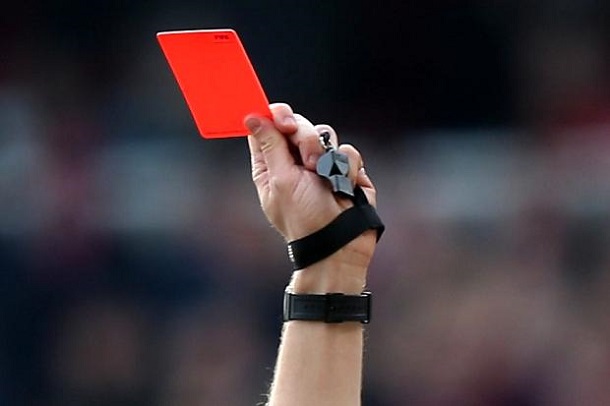
The Confederation of African Football (CAF) recently shortlisted 73 officials—referees, assistant referees, and Video Assistant Referee (VAR) personnel, for the forthcoming African Cup of Nations (AFCON) roster—Morocco 2025, which commences about three weeks from now. As expected, not a single Nigerian referee made the cut. Not one. And this is neither a coincidence nor some new misfortune; it’s a decade-long embarrassment that has become the new normal. This is simply because, the nurturing process back home is corruption-ridden.
This is the same country that once produced referees who dominated the continent and stood up to be counted on the global stage. Referees like Faith Irabor, Linus Mbah, Festus Okubule, Sani Zubair, Emmanuel Nwanyanwu (Jnr.), and Temidayo Ayeni, among others. They have shone on both continental and global stages. Today, Nigeria cannot even get a seat at the continental refereeing table, not to talk of the global. The reason? Integrity, or rather, the lack of it, within officiating across our domestic leagues: the Nigerian Premier Football League (NPFL), the Nigerian National League (NNL), and the Nationwide League One (NLO).
Yes, officiating in the elite NPFL has enjoyed modest improvement. But drop one tier lower to the NNL, and you enter a wilderness of chaos where integrity is optional, accountability is nonexistent, and the beautiful game becomes a tragicomedy. In fact, it is a cesspool of corrupt officiating that is harming not only the reputation of the referees but also the quality and integrity of the champions produced by the domestic league. Need I say, it rubs off negatively on the image of the entire football ecosystem in the country?
Advertisement
That tragicomedy played out in real time on 15 November 2025 at the Rashidi Yekini Arena of the George Innih Stadium in Ilorin. A 2025/26 season’s matchday-1 fixture of the NNL Conference C between ABS Ilorin FC and Sokoto United FC became a full-blown exposé on why Nigerian referees are not so rated internationally (by CAF and FIFA).
The centre referee, Umar Ndagi Usman, alongside his assistants—Mohammed Musa Bajaj (Assistant Referee 1) and Bilikisu Ibrahim (Assistant Referee 2), all from Niger State—put up a performance so questionable that it swung from mere incompetence to outright farce. Dodgy calls littered the first half. By the closing minutes, things descended into what can only be described as administrative daylight robbery against the home team. The centre referee handled the match as though, his KPI was not to allow ABS Ilorin FC to end the match with three maximum points or to ensure that Sokoto United left town with at least a point.
After reducing the home side to 10 men via another questionable call, the referee somehow conjured 17 minutes of added time in a half where not even five minutes of stoppage was justifiable. The away players could not help but begin laughing (in hushed tones) at how ludicrous some of those decisions were, even when they were the ones who benefited from them. That’s not football; that’s theatre—and a poorly acted script at that.
Advertisement
Even the referee assessor, Yusuf Issah from the FCT, was visibly furious at what was unfolding. Yet, weeks later, the silence from the league’s governing body is deafening. It is either the match commissioner never included the madness in his report, or he did, and the NNL simply swept it under the turf like dirt under a stadium rug, I conclude.
But let’s not pretend what happened in Ilorin was an isolated case. It is the symptom of a systemic rot—one replicated in stadia across the NNL and NLO and occasionally creeping into the NPFL. These leagues are supposed to be incubators, the breeding ground for the next generation of elite officials. Instead, they are factories producing embarrassment, sidelining talented referees, and ensuring Nigeria remains absent on CAF and FIFA lists of honour.
Former Minister of Sports Development, Senator John Owan-Enoh once expressed displeasure over the non-inclusion of Nigerian referees among match officials listed for the 2023 AFCON in Cote D’Ivoire, back then. He said, given Nigeria’s football pedigree and population, the country should not be in such a predicament, which is now becoming a trend. The minister, as reported by “The Sporting Tribune,” promised to hold engagements with relevant stakeholders such as the Nigeria Football Federation (NFF) Nigeria Referees Association (NRA), among others, with a view to reversing the trend.
He was reported to have said, “At the last AFCON (2021), Nigeria only had one assistant referee listed among the match officials. Two years prior, we didn’t have any centre referee either.
Advertisement
“Going into the next AFCON (2023), we still won’t have any Nigerian official. I am going to interrogate this matter.
“We will have engagements with the NFF, the Referees’ Association, and the League Board because we need to get to the bottom of this,” he said.
One major reason the racketeering thrives?
No television coverage.
The entire officiating ecosystem operates in the shadows. With no cameras, no replays, and no public scrutiny, anything goes. And when racketeers know that nobody is watching, they become bolder and more brazen even. They take the laws of the game hostage, and the clubs, the players, and the fans pay the price. The Lower Leagues: In the NNL and Nationwide League One (NLO), brazen match manipulation occurs with minimal accountability. The Ilorin incident exemplifies an environment where officials operate without fear of consequence, as matches receive little public scrutiny.
Advertisement
The impact is devastating. Potential investors and sponsors are scared away when the competition is integrity-challenged. Nigerian league “champions” arrive on the continental stage, untested, unprepared, less competitive, and often humiliated. Even the CHAN Eagles—supposedly the finest from our domestic league—were battered by a Sudanese side from a country engulfed in war. That is not a footballing tragedy; it is a national disgrace.
Nigerian football is being killed in instalments.
Not by lack of talent.
Not by lack of fans.
Not by lack of passion.
But by a corrupt, compromised officiating system that bends the game for the highest bidder.
Advertisement
So, what must be done?
1. Put the leagues on television—every match, every division.
Sunlight is the best disinfectant. When, and if, officials know the world is watching, the nonsense evaporates overnight.
Advertisement
2. Establish an independent Referees Integrity Unit.
No more internal cover-ups. Complaints must be investigated immediately and transparently, with anybody found culpable adequately punished.
3. Mandatory performance reviews, financial profiling, and psychological screening for referees.
Those who cannot handle pressure, rejecting envelopes, should be shown the exit door.
Advertisement
4. Decentralize referee appointments.
Local alliances are fueling corruption. A national pool with random assignments reduces manipulation.
5. Empower referee assessors.
Their reports should trigger automatic review panels. No more ignoring assessors like Yusuf Issah, who actually care.
6. Invest in proper training and international exchange programs.
Referees should be exposed to CAF and FIFA standards regularly through coaching clinics.
7. Punish offenders—firmly and publicly.
Integrity will never thrive when bad eggs suffer no consequences.
If we do nothing?
Nigeria risks losing its place—not just as a football powerhouse, but as a respected participant in African football. The dustbin of history is wide open, waiting. And right now, Nigerian football is dangerously close to being tossed inside.
This is not the future the game deserves.
It is not the future fans deserve.
It is certainly not the legacy Nigeria should leave behind.
The time for reforms is now, before the rot becomes irreversible. The incident in Ilorin involving referee Umar Ndagi Usman and his team should serve as a wake-up call, not just another forgotten controversy in Nigeria’s football history. If properly addressed, it could mark the beginning of genuine reform. If ignored, it will remain simply one more installment in the gradual death of Nigerian football.
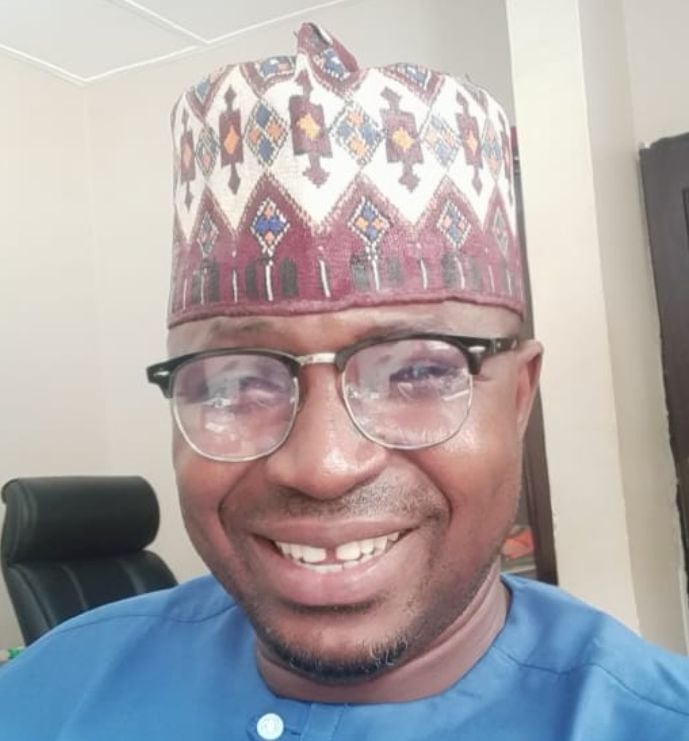
Abubakar writes from Ilorin, Kwara State. He can be reached via 08051388285 or [email protected].
Views expressed by contributors are strictly personal and not of TheCable.