
When President Bola Tinubu announced that Nigeria’s inflation rate would drop from 34.6 percent to 15 percent by the end of 2025, the declaration sounded like a political flourish—one more lofty projection in a country where people are used to grand promises dissolving into thin air. Yet, as we stand today with inflation at 16.05 percent as at October 2025, a remarkable fall and the seventh consecutive month of decline, the country finds itself in an unusual position: the President’s pledge no longer sounds impossible. But that progress, while encouraging, is tied to deeper questions about the durability of Nigeria’s economic recovery and the structural problems that continue to shape the cost of living.
The numbers alone tell a compelling story. A drop from over 30 percent into the mid-teens within a year suggests a decisive shift in the economic direction of the country. Government officials have been eager to celebrate this as proof of policy discipline under the Renewed Hope agenda and of the success of tough reforms carried out since 2023.
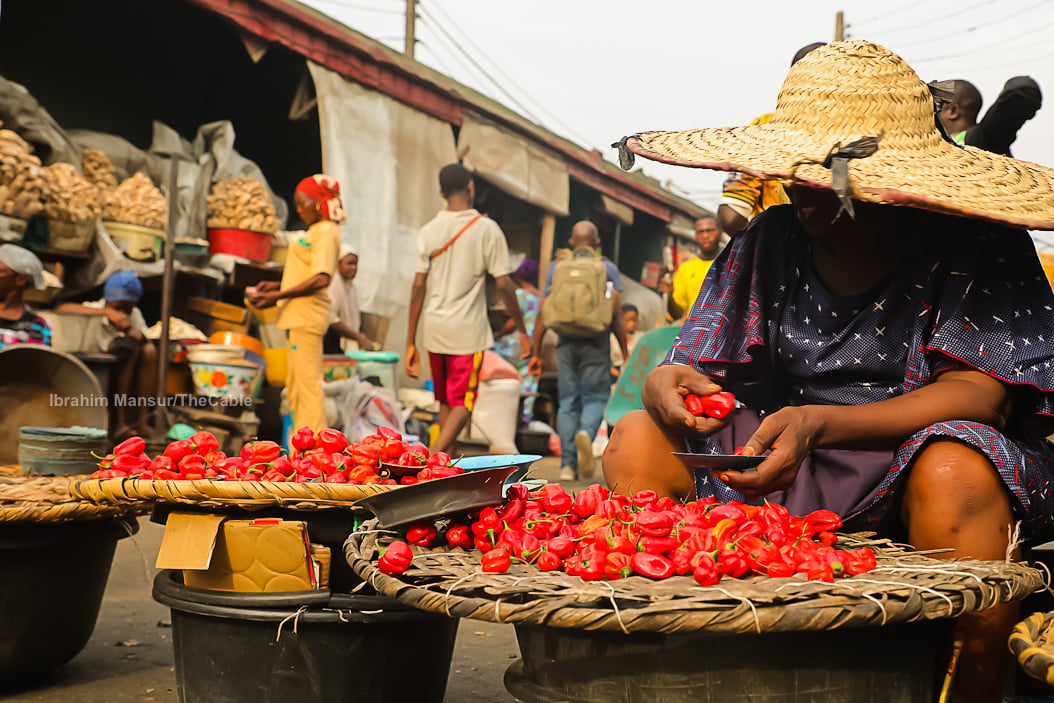
For many Nigerians, the relief is real, especially in markets where the price of staple foods—rice, garri, beans, and some vegetables—has softened compared to the painful spikes that defined much of 2023 and early 2024. Yet it would be misleading to simply point at the headline figure without examining the forces behind it. Nigeria’s inflation story is more complicated than it looks at first glance.
One of the most underreported shifts in this conversation is the rebasing of the Consumer Price Index (CPI). Nigeria’s statistical system had been long overdue for this methodological update, and the rebasing exercise has reshaped the inflation narrative. The old basket of goods was rooted in a consumption pattern that failed to reflect the realities of modern-day Nigeria, where urbanisation, changing diets, technology costs, and new categories of expenditure play an increasingly central role. With the new base year, the weights within the CPI better capture what Nigerians actually spend their money on.
Advertisement
This update alone produced a measurable difference in the inflation numbers. It did not magically make prices drop in markets, but it recalibrated the lens through which the country measures inflation. Critics have attempted to dismiss the new numbers as statistical manipulation, yet Nigeria is simply doing what most countries do regularly: updating the tools used to measure the cost of living.
The rebasing exercise also explains why the current inflation rate feels, for some Nigerians, somewhat out of sync with their lived experience. Measurement changes, however scientific, do not immediately translate into cheaper tomatoes or more affordable transport fares. The challenge for policymakers is to communicate this nuance without undermining the credibility of the reforms.
What the rebasing does accomplish, however, is a clearer, more relevant tracker of future inflation movements. It provides a more accurate basis for forecasting — and forecasting is where the debate around Tinubu’s 15 percent target becomes more interesting.
Advertisement
The Access Bank Economic Intelligence Unit, in its latest projections, anticipates that inflation will continue to moderate in the coming months, especially as the exchange rate holds steady and the harvest cycle expands food supply. The bank’s outlook aligns with the idea that the government’s macroeconomic reforms are gradually restoring market confidence. The naira’s relative calm, compared to the volatility of previous years, has helped stabilise the cost of imported goods. In a country that relies heavily on imports for raw materials, fuel, machinery, pharmaceuticals, and even food items, the exchange rate is one of the most powerful catalysts for inflation.
But the factor weighing most heavily on Nigeria’s inflation trajectory is food. Whether inflation rises or falls, it is food prices that determine how the average Nigerian experiences it. A person can tolerate higher prices for clothing or household appliances, but the price of food touches every family, every single day. That is why the findings from SBM Intelligence’s Jollof Index for Q3 2025 deserve attention.
The index, which tracks the cost of preparing a pot of jollof rice across states, revealed that food prices have begun to ease in several urban centres. But the reasons behind this drop are crucial: it is largely due to seasonal factors. Harvest season naturally pushes more grains, vegetables, and tubers into the markets, providing temporary relief. Seasonal price drops are not proof of a solved problem. They simply remind us that Nigeria’s food inflation problem is deeply structural.
Seasonality, however, is just one part of the equation. The deeper issue lies in the alarming decline of agricultural productivity caused by widespread insecurity. Across large swathes of the north-west, north-central, and parts of the north-east, farmers continue to face threats from bandits, insurgents, armed herdsmen, and communal conflicts. Large tracts of land that once fed millions are either deserted or only partially cultivated. Farmers who used to plant twice a year now plant once or not at all.
Advertisement
In many communities, farming has been reduced to a risky venture conducted under fear, with limited labour supply, lower yields, and rising costs of inputs. The direct result is a contraction in food availability and a spike in farmgate prices before food even begins its journey to city markets.
The journey itself is another critical problem. Nigeria’s infrastructural deficit undermines even the most optimistic inflation forecasts. Poor road networks, lack of storage facilities, inadequate cold-chain systems, and inefficient transport logistics all combine to push up costs. For many food items, up to 40 percent of produce is lost before it reaches consumers, a figure that remains one of the highest in Africa. These losses are not just an economic problem; they are an inflation problem. Every bag of onions spoiled on a highway due to bad roads is a cost that traders will recover at the final point of sale. Every container of tomatoes that rots because there is no cold room in a growing city becomes part of the invisible tax Nigerians pay in the form of higher food costs.
This is why the debate over Tinubu’s 15 percent inflation target must acknowledge both the successes and the limitations of current reforms. The reforms have clearly created momentum. The fiscal tightening, the return to coordinated monetary policy, the gradual stabilisation of the naira, the removal of multiple exchange windows, the efforts to tame speculative demand for forex, and the moderation of petrol import pressures all feed into the current downward trend. But the reforms cannot, on their own, overcome the agricultural and infrastructural crises that shape the country’s food economy. The government may celebrate seven months of disinflation, but without meaningful progress in security and logistics, the victory will be fragile.
Just as I often tell my friends, Inflation is not just an economic statistic; it is a social one. It determines whether workers can afford to commute to work, whether households can afford protein, whether parents can cook balanced meals for children, whether small businesses can manage working capital, and whether pensioners can survive on fixed incomes. Inflation shapes the national mood more than almost any other indicator. A country can tolerate slow GDP growth, but it cannot tolerate unaffordable food for long. That is why the current moment feels like a delicate balance: Nigeria is in recovery, but the recovery is uneven.
Advertisement
It is fair to say that Tinubu’s target is no longer a political slogan. It is a credible possibility. The movement from 34.6 percent to 16.05 percent brings Nigeria significantly closer to the promised 15 percent by December 2025.
Yet credibility does not guarantee success. Nigeria has a long history of mid-year reversals where gains achieved during the harvest season evaporate under the pressure of the lean season. If insecurity worsens in food-producing regions or if the naira comes under renewed pressure, inflation could begin rising again. On the other hand, if the reforms continue to gain traction, if food supply improves beyond seasonal cycles, and if agricultural productivity begins to recover, Nigeria could not only hit the 15 percent target but possibly stabilise around it.
Advertisement
The coming year will therefore be a test of sustainability, not just achievement. Nigerians will judge success not by economists’ charts or government statements, but by what they face at the market stalls in Ojuelegba, Wuse, Mile 12, Ogbete, Garriki, and Singa. True relief will come when families no longer have to cut protein out of their meals, when transport fares no longer consume a third of workers’ salaries, and when the price of a simple pot of jollof rice stops swinging like a stock market chart.
Tinubu’s inflation promise is within reach, but its survival depends on whether Nigeria confronts the insecurity choking its farmlands and the infrastructural failures that bleed its food supply chain. Without addressing these fundamentals, declining inflation may end up as a brief chapter rather than a lasting story. For now, Nigerians can cautiously celebrate progress — but they must also keep their eyes open. The road to 15 percent is possible, but it is not guaranteed.
Advertisement
Victor Ejechi is the head of insights and storytelling at SBM Intelligence.
Advertisement
Views expressed by contributors are strictly personal and not of TheCable.