A few days ago, as I prepared to go out, I decided to try out my new outfit just recently delivered by the tailor.
When I tried the trousers on, I noticed that it was oversized at the waist. It occurred to me that if I really wanted to wear the trousers then I would need a belt to hold it together at the waist.
This little incident brought home to me the analogy of the trending issue of the agitation for a “Middle Belt” region in Nigeria.
For sure, it is not new. It has been cooking in the Nigerian political space since pre-independence days. The idea of a middle belt region was one of the issues presented to the Willink Commission set up by the colonial authorities to look into the demands of mainly the minority areas of Nigeria for the creation of separate regions or states out of the three main geo-political regions which formed the political structure of Nigeria then.
Advertisement
From the Western region, came a demand for a Mid-West region for the Edo, Urhobo, Itsekiri, Ika Igbos, Aniomas, Ijaws Isoko and Ukwani peoples. In the East, the minority groups made up of the Ibibios, Anang, Efik, Ogoja peoples, as well as the Ikwerres, Ijaws, Ogonis also wanted either a region or states for them too.
Up North, similar demands too were made. But the issues in the north were more complex. First the northern minorities were too numerous numbering hundreds on the whole. Second although the idea was welcomed, it did not enjoy the same tenor across the minority areas. Some of the minorities did not want a sharp break with the north having had centuries of historical and cultural integration with the dominant Hausa-Fulani group. Others like minority groups in the Benue-Plateau areas wanted a drastic break and creation of a separate region for them out from the north in order to preserve their identity and political interest within Nigeria.
This idea was fiercely pursued by the late Joseph Saarwuan Tarka under his United Middle Belt Congress (UMBC) in the first republic.
Advertisement
But with the fierce objection and pressure under from the three main dominant ethnic groups in the respective regions, Hausa-Fulani in the north, Yoruba in the West and Igbos in the East, the Willinks Commission closed shop without doing the needful. The colonial administration also considered that the Willinks Commission might be bogged down with the demands to the extent that this would likely shift further the projected date for the independence of Nigeria.
But the agitations did not die down even after Nigeria gained independence in 1960 and the creation of the Mid-West region out of the Western Region in 1963 added more impetus to it.
It was the Gowon military regime that broke the deadlock in 1967 with the creation of 12 states which many viewed as a concession to the demand of the minorities mainly. This also opened the way for the subsequent creation of states in the coming years. To date we have 39 states and there are demands for more.
So how then do we situate the abiding demands for a Middle Belt region even though the areas making it up have had states created for them and that they are pretty much free to determine their affairs without the burden of an over bearing ‘’northern Hausa-Fulani hegemony’’ as is often said by leading proponents of the idea?
Advertisement
As I understand it the main grouse of the proponents of the Middle Belt idea is that they do not want the area to be identified as belonging or being part of the Northern region in reference and identity. ‘’How can we feel free to call ourselves or be called northerners when our so-called northern brothers have been killing us in thousands and calling us all sorts of derogatory names’’, a Plateau canvasser of the Middle Belt idea Ayuba Manjang told me. For emphasis he said, “Yes, we drink beer and burukutu, we also eat pork and dog meat if we can find them. We are Christians and not Muslims. All these marks out from the Hausa-Fulani whom our ancestors and ourselves have been resisting for long. So how can we be referred to as northerners Allah Kiyaye!’’
Beneath all the agitation is the issue of identity politics. They do not want the term ‘’North’’ in reference to them. To them the term conjures everything about the hatred, marginalization, discrimination and denigration of their culture. Thus, they harbour a deep grudge with the term ‘’North Central’’ which they want replaced by the term ‘’Middle Belt’’.
But the questions to ask is; can the agitation be assuaged by merely a change of name from ‘’North Central’’ to ‘’Middle Belt’’? And specifically, are the Middle Belt ethnic groups aligned in the agitations? Can the Tiv ethnic group of Benue align politically with their neighbours and perennial enemies the Jukuns of Taraba? Even within Benue can the Tivs and Idomas see eye to eye on political choices and identity? In Plateau state can the ethnic groups there communicate in any other language effectively other than in Hausa, the language of their ‘’oppressor’’?
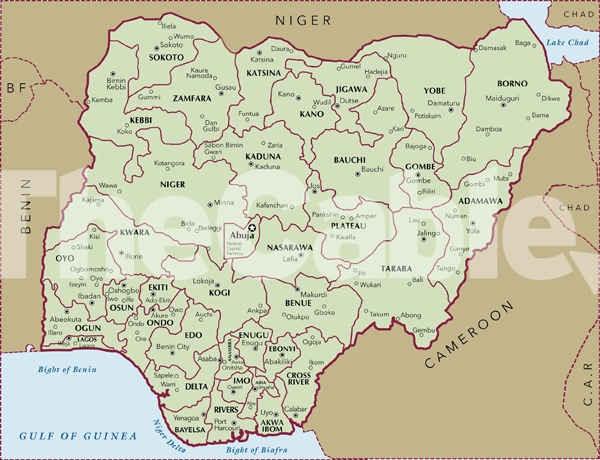
I have seen the map of the proposed ‘’Middle Belt’’ region and I must say it looks good for the optics. The geographical area covers the entire areas south of the main Hausa-Fulani dominated states stretching from Kebbi state across northern Nigeria to Borno state. In this area are hundreds of distinct ethnicities most of them different in every particular from one another. The proponents of the Middle Belt idea hope to forge a unity of these disparate people from the Hausa-Fulani group dominant group whom they finger as the problem of the northern minority groups.
Advertisement
But the devil is in the details. With regard to how the northern minority groups may feel about the Hausa-Fulani, can a Nupe man share and align with the Tiv or for that matter a Plateau man on this? As the putative Middle Belt area is a diverse place in culture, religion and politics, have the promoters of the idea taken the pains to integrate majority of the people in the geographical area to buy into this concept? Have they stopped to consider that the Muslims who arguably constitute the majority of the peoples in the geographical area may not go along wholeheartedly? Do they want to foist Christian values only into the agitation thereby excluding the significant number of Muslims who are also integral part of the geographical area?
A belt as we know is what holds a trouser together to fit into the waist of the owner. If the promoters of the Middle Belt want to be taken serious on the idea, they should either initiate a grassroot mobilization in all the ethnic groups of the area and tasking the legislators, governors and CSOs to present a resolution to that effect at the National Assembly. Using the pulpits and ‘’political priests’’ only, to canvass an idea that affects the diverse peoples of the area is opportunistic, non-inclusive, counterproductive and ultimately dead on arrival.
Advertisement
Gadu can be reached via [email protected] and 08035355706 (texts only).
Advertisement
Views expressed by contributors are strictly personal and not of TheCable.