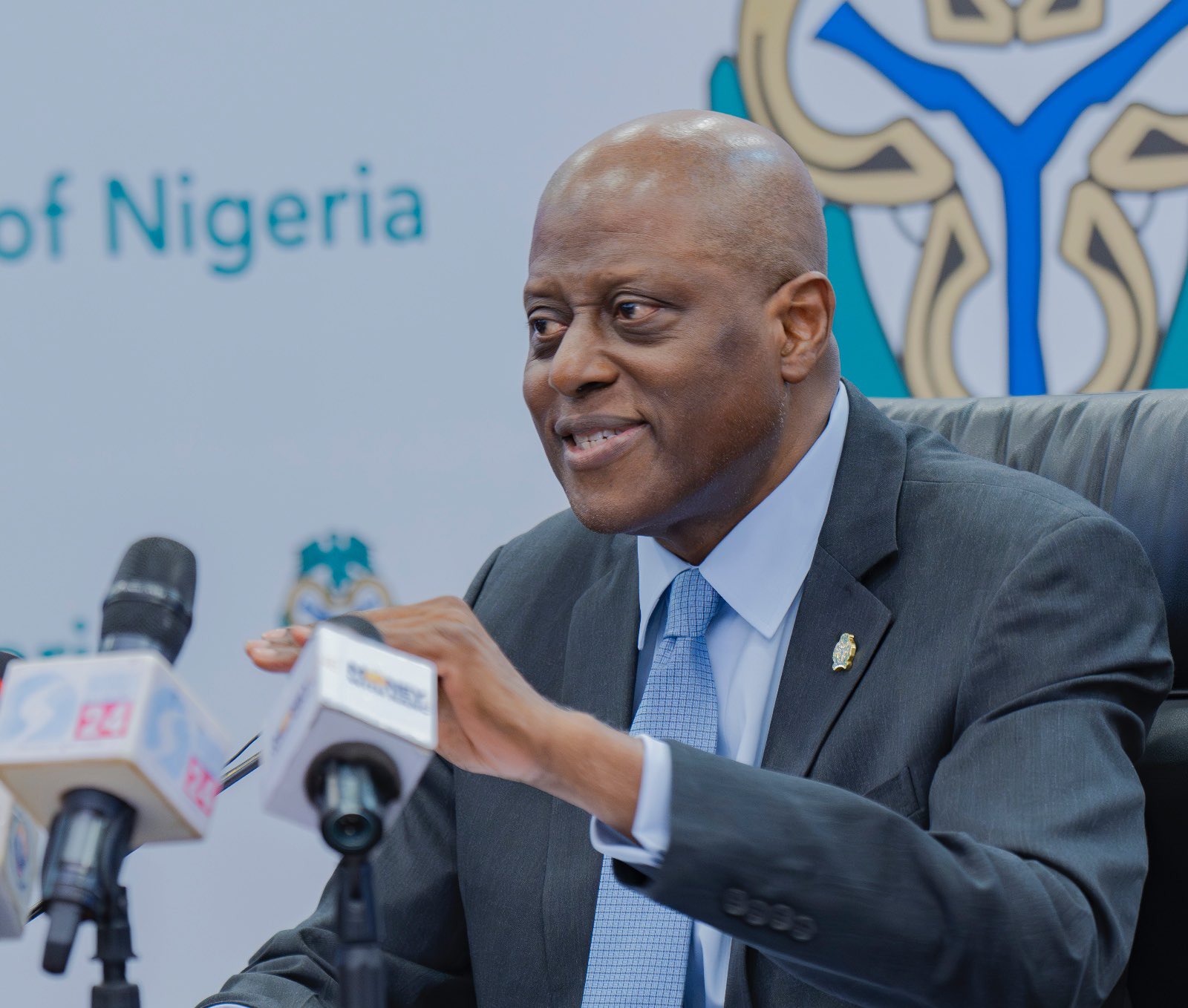
Nigeria is entering a rare moment of macroeconomic clarity. After years of turbulence marked by FX scarcity, policy inconsistency, and runaway inflation, the Central Bank of Nigeria (CBN) has begun to stitch together what appears to be the architecture of a more stable and predictable economy. The Governor’s remarks at the 60th Annual Bankers’ Dinner painted a picture of a monetary institution that has spent the past year cleaning house and now believes it has earned the right to think boldly about the future.
This piece looks at what the Bank has achieved so far, what the data tells us, and what Nigerians should realistically expect in 2026 as the institution pushes toward full inflation targeting, banking-sector consolidation, and a deeper embrace of digital finance.
The Year of Stabilisation: How the CBN Stopped the Bleeding
To appreciate where Nigeria stands today, it’s important to recall how bad things were. When the current leadership took office, FX backlogs were suffocating the market. Inflation had climbed to 34.6%, businesses had given up on the official FX window, and trust in monetary policy had evaporated.
Advertisement
Cardoso’s first job was basic triage. Clearing the US$7 billion FX backlog didn’t just tidy the system—it restored credibility. For the first time in years, businesses could price goods, investors could plan investments, and ordinary Nigerians could understand what the Central Bank was trying to do.
Inflation, which had become a stubborn and structural problem in Nigeria, began to moderate. The drop from 34.6% in November 2024 to 16.05% in October 2025 is a dramatic turn that few African economies have pulled off in a comparable time frame. The Bank stopped deficit monetisation, tightened liquidity, and committed to policy transparency—a departure from the era of experimental monetary policy.
In the FX market, reforms went from cosmetic to structural. Mandatory order submissions through EFEMS, the Nigerian FX Code, and disciplined price discovery restored sanity. The naira now trades with less than a 2% gap between official and parallel rates—an unimaginable scenario just two years ago.
Advertisement
New capital inflows of US$20.98 billion between January and October 2025, suggest investors believe Nigeria has turned a corner. And external reserves have rebuilt without borrowing, rising to US$46.7 billion, a psychological and economic milestone.
The Banking Sector: Recapitalisation Without Crisis
Against expectations, the banking recapitalisation programme has unfolded without market panic. Twenty-seven banks already meeting or exceeding new capital thresholds suggests that Nigeria’s banking system may be more resilient than many assumed.
Rather than simply shoring up balance sheets, the CBN is using the recapitalisation process to enforce cultural change: better governance, stricter credit controls, and tighter supervision. The Apex Bank is deliberately shutting the door on the boom-and-bust cycles that followed previous recapitalisation rounds. Stress tests show the system can withstand extreme macroeconomic shocks—an encouraging signal as 2026 approaches.
Advertisement
Digital Finance and Payments: Nigeria’s Silent Revolution
The CBN is clearly positioning Nigeria as a continental fintech hub. More than 12 million contactless cards, a sandbox of over 40 innovators, and deeper interoperability across payment switches signal a coherent strategy: modernise payments, reduce cash dependency, and build infrastructure that can handle scale.
Nigeria is now home to eight of Africa’s nine fintech unicorns—not by accident, but by an enabling regulatory posture. The emerging focus on stablecoins, tokenisation, and digital-asset governance suggests the Bank is preparing for a financial future where data and digital rails matter as much as interest rates.
Exiting the FATF grey list adds further credibility, reducing the friction of cross-border payments and enhancing correspondent banking relationships.
Advertisement
The CBN’s Blueprint for 2026: What Nigerians Should Expect
Next year will be the first time in nearly a decade that Nigeria enters with inflation trending down, FX markets stabilised, and reserves rising without external borrowing. The CBN’s roadmap for 2026 is shaping up in five major dimensions.
Advertisement
1. A Shift Toward Full Inflation Targeting
The Bank is preparing to fully operationalise an inflation-targeting regime. This will mean more transparent communication, sharper data analytics, and a policy rate calibrated to economic reality rather than political convenience. Nigerians should expect monetary tightening when necessary, but also rate cuts if inflation falls within target.
Advertisement
2. A Deeper, More Disciplined Banking System
With the recapitalisation deadline set for March 2026, banks will enter the new year stronger—but also more tightly regulated. Expect stricter credit-risk guidelines, better capital quality, and enhanced cybersecurity oversight. The CBN’s strategy is to pre-emptively guard against financial instability, not react to it.
Advertisement
3. A More Modern Payment System
Expansion of digital payment rails, more contactless adoption, and stronger cybersecurity architecture are all on the 2026 agenda. With agent banking now at 3 million operators, financial inclusion is becoming a structural part of the economy rather than a policy slogan.
4. Responsible Fintech Innovation
The CBN is preparing clearer guardrails for stablecoins, tokenised assets, and digital-asset experimentation. Nigerians should expect tighter licensing for fintechs, stronger consumer protection rules, and more robust data governance. The aim is to foster innovation without risking stability.
5. Stronger Fiscal-Monetary Coordination
The no-deficit-financing stance is here to stay. The implementation of a Revenue Optimisation (RevOp) framework, establishment of National Revenue Service (NRS) and upgrades to the Treasury Single Account (TSA) mean fiscal authorities will rely less on CBN financing. This fiscal discipline will help the Central Bank anchor inflation sustainably.
The CBN has, undeniably, engineered one of the most significant macroeconomic turnarounds in recent Nigerian history. The reforms have moved Nigeria from reaction to strategy, from opacity to transparency, and from crisis management to planned transformation. Inflation is moderating, FX markets are functioning, banks are consolidating, and digital finance is scaling.
But the harder part begins now. Stability can be fragile if reforms lose momentum, if politics intrudes, or if global conditions tighten.
Cardoso’s blueprint is clear, the direction is right, and the early results are promising. If Nigeria stays the course, the coming year may mark the beginning of the country’s most stable macroeconomic period in over a decade—a foundation not just for recovery, but for sustained prosperity.
Oyalowo is the Executive Director, Finance and Administration at The Ogun-Oshun River Basin Development Authority
Views expressed by contributors are strictly personal and not of TheCable.