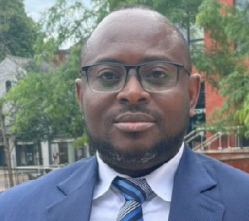

Peter Nwaoboshi
These are, by any measure, trying times for former Delta state governor James Ibori. In the second half of this year alone, Ibori has endured the painful loss of men who formed the core of his personal and political circle—friends who stood with him not only in moments of influence but also in periods of deep adversity. In September came the shocking death of Oskar Ibru. While still grappling with that loss, Ibori was confronted with another blow while he was in attendance at Ibru’s service of songs: the death of Segun Awolowo. The double tragedy was devastating.
Last week brought yet another round of farewells. Two of Ibori’s most steadfast loyalists passed on—Peter Nwaoboshi, popularly known as Oracle, and Charles Idahosa, the outspoken Edo political figure widely called Charlie Tempo. With their passing, a chapter quietly closed.
Politics, especially in the Nigerian context, is rarely remembered for loyalty. Many politicians lack the ideology to remain faithful to a course. It is more often defined by expediency and realignment when fortunes change. During Ibori’s ordeal in the United Kingdom, many who once thronged his corridors vanished. Some distanced themselves quietly; others openly recalculated their interests.
Nwaoboshi did neither.
At the height of the controversy surrounding Ibori, he stood firm, defending his principal with unusual candour. In one interview, he rejected the popular narrative that Ibori’s wealth was solely a product of his occupying the number one political office in Delta State.
Advertisement
“We came together and said, ‘Ibori, you have to run for governor,’ because he was the richest among us. He has more contacts. He was rich, and he also has the reach. And so, we knew that none of us could withstand the force. So, we all agreed here in Ibuzo. All of us young men said, ‘As far as we are concerned, he is going to be the governor.’ He brought his money. I am not an ingrate. Some people will be talking negatively about Ibori today because of ingratitude. None of us had money to go for election. He (Ibori) was the only man who has money, real money, to go for the election. 99 per cent of the money we spent was from Ibori. I speak as the State Secretary of the party. Even the contacts we used and the electronic systems and all the equipment we used, were in my chambers. All of them were done by Ibori.”
It was not a popular position to hold, but Nwaoboshi held it nonetheless. To him, loyalty was not situational; it was a matter of honour. Speaking shortly after Ibori’s release, he captured the essence of that belief: “There are many people who have been governors, and nobody remembers them again. But James Ibori is a man who made people. Nobody made him.”
His words were not merely praise; they were testimony to a relationship forged long before exile and trial—one that endured long after power shifted.
Advertisement
Charles Idahosa represented another dimension of loyalty: blunt, unvarnished, and rooted in conviction. Outspoken and unapologetic, he often said of himself, “I speak the truth the way I see it, no matter whose ox is gored.”
As political editor, I usually travelled on a monthly basis to Benin to interview him on national issues. An encyclopaedia of knowledge, he always had something new to say.
As commissioner for information during the Lucky Igbinedion administration, Idahosa occupied the engine room of PDP politics at a time of intense national intrigue.
He believed, until the end, that Ibori’s incarceration in the UK was politically motivated. Reflecting on the power struggles of the early 2000s, he once argued that certain governors—among them Ibori—were marked for persecution because of their role in opposing entrenched interests within the ruling party and their plans to support the late Alex Ekwueme to clinch the 2003 presidential ticket of the PDP against Olusegun Obasanjo, who was seeking reelection in office.
Advertisement
“I remembered I sat with Lucky Igbinedion, DSP Alamieyeseigha and James Ibori in Government House, Benin, for a small meeting. Senator Ehigie Uzamere was also in attendance. I told them at that meeting not to allow the National Assembly members to support the creation of the Economic and Financial Crimes Commission (EFCC) because the EFCC is a duplication of the Federal Fraud Unit.”
“I told them if they allow EFCC to be passed into law, Obasanjo will use it as his attack dog. If the governors don’t do his bidding, he will use EFCC to harass them. They are alive today; you can confirm from them what I said. Alamieyeseigha looked at me and said, ‘How can you be talking about the Commander-in-Chief like that? I said, ‘Okay, you will remember I said these things.’
“So, we wanted to make an Igbo man president, but it leaked. At the last minute, Atiku pulled out. We held the last meeting where Obasanjo came at the Rivers State Governor’s lodge. I was physically present. Immediately Atiku pulled out, Obasanjo had his way, and he marked Ibori and others as rebels to be punished.”
“So, all those stories of Ibori doing this and that were a result of that plan to make Ekwueme president. Obasanjo made sure Ibori was pursued out of the country and jailed.”
Advertisement
Whether one accepts this interpretation or not is secondary. What matters, in the context of loss, is that Idahosa never retreated from his position. He stayed loyal to his narrative and to the man he believed had been wronged.
Loss has a way of stripping politics of its noise and leaving only essentials. What remains, in moments like this, is not office held or influence wielded, but memory—of who stood firm when standing carried a cost.
Advertisement
As the circle grows smaller, Ibori confronts what all men of long public journeys eventually face: the reckoning not of power, but of time. Friends depart. Voices fall silent. And history, indifferent to sentiment, moves on.
May the souls of Peter Nwaoboshi and Charles Idahosa rest in peace. They were imperfect men, as all political actors are, but they were loyal and tested—men who did not abandon their benefactor in his lowest moments. May comfort also come to Ibori and to the families these men left behind.
Advertisement
In the end, loyalty—quiet, unfashionable, and costly—may be their most enduring legacy.
Akinsuyi, former group politics editor of Daily Independent, writes from Abuja. He can be reached at [email protected]
Advertisement
Views expressed by contributors are strictly personal and not of TheCable.