
The eleventh session of the Conference of the States Parties to the UN Convention against Corruption (the UN Anti-Corruption Conference) or CoSP 11 kicked off on Monday, December 15, in Doha, Qatar. CoSP is “the main decision-making body of the Convention.
It supports parties and signatories in their implementation of the Convention and provides policy guidance to the United Nations Office on Drugs and Crime (UNODC) to develop and implement anti-corruption activities. The Conference convenes every two years, bringing together representatives of States that have acceded to the Convention and other relevant stakeholders to review its implementation, discuss emerging challenges and trends and adopt resolutions on pertinent issues.”
The prelude to this year’s conference was the award ceremony for the 2025 Sheikh Tamim Bin Hamad Al Thani International Anti-Corruption Excellence (ACE) Award, which took place on December 14. The ACE Award advocates the importance of tackling corruption and encourages the implementation of the crucial measures set forth by the United Nations Convention Against Corruption. It is presented “in recognition and appreciation of those who have contributed to the global campaign against corruption. The Award recognizes individuals and organizations who have dedicated themselves to combat corruption in a significant capacity. The greater purpose of the Award is not only to serve as a tool that highlights exemplary and noteworthy actions and good practices on a global scale, but also to recognize, promote, collect and disseminate anti-corruption models from around the world and to raise awareness, support and solidarity to the fight against corruption.”
In its ninth year, “the Award seeks to encourage and inspire similar and new initiatives in order to enable a corruption-free society. To meet these goals, the Award is divided into five categories, recognizing the diverse and distinct fields in the global fight against corruption. These categories are: Lifetime/Outstanding Achievement; Academic Research and Education; Youth Creativity and Engagement; Innovation/Investigative Journalism; and Safeguarding Sports from Corruption.”
Advertisement
The ACE Award, administered by the Qatar-based think tank, the Rule of Law and Anticorruption Center (ROLACC), celebrates corruption fighters, academics and campaigners from around the world. “Held under the patronage of His Highness Sheikh Tamim Bin Hamad Al Thani, Amir of the State of Qatar, and supported by the United Nations Office on Drugs and Crime (UNODC), the award ceremony honours individuals making significant and lasting contributions to transparency, accountability, and the global fight against corruption. Since its launch in Vienna in 2016, the Award has become one of the world’s most respected recognitions of excellence in anti-corruption work.” It could be described as the Accountability and Integrity Nobel.
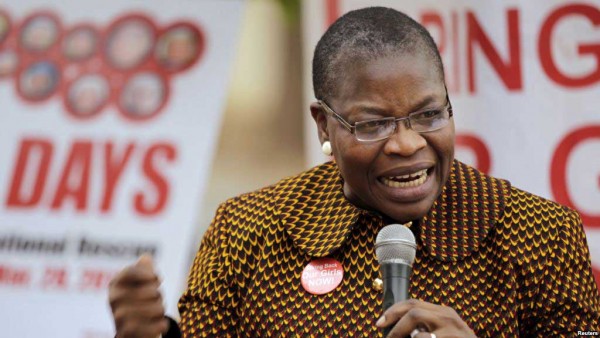
This year’s co-winner (alongside Mr Drago Kos, a former chair of the OECD Working Group on Bribery from 2014 to 2022) in the Lifetime/Outstanding Achievement category is the inimitable Dr. Obiageli “Oby” Ezekwesili, a former education minister in Nigeria, former Vice President of the World Bank and co-founder of Transparency International. Notable Africans, including Dr Kenneth Kaunda, first president of independent Zambia, and John Githongo, a Kenyan investigative journalist and prominent anti-corruption figure who served as Kenya’s first Permanent Secretary for Governance and Ethics under President Mwai Kibaki and whose travails are chronicled in the captivating book, It’s Our Turn to Eat: The Story of a Kenyan Whistleblower by British journalist and author, Michela Wrong, have won the Award.
Dr Oby Ezekwesili is the second Nigerian to win the award. In 2018, my organisation, the African Centre for Media and Information Literacy (AFRICMIL), whose pioneering work has identified whistleblower protection and whistleblowing advocacy as a key tool in the promotion of accountability and good governance in Nigeria, nominated Mallam Nuhu Ribadu, first chair of the Economic and Financial Crimes Commission (EFCC) and the current National Security Adviser (NSA), for the award which he won for his integrity and pioneering anti-corruption work in Nigeria. I accompanied Mallam Ribadu to the award ceremony, which took place at the Putrajaya International Convention Centre in Kuala Lumpur, Malaysia, and had in attendance Malaysia’s legendary prime minister, Dr Mahathir
Advertisement
Mohamad, and the Amir of the State of Qatar, Sheikh Tamim Al Thani, in attendance. Mallam Ribadu jointly won the Lifetime/Outstanding Achievement category alongside Leonard McCarthy, a former Vice President of Institutional Integrity at the World Bank Group.
In his acceptance speech, Mallam Ribadu while paying tribute to his former colleagues at the EFCC some of whom paid the supreme price in the line of duty, described the award as an acknowledgement of persons around the world working to curb corruption. He noted that the Award would boost the morale of corruption fighters and make them realise that their job is not unappreciated.
It was the same feeling I had when I read the news of Dr. Ezekwesili’s recognition as the joint winner of this year’s ACE award in the Lifetime/Outstanding Achievement category. I am indebted to Anthony Ubani, the executive director of #FixPolitics, “a citizens-led movement to structurally change and innovate politics in Nigeria, Africa, and the rest of the world,” founded a few years ago by Dr Ezekwesili, for the title of this essay. Nothing captures the sentiment better! Integrity does, indeed, speak a universal language, and as Mr Ubani noted, “this international recognition in Qatar affirms a lifetime of principled leadership and fearless advocacy. Nigeria is proud. We are inspired.”
Dr. Ezekwesili well-deserved global honour follows a track record of pioneering work in the accountability and good governance eco-system. She co-founded and served as one of the pioneer directors of Transparency International, the Berlin-based global movement working in over 100 countries to end the injustice of corruption. From 1999 to 2007 when she was appointed Vice President of the World Banks’ Africa region, she served, among other things, as the pioneer head of the Budget Monitoring and Price Intelligence Unit (aka Due Process Unit) under President Olusegun Obasanjo, which helped to sanitize the federal government’s public procurement and contracting processes earning her the monicker, “Madam Due Process.”
Advertisement
Not tired of innovating, a few years ago she launched #FixPolitics, believing that we can’t fix our nation unless we fix our politics. Among #FixPolitics’ groundbreaking initiatives is the School of Politics, Policy, & Governance (SPPG), where yours truly is a faculty, “an unconventional school designed to attract, develop and produce a new generation of political leaders who will listen and serve the new class of citizens who know their rights.”
Speaking on the ACE Award, Dr Ezekwesili noted, “the fight against corruption is inherently collective: This honour belongs to all citizens and reformers who insist that public power must serve the public good (emphasis added). Anti-corruption work is not about individuals, but about building institutions and norms that outlive any one person. Thanks for being co-labourers in the fight towards well governed societies.”
“Madam Due Process,” may your light continue to be a guide for citizens, institutions, and nations around the world.
Onumah, PhD., is the coordinator of the African Centre for Media and Information Literacy (AFRICMIL).
Advertisement
Views expressed by contributors are strictly personal and not of TheCable.