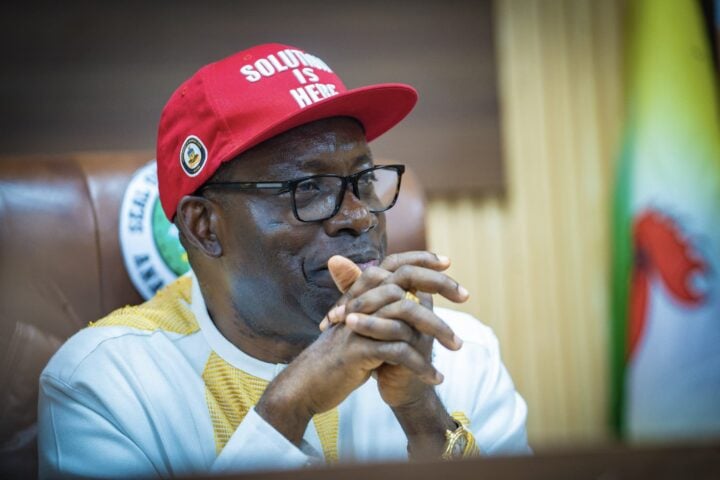
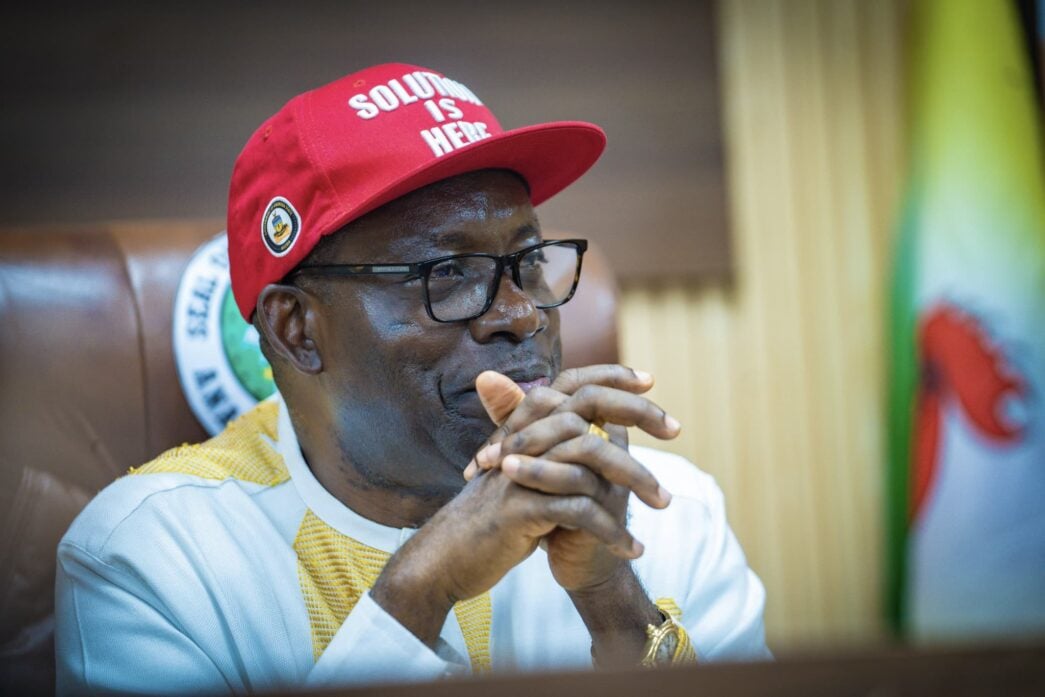
Chukwuma Soludo
In Anambra State, Governor Chukwuma Soludo is aggressively putting in place structures to return public schools to its glory days. Between 1970 and 1985, public schools in Nigeria were highly respected and produced the best graduates. There were no rooms for private schools in this era. In this period, teaching was respected as a middle-class profession and it attracted the best and the brightest. The federal, state and local governments aggressively built and equipped new schools. In this era, Nigerian certificates were highly respected abroad.
To put the quality of Nigerian certificates in perspective, between 1970s and 1980s, many Nigerian graduates with only first degrees (B. Sc/B. A) were admitted directly into PhD programmes abroad because their undergraduate training was strong enough to qualify for PhD programmes without first completing a Master’s degree. A first-class or a second-class upper degree from a Nigerian University was regarded equivalent to a Master’s qualification in many countries.
All these have changed in Nigeria. Public schools, which used to be a leveler for the rich and the poor in Nigeria are now a shadow of their former selves. Many middle class and rich Nigerians no longer want to have anything to do with public schools. Many public schools are overcrowded, dilapidated, and under-equipped. Today, though the modern curriculum is broader, they are poorly implemented. There are reports of students graduating from some public secondary schools in Nigeria without having basic numerical and literacy skills. But all hope is not lost. Some subnational governments are aggressively building back trust in public education in Nigeria.
Today, in Anambra, the ‘glory days’ of public schools are being restored. In the 2025 President’s Teachers’ and Schools’ Excellence Awards (PTSEA), a public school in Anambra, Woliwo Primary School II, Onitsha, won the award for the best public school in Nigeria. In the 2024 edition of the same Presidential awards, a teacher in Government Technical College, Osamala, Ogbaru LGA, won the award for the best teacher in Nigeria. The ‘best teacher award’ came with a brand-new Hyundai Accent car. These awards to Anambra schools did not happen by accident but are a result of an intentional and focused investment in education.
Advertisement
Without teachers there is no education. Little wonder that in the first two years in office as Governor of Anambra State, Governor Soludo recruited additional 8115 teachers in public schools in a bold move to end an era where the State had schools without teachers. For context, in the 2013/2014 academic session, according to documents released by the Federal Ministry of Education, the total number of teachers in primary schools in Anambra was 7616 with a pupil to student ratio of 99 and this number increased to 8132 in the 2015/2016 academic session.
The term ‘PTA Teachers’ showed the level of shortage of teachers in Anambra State before the aggressive recruitment of teachers by the Soludo-led administration. Before the coming of Governor Soludo, and due to a shortage of government teachers, PTAs had to hire and pay “PTA Teachers” using parents’ money. These were ad-hoc teachers, as it were. (PTA stands for Parent Teachers Association).
In November 2025, Governor Soludo approved the construction of 30 brand new public schools in communities without schools. All these are intentional efforts to bring education to the door step of the child of the common man.
Advertisement
Under Governor Soludo’s watch, public education is now truly free because his administration has removed all the hidden levies in nursery up to senior secondary public schools in Anambra. In public schools in Anambra, between 2016 and 2022, parents paid for PTA, exams, sports, handcrafts, and infrastructure. All these hidden levies have been banned today. In the past, there were reports that parents paid ₦8,000 – ₦12,000 + per term per child to cover school running costs in public schools. Today, public schools are prohibited from collecting any cash. The ban on hidden fees in public schools is religiously enforced in Anambra. The Soludo-led administration has sacked and demoted several headteachers who violated the administration’s ‘free education’ policy. In fact, when free education was extended to SS1 -SS3 in September 2024, Governor Soludo ordered public schools to refund any fees that parents had already paid for that term.
Governor Soludo strongly believes that the children of the poor must have free and qualitive education. This is a key component of Anambra’s educational policy today. In fact, one media outlet quoted a former governor of the State as saying, ‘’ Anambra people are not poor, they want quality education and can pay for it.’’. This is not the philosophy of the state today in terms of education. The children of the poor must have the same quality of education as the children of the rich.
Also, schools in Anambra have progressively improved on their performance in external examinations. In the 2024 WAEC examinations, Anambra had an 86.1% pass rate compared to the 61% rate recorded in 2014. The state had a pass rate of 47% in 2010. (WAEC percentage pass rate represents students with pass in 5 credits – including Mathematics and English).
But there is one area where public education seems to lag in developing countries. This is in the area of tech. Very few public schools can afford to have the same level of tech investment as seen in some modern international schools in Nigeria. To solve this problem, the Soludo-led administration seems to have used a model that makes a lot of sense. While the administration is aggressively building smart schools in various communities, through its Solution Innovation District (SID), the administration is up-skilling millions of young people in tech. For example, SID is currently running ‘1 Million Anambra Digital Tribe Project’ which is an initiative to train one million Anambra people and residents in essential digital skills and in tech. There are numerous tech initiatives being run by SID. Governor Soludo is also aggressively installing broadband fiber-optics infrastructure in all tertiary institutions in Anambra. The future of higher education is in tech.
Advertisement
Bringing public schools back to its glory days of the 1970s and 1980s will require commitment, investment and discipline. It will take a deep, structured and multi-layered reform. Anambra is on the right path.
Nwankwo is the special adviser to Soludo on Special Projects
Views expressed by contributors are strictly personal and not of TheCable.