
Political scientists and historians broadly recognise that governing a democratic society comes with a distinct and often demanding set of challenges, frequently viewed as more complex than those associated with autocratic or monarchical systems. Whether it is inherently the most difficult form of government to manage remains a matter of debate and interpretation, as every system carries its own unique constraints and complexities.
The question about complexity is incontestable because democracy requires balancing the interests, demands and expectations of diverse groups. Because multiple voices compete freely, democracies can become deeply polarised. Navigating disagreement without tipping into instability or chaos demands advanced political skill, especially in Nigeria, where the challenge seems greater than in many other climes.
Because of our multicultural makeup and the persistent dysfunctions within our system, matters that should be straightforward often become unnecessarily complex. Even more troubling is our gradual drift away from rational engagement, as we increasingly focus on trivialities rather than substantive issues. A significant portion of public commentary across various sectors is now marked by an acute shortage of logic and an excess of sentiment. Sadly, many of these views stem either from a limited understanding of the issues at stake or from analyses that are, at best, pedestrian in approach.
Unfortunately, strategic institutions that should ordinarily help the smooth functioning of society through civic engagements, instead, pursue vested interests along political, ethnic or religious lines. Pathetically, when such indulgences snowball into dire security and economic consequences, the same commentators search for scapegoats among the very institutions that tried to stem the rise of the monster in the first place.
Advertisement
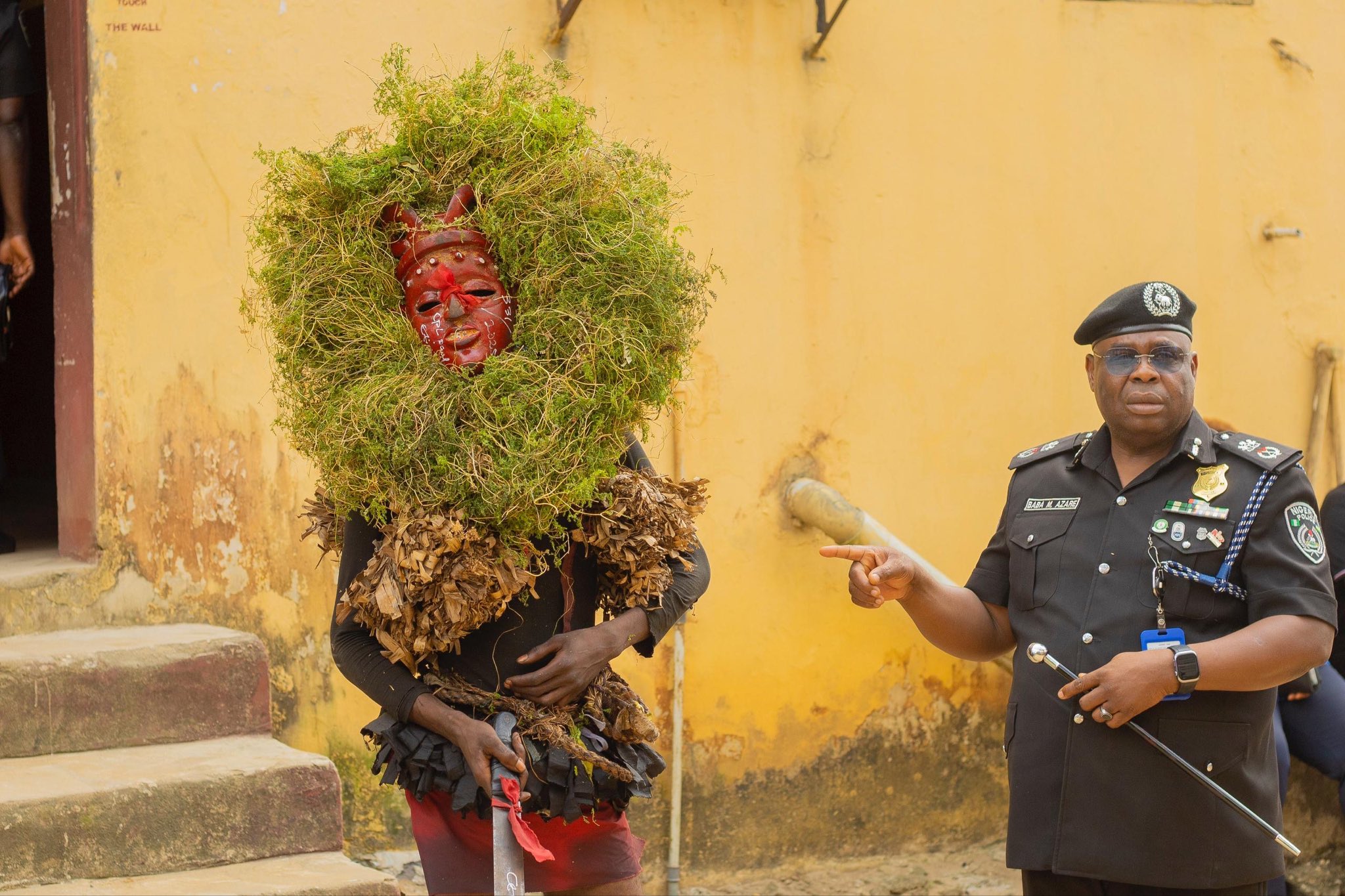
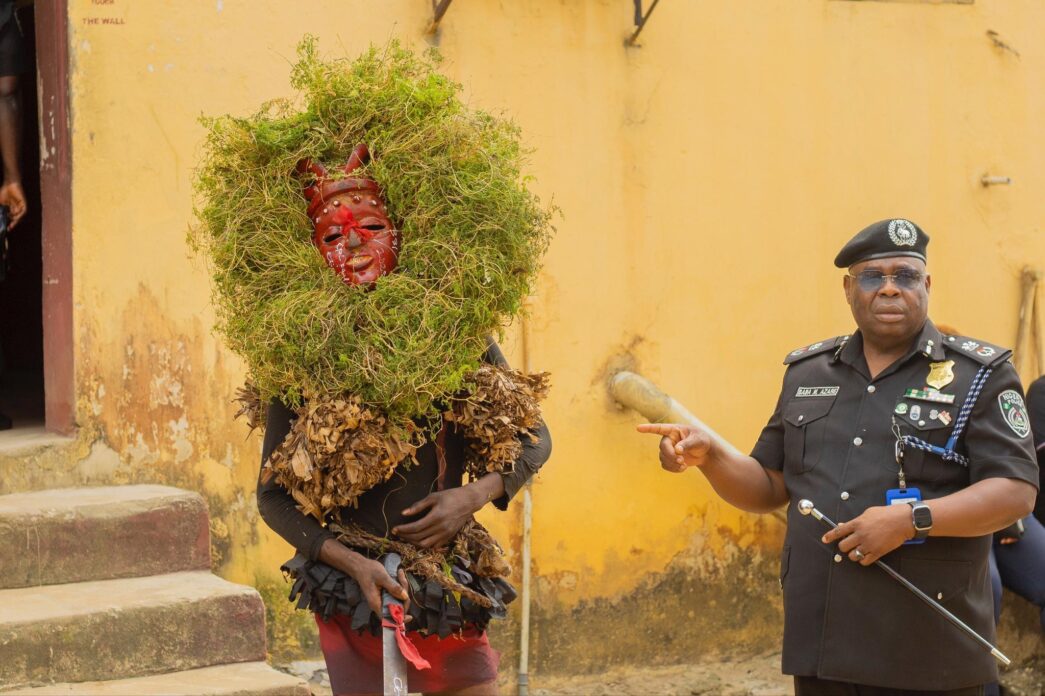
In recent weeks, Akwa Ibom has found itself embroiled in a heated conversation that goes beyond the Ekpo masquerade which is the major issue. It touches identity, culture, safety, rights and the boundaries of freedom in a modern society. The uproar that followed Governor Umo Bassey Eno’s Executive Order on masquerade displays has generated sound and fury from many quarters: some sincere, some emotional and some misdirected. Yet behind all the arguments lies one stubborn truth: lives have been lost, people have been assaulted and criminal elements have hijacked a revered heritage for sinister ends.
In recent days, the Police in the state have arrested some suspects for robbery, assault and extortion allegedly carried out by criminals masquerading as custodians of tradition. According to the state governor, intelligence reports indicated a real and growing danger, suggesting that without prompt action, the state risked slipping into violent scenarios and possibly tragic outcomes, especially with the increased activities and crowds expected during this festive season.
It was against this backdrop, he explained, that he issued an Executive Order, one which restricts masquerade displays from urban centres but allows them within village squares and local communities under regulated conditions. This context does not in any way connote a cultural war nor an attempt to erase heritage. It is more of a safety measure, anchored on an existing law: the Masquerades (Control) Law, Cap. 94, Laws of Akwa Ibom State (2022), which had already mandated police permits and confined displays to designated areas.
Yet, as expected in matters involving culture and sentiment, the Order triggered strong reactions. As has become commonplace in our clime these days, it has assumed a religious dimension, especially as the governor is a cleric of the Christian faith. Some commentators argued that Ekpo is not simply entertainment but a sacred institution, an embodiment of the coexistence between the living and the spirit world. They noted that even colonial administrators, in their zeal to suppress African practices, failed to eliminate Ekpo, revered as the king of masquerades in the Ibibio and Annang communities of the state. If the white-men failed, why then should black men with “white hearts,” as some put it, now attempt to annihilate their own identity?
Advertisement
Others raised constitutional questions, citing the freedom of worship and association under Section 38 of the Nigerian Constitution. They claimed that restricting Ekpo to village squares amounted to cultural discrimination—comparable, in their view, to ordering Christians to worship strictly within church buildings without public processions or crusades.
Some recalled past episodes where officials destroyed cultural artifacts under the guise of modernity or religion, warning that this new order, if not resisted, might follow the same script. Others wondered why the state shows stronger enforcement energy toward Ekpo masquerades than toward open grazing or “iron-condemn” scavengers, both of which had long been banned in the state without rigorous implementation.
But criticism, however loud, must be measured against facts. And the facts remain sobering. When a masquerade hides behind a mask to threaten and deprive citizens of their possessions, that is not culture. It is robbery. When a man in Ekpo attire assaults a young girl because she previously rejected his advances, that is not tradition. It is criminality. When public roads become arenas of intimidation where uninitiated persons, especially women and children, are harassed or blocked from their daily activities, then the masquerade has ceased to be a cultural expression and has become a tool of intimidation and coercion.
As one commentator also observed, culture is dynamic. That just as the inhuman practice of killing twins was discontinued, societies must abandon or reform practices that endanger life and undermine public harmony. A culture that thrives on exclusion, fear and intimidation cannot claim to unite the community. Public peace and coexistence require a culture that protects, not one that persecutes.
Advertisement
There seems to be a consensus among some elders in the state that what is being displayed as Ekpo today is far from the values of the ancestors. The authentic Ekpo represents discipline, reverence and communal unity, not extortion, harassment or lawlessness.
When criminals hijack culture, the state has a clear responsibility: protect citizens and preserve the integrity of tradition by removing the criminal element. Much as some critics of the recent move agree that there is a need for punishing bad behaviour, they insist the action should target, identify and prosecute masquerades that commit crimes, not hiding under the smokescreen of law and order to prosecute a religious agenda.
However, much of the present controversy seem to stem not from the content of the Executive Order but from a misconception. Did the governor “ban” Ekpo? It doesn’t seem so. He clarified repeatedly: “I have not banned Ekpo masquerade in Akwa Ibom.” He confined displays to village squares, in accordance with existing law. The message seems clear enough: “We will continue to promote our rich culture and tourism, but never at the expense of public safety or human dignity.” This is not suppression; it is preservation. Preservation of life. Preservation of peace. Preservation of the authentic Ekpo, which must not be left in the hands of hooligans who hide criminality behind sacred attire.
Beyond the arguments, the central issue remains: the state has a responsibility to guarantee the safety and dignity of all residents. Freedom of worship cannot override the right to life. Cultural expression cannot trump public security. No society, African or otherwise, permits masked individuals to roam the streets unregulated during a tense holiday period when there is mass movement of persons, markets are bustling and security threats are heightened. At the core of this debate lies a difficult but necessary recognition: the times we live in demand caution. Criminal ingenuity has grown. Public anxiety has increased. And the state cannot afford the luxury of inaction.
Advertisement
If certain measures now appear stringent, as perceived by some, they are grounded in the overarching duty to maintain peace, uphold stability and safeguard human dignity. Culture must be celebrated, but life must be protected. Heritage must be cherished, but society must remain safe. And in a season when goodwill should prevail, it is only prudent to ensure that joy is not eclipsed by tragedy.
My reading is that the Executive Order is not a death sentence on the Ekpo masquerade; it is a protection of the living being. It is the reassurance that tradition will endure, but never as a cloak for violence. It also stresses the point that, when guided by good faith, tough decisions are sometimes essential to safeguard the peace and harmony on which every stable society depends.
Advertisement
James is a Fellow of the Nigerian Guild of Editors and Chairman Editorial Advisory Board of Naija Times.
Advertisement
Views expressed by contributors are strictly personal and not of TheCable.