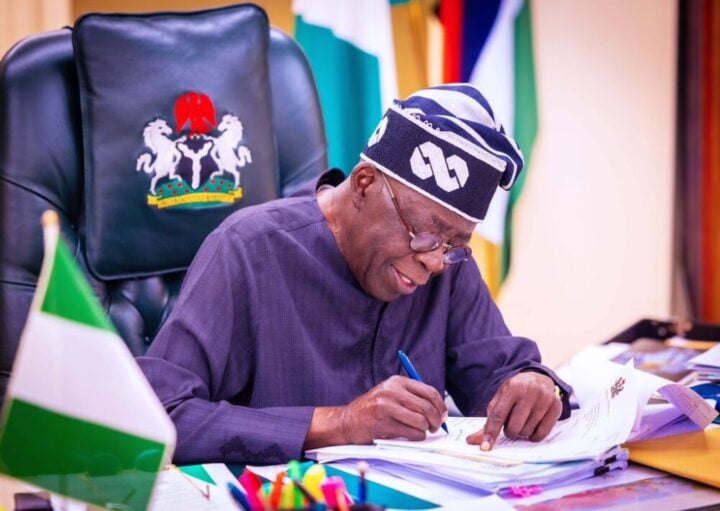
President Bola Ahmed Tinubu is often celebrated by his allies as a grandmaster of political strategy—a man whose election record reads like a string of unbroken victories. They point to his seamless ascent: a Senate seat won on first attempt, a governorship clinched and renewed without strain, and, ultimately, the presidency secured on his maiden outing.
It was on this foundation that millions of Nigerians invested in his promise. Many believed that a man hailed for his tactical prowess could finally deliver the long-awaited good governance that has eluded Nigeria’s development journey for decades.
But the early signals from his administration have steadily chipped away at that expectation.
His Day-1 removal of fuel subsidy sharply divided the country; yet even critics admitted that the audacity of the move suggested a strategic mind unafraid of tough decisions. Perhaps, many thought, this boldness would extend to other aspects of governance.
Advertisement
Instead, the President’s ministerial list became the first major rupture in public confidence. Nigerians had hoped Tinubu would assemble a cabinet of first-rate technocrats—professionals armed with fresh vision, competence, patriotism, and the urgency required to rebuild a nation in distress.
What emerged, however, was a politically calculated ensemble that revealed a deeper priority: re-election over reform, patronage over performance. Many appointees had little record of excellence from past public assignments. With that list, the President inadvertently announced that his government would serve as a recycling depot for figures whose ideas, energy, and patriotic fervor had long expired.
The disappointment persisted. Despite his courage on subsidy and FX unification, the failure to complement those bold moves with an equally courageous selection of capable hands weakened the administration’s transformative potential. The recycling instinct was again visible in the appointments of heads of agencies and parastatals, leaving the government perpetually entangled in controversies that could have been avoided with better leadership choices.
Advertisement
The headwinds intensified with the controversial Presidential Prerogative of Mercy list—an episode that inflamed public outrage and embarrassed the government. Before that uproar could fully settle, another blow arrived: the United States’ designation of Nigeria as a Country of Particular Concern (CPC), a badge of dishonour with far-reaching diplomatic implications.
The CPC episode exposed another costly delay—the President’s slow approach to appointing ambassadors. After public pressure, he promised to act swiftly. Nigerians waited with renewed hope. But when the ambassadorial list finally emerged, it landed like a dropped balloon. It confirmed what critics had long warned: the administration remains deeply addicted to recycling personalities, even for roles that demand global competence, diplomatic intelligence, and fresh international vision.
To be clear, President Tinubu did not create the culture of recycling. Nigeria’s ruling class has practiced it since the birth of the Fourth Republic. President Obasanjo, though not immune, balanced political patronage with the infusion of world-class technocrats. President Muhammadu Buhari, on the other hand, elevated recycling to an art form. Yet, Tinubu appears poised to surpass even Buhari in entrusting Nigeria’s progress to individuals with limited track records in performance, prudence, patriotism, or professionalism.
This is not only disappointing—it is dangerous. A nation of over 200 million people—brimming with brilliant minds at home and abroad—cannot afford to rely on a small circle of tired actors to navigate the complexities of a rapidly changing world. In an era defined by innovation, global competition, and diplomatic agility, the recycling of old hands is an anchor dragging the nation backward.
Advertisement
Tinubu’s ambassadorial list is more than a set of names; it is a silent message. It tells of a government unwilling or unable to scout for excellence. It signals a lethargy in talent discovery and an imagination too timid to embrace rapid, sustainable progress.
And as history has shown, a government of recycled leaders will produce recycled problems. It will struggle in service delivery, falter in innovation, and move sluggishly in development. The nation, in turn, sinks deeper into a cycle of crisis, stagnation, and underperformance.
As Nigeria becomes a recycling bin for outdated political actors, it also becomes—sadly—a recycling bin for criminality, chaos, and chronic underachievement.
The message in the ambassadorial list is loud enough for anyone willing to hear: Nigeria cannot move forward on recycled wheels.
Advertisement
Views expressed by contributors are strictly personal and not of TheCable.