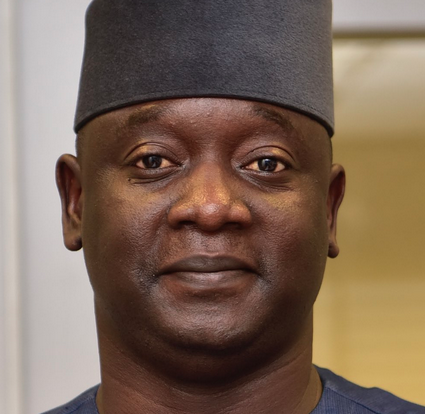
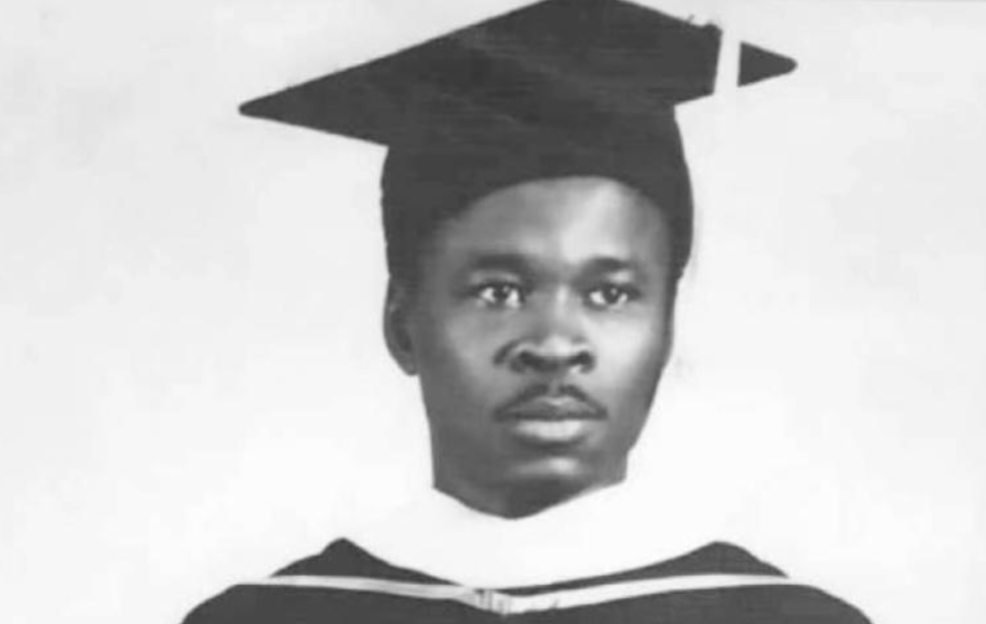
With the passing of Professor Adamu Baikie on Friday, December 12, 2025, Nigeria and the broader African academic community have lost a true architect of modern education. He was not merely a participant in the post-colonial educational project; he was one of its primary designers and builders. His life, spanning 94 years from his birth in Zaria on October 2, 1931, charts the very evolution of learning and leadership in our nation.
Writing a tribute in his memory is challenging, given the vast tapestry of connections his life embodied. He was a meticulous chronicler, profoundly documenting not only his own journey but also tracing the lineages of his parents and others with a historian’s sincerity. Had he chosen that path, he would have been an excellent historian, just as he was a leader in education and university management.
Before delving into his background, I wish to explain my connection to him. Beyond knowing him as Northern Nigeria’s first Professor of Education, an astute educationist, a vice-chancellor at several universities, and a leader in the Northern Elders Christian Forum (NOCEF) and the Congress of Northern Nigeria Christians (CNNC), I was formally introduced to him by my Editor-in-Chief, Sam Nda-Isaiah, while I was a reporter with the Leadership Newspapers Group. This began a lasting relationship, resulting in interviews and the generous gift of books from his personal library.
In his autobiography, “Against All Odds”, Baikie explained that his father was of Shuwa Arab origin, born around 1890 in the Lai Bagharmi District of Chad, and named Batshon Bangbharyiga Abdallah. His grandfather was Hamda and his grandmother Khadija. Tragedy struck when his father, then about nine years old, was captured in 1900 by Arabian raiders from Sudan while guarding his family’s farm. He was taken to Dikwa, regained his freedom in 1901, and remained in Mafoni under British care for about four years. He then trekked with others to Ibi and Lokoja, finally arriving in Zungeru in 1906.
Advertisement
At Zungeru, his father served as a milk boy, supplying colonial officers, including those working with Lord Frederick Lugard. In November 1908, he was among eight boys handed over to the Church Missionary Society (CMS). After six months in Mokwa and later Kutigi, he met Reverend John Ogazuma Baikie in January 1910. In 1912, Reverend Baikie adopted him, and upon baptism, his name was changed to Jacob Abdallah Baikie. In a 1974 account, Abdallah Baikie clarified that Christianity was not imposed on him. “My parents were Muslims, but I was not taught in the Muslim way at an early age… I took up Christianity and was subsequently baptised at my own wish and convictions,” he stated.
Abdallah Baikie’s story is a remarkable thread in a wider tapestry of faith and community. He was a relative of Reverend Henry Galtir Darren Miller. Henry Miller, father of the famous musician Bala Miller of the Pirameeds of Africa Band based in Kaduna, was of the same lineage from Chad. Henry Miller also adopted the name ‘Miller’ from the missionary Dr. Walter Richard Samuel Miller upon his baptism. He became the first Northern Nigerian Anglican priest in 1924. Other children of Reverend Miller included the popular identical Miller Twins: the late Mrs. Jummai Jarma and Mrs. Dora Maude Akanya. I once interviewed Professor Baikie at Mrs. Akanya’s home at No. 4 Waziri Drive, Off Alkali Road, Kaduna, and admired their deep familial bond. Mrs. Akanya was appointed the first female commissioner in Northern Nigeria in 1967, serving in the North Central State as Commissioner for Health and Social Welfare, and later for Trade, Industries, and Cooperatives. Her twin sister, Jummai Jarma, was the founding principal of both Women’s Teachers’ College and Queen Amina College in Kaduna. The Miller Twins were born in Unguwan Juma, Zaria, on 8th November 1933. They were the only two women at the College of Arts, Science, and Technology, Zaria, cycling long distances to teach married women essential skills. Their mother was Mrs. Juli Martha Miller.
Reverend Ogazuma Baikie, who adopted the professor’s father, was also the father of Miss Christiana Ogazuma Baikie, later Mrs. Christiana Fearon. She was the mother of Bishop Josiah Idowu-Fearon, the immediate past Secretary General of the Anglican Consultative Council. Bishop Fearon’s father was also a pastor, Reverend E.Z. Fearon.
Advertisement
Due to his missionary work across Northern Nigeria, Abdallah Baikie became fluent in Nupe, Kanuri, and Angas (Ngas). While working in Kabwir, present-day Plateau State, one of his pupils was Mama Namun (Saraya Kurinyan) Gowon, mother of General Yakubu Cinwa Gowon (‘Cinwa’ appears to have been General Gowon’s tribal name). Later, faith brought General Gowon and Professor Baikie together as classmates at Boys’ Middle School (BMS) in Wusasa between 1946 and 1948, along with Mr. Michael Angulu, one-time Registrar of the Joint Admissions and Matriculation Board (JAMB); Paul Barnabas; and the famous Dr. Eli Mama, founder of Lafiya Clinic, said to be Kaduna’s first private hospital. Positions second and third in the class rotated between Yakubu Gowon, Adamu Baikie, and Paul Barnabas. One of the Gowon sisters, Martha Kande Audu (née Gowon), wife of veteran broadcaster James Audu, made history as the first female voice on Radio Television Kaduna when the station launched on 11th March 1962. I felt honoured to have interviewed Mama Martha Audu, alongside my senior colleague Mallam Ibraheem Musa, at the instance of her son Yahaya Audu in August 2013.
Another pupil of Abdallah Baikie in Kabwir was Baba John Amos Kwashi, the father of Bishops Benjamin Kwashi and Jacob Kwashi. Yohanna Gowon, the father of General Gowon—as noted by Professor Isawa Elaigwu in “Gowon: The Biography of a Soldier-Statesman”—arrived in Wusasa in 1936 when the future General, his fifth child, was only two. The senior Gowon built his family life around what Elaigwu termed “the Bible, the Hoe, and the Pen”—a combination of religious study, hard work on the farm, and an emphasis on education. General Gowon’s father’s main associates were Bishop Smith, Mallam Nuhu Bayero (Dan Iyan Zazzau), and the Chief of Wusasa, Mallam P.O. Ishaku, popularly known as ‘Mallam Bisirka’.
Abdallah Baikie retired from missionary work in 1921, joined the Nigerian Railways in 1923 at Minna, and was posted to Zaria as a clerk in the Locomotive Department. It was in Zaria that he married Asama’u Ma’u, a Fulani woman from Garwa, in January 1925. As Professor Baikie narrated, “My mother was a practicing Muslim at the time she married my father, who had already taken to Christianity… In 1947, after twenty-two years of marriage, my mother received Christ and decided to be baptised. My father chose the name Rebecca for her.” The senior Baikie’s journey with the Nigerian Railways continued until, on the 2nd of October 1931, at No. G10 Sabon Gari, Zaria (on what is now Yoruba Street), his son—the man who would become a household name—was born amid fanfare. Named Adamu and Dumo, his birth coincided with a payday for railway staff, celebrated with Bagharmi and Nupe dancers.
As young Adamu grew, his father joined the Kano Native Authority in 1933 during the reign of Emir Abdullahi Bayero, working at ‘Gidan Ruwa’, the administrative headquarters for electricity supply in Kano. He rose to Chief Clerk and served in various departments until 1949. He then helped set up the administrative machinery for the Kano Citizen Trading Company until 1954. Later, he taught the Hausa language to expatriates and worked for P.S. Mandrides, a groundnut oil producer, until ill health forced his retirement in 1962. He died in 1983 at 93; his wife, the professor’s mother, had predeceased him in 1980.
Advertisement
This intricate web of connections extended to Professor Baikie’s own family. He first met his wife of blessed memory, Mrs. Elizabeth Yar’baba Sa’adatu, in 1953. They wed at Holy Trinity Church (now Cathedral) in Fagge, Kano, on the 1st of July 1961, as he completed his studies at the Nigerian College of Arts, Science, and Technology, the precursor to Ahmadu Bello University. Justice Haruna Dandaura, the first Hausa Christian to become the Sarkin Sabon Gari of Kano and the first judge in the Nigerian Customary Court of Appeal system, was the father of the bride. He also served as Chairman of the Code of Conduct Bureau and Chief Commissioner of the Federal Public Complaints Commission. The Chief Bride’s Maid was Miss Comfort Maimuna Zakari (later Mrs. Garba Yaroson), who married General Gowon’s Police ADC, Commissioner of Police Garba Yaroson. One of the bridesmaids was Miss Victoria Hansatu Zakari, who later married General Gowon and became Nigeria’s First Lady. The civilian executed after the 1976 coup, Abdulkareem Zakari—a journalist, University of Ibadan graduate, and staff member of the Nigerian Broadcasting Corporation (NBC)—is said to have been the elder brother of the Zakari sisters (Comfort Yaroson and Victoria Gowon). Their father was Mallam Walter Ibrahim Balarabe Zakari, who hailed from Farana village in present-day Ikara Local Government Area of Kaduna State. Garba Yaroson was the son of Aliyu David Yaroson of Durumin Maigarke in Zaria City.
After her clerical course at the famous Institute of Administration, Zaria, in 1959, Mrs. Elizabeth Baikie was posted to the Provincial Office in Kano. She later returned to the Federal Training Centre in Kaduna for an Advanced Clerical Course, which she completed in 1965. Among her classmates were Sarkin Wusasa Mallam Daniel Gowon and Maria Okogu, who later married Major Ibrahim Babangida, who would rise to become Nigeria’s military President. Mrs. Baikie, who hailed from Dausayi village in Ungogo Local Government Area of Kano State, passed away in December 2013 in Zaria. She was survived by her husband, their five children—Mohammed Adamu, Ado Adamu, Tanimu Adamu, Jummai Adamu, and Maimuna Adamu—and many grandchildren. It is the full measure of his own life, lived after her passing until his death, that forms the purpose of this tribute in his honour.
I now turn to Professor Baikie’s own educational sojourn—a meticulous and determined pursuit of knowledge. His foundational education across Northern Nigeria began at Holy Trinity School in Kano (1940-1943) and Lokoja (1944-1945). He proceeded to C.M.S. Middle School in Wusasa, Zaria (1946-1948). His path toward shaping minds was cemented early at the Anglican Teacher Training College, Zaria (1949-1950), with further studies at St. Peter’s College, Zaria (1953-1954) and the Nigerian College of Arts, Science, and Technology, Zaria (1957-1961).
This classic pedagogical foundation was a prelude to a transformative leap. As a Northern Nigerian Government scholar and later as Ahmadu Bello University’s first staff development scholar to the USA, he ventured to Indiana University, Bloomington. There, he sculpted not just art—earning a Diploma in Fine Art (1962-1964)—but his academic destiny, returning to obtain an M.Sc. and ultimately a Doctor of Education (Ed.D.) in Educational Technology (1967-1969). This unique, hard-earned blend of artistic sensibility, pedagogical depth, and technological foresight became his enduring hallmark.
Advertisement
Returning to Ahmadu Bello University, Professor Baikie did not just join the faculty; he fundamentally constructed its educational engine. As the first Nigerian Head of the Department of Education and later the first Nigerian Dean of the Faculty of Education, his achievements were foundational. He initiated the B.Ed. degree programme, designing a pioneering part-time structure for serving teachers, and established the Master’s and Doctorate degrees in Education. His vision led to the creation of two new departments: Vocational and Technical Education and Physical and Health Education. Under his leadership, student numbers in Education grew from 20 to over 1,200, and academic staff grew from eight to 48. His role extended beyond the faculty, as he acted as Vice-Chancellor of Ahmadu Bello University five times during long vacations—a testament to the trust he commanded.
His legacy as a builder reached its zenith in his vice-chancellorships, each an act of institutional creation or transformation. At the University of Benin (1978-1985), he established the Faculties of Law and Agriculture, the School of Postgraduate Studies, and the unique Institute of Public Administration, overseeing a tripling of the student population. At the National University of Lesotho (1988-1995), he made history as the first Nigerian appointed Vice-Chancellor in another African country. There, he revised curricula, established a new Faculty of Agriculture and Postgraduate Studies, and successfully hosted the Conference of the Association of African Universities. As the Pioneer Vice-Chancellor of Nasarawa State University, Keffi (2002-2009), he performed his signature act of creation from the ground up. He established seven academic faculties, a Postgraduate School, a School of Preliminary Studies, and all critical service units, guiding the university to its first accreditations and a student body of over 10,000.
Advertisement
Beyond the titles and buildings, Professor Baikie embodied a powerful synthesis. An African, a Nigerian, a proud son of Kano who was born and died in Zaria, a man whose life was guided by his Christian faith, he stood as a profound testament to the harmony of faith, culture, and intellectual pursuit. He moved with equal grace among sound minds, revering the likes of Dr. Russel Barau Dikko, a Fulani and the first medical doctor in Northern Nigeria; another Fulani, Walter Samaila, the first Agricultural Officer in the region; and Ambassador John Mamman Garba, a Kanuri, another first graduate of the region from the London School of Economics and the first Nigerian Executive Director at the World Bank. Garba was also a foundation member of the Nigerian Foreign Service who headed missions in Washington, Rome, Athens, Nicosia, and Madrid. I recall the day I asked Professor Baikie about Ambassador Garba; he responded with pride and nostalgia, saying, “Babban mu ne,” meaning, “He is our father.” He further told me that Ambassador Garba’s book “The Time Has Come” was one of his favorite autobiographies. In politics, his favorite was the radical reformer Mallam Aminu Kano.
He also moved with ease among other giants of his era. His long connection with Professor Ishaya Audu was layered with history: Audu had first been a teacher to both him and a young Yakubu Gowon in Wusasa during holiday classes. Their paths fatefully realigned after the 1975 coup, which sent Gowon into exile as a ‘wanted’ man and rendered Audu, the removed Vice-Chancellor of Ahmadu Bello University, as ‘unwanted’—barred by the military from remaining and teaching in the Department of Pediatrics at Ahmadu Bello University, forcing him to seek work in a London hospital. Baikie would visit them both in their London neighbourhood whenever his travels took him through the city, reuniting the former teacher and his students in a chapter of exile. Professor Audu was the son of Mallam Bulus Audu, one of the early Christian converts. His siblings included Ibrahim Audu, the first Sarkin Wusasa and first Christian appointed Sarkin Ayyuka of the Zaria Native Authority; E.O. Audu, who taught at Toro Teachers College and was the first trained pharmacist in Northern Nigeria; Mallam Mua’zu Audu; and Kaka Audu, the first Northern Nigerian girl to take and pass the Junior Cambridge examination. These are the pieces that emerge from a zest for tracing and documenting the glorious past for further reflection.
Advertisement
An accomplished academic and author, Baikie leaves behind not only institutional structures but a vital personal narrative for history. Professor Adamu Baikie was, in the fullest sense, an educational technologist. He applied the most effective tools of vision, administration, and unwavering will to build systems that produced knowledge and shaped generations. His life’s work is engraved not in stone, but in the countless minds educated, the institutions strengthened, and the barriers of parochialism he quietly dissolved.
Apart from his public lectures and journal publications, his authored works include his autobiography, “Against All Odds”; a book on his father titled “Baba’s Diaries: 1890-1983”; and four other authoritative books: “Recurrent Issues in Nigerian Education”; “Nigerian Education: Ivory Towers and Other Issues”; “Boys’ Middle School: The Reminiscences of an Old Boy”; and “Sabon Gari: The Simmering Melting Pot of Kano State”—a classical work that addresses the efficacy of diversity as a basis for development and national cohesion.
Advertisement
Thus, we do not merely mourn a titan who has departed. We stand in the vast, vibrant campus of a legacy he built. His impact is in the halls of Ahmadu Bello University, the University of Benin, the National University of Lesotho, and Nasarawa State University; in the minds of the thousands he taught and the systems he designed. We are left with the quiet, powerful testimony of his life—a scholar who embodied Nigeria’s complex promise and beyond. The architect has laid down his tools. But the university of his life’s work remains open, forever in session.
Aruwan is a postgraduate student of Ahmadu Bello University, Zaria.
Views expressed by contributors are strictly personal and not of TheCable.