
Nigeria’s agriculture story is often told with pride. We speak of hectares cultivated, yields improved, farmers mobilised, and crops expanding across the country. Agriculture contributes roughly a quarter of Nigeria’s GDP and employs more Nigerians than any other sector. On paper, it should be the backbone of shared prosperity.
Yet the lived reality tells a different story. Rural poverty remains stubbornly high. Farmers struggle with unstable incomes. Food prices soar even during harvest seasons. Imports of food we already grow continue to drain scarce foreign exchange. Inflation bites hardest in the very communities meant to benefit from agricultural growth.
This is not a paradox. It is evidence of a deeper failure. Nigeria is not poor because it does not produce enough food. Nigeria is poor because it destroys value after production, at scale, and then imports replacements.
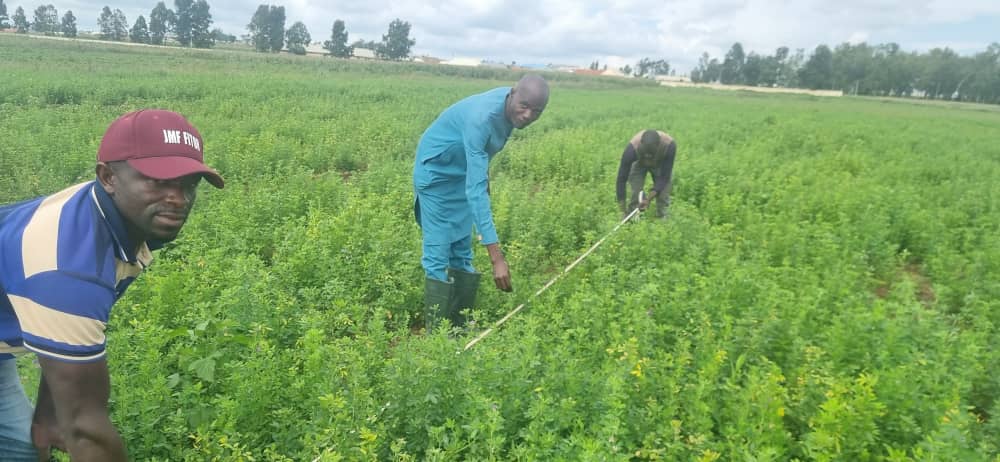
The recent strawberry collapse in Plateau State makes this failure impossible to ignore. Farmers in Jos produced strawberries successfully. The crop was healthy, abundant, and ready for market. Then the planes stopped flying. Road transport proved unviable for an ultra-perishable fruit with a shelf life measured in days. Losses mounted. Farmers began to ask a chilling question: is it cheaper to harvest or to let the fruit rot?
Advertisement
This was not an agricultural failure. It was a logistics failure. And it is not unique. Strawberries merely expose, in days, what tomatoes, fish, dairy, onions, mangoes, and vegetables expose over weeks and months. Nigeria grows food, counts it in GDP, loses it after harvest, impoverishes farmers, and imports substitutes. Then we congratulate ourselves on production statistics and wonder why prosperity does not follow growth.
GDP records crops grown. It does not record crops lost. When food rots between farm and market, GDP still shows success. When logistics costs exceed crop value, GDP remains silent. When farmers absorb losses created by system failure, GDP does not blink. The result is an illusion of progress that hides a machinery of value destruction.
This is why agriculture can contribute significantly to GDP while agricultural households remain among the poorest Nigerians. Growth is being measured where it begins, not where it should end.
Advertisement
Post-harvest losses are often described as technical inefficiencies. That language is too mild. They are macroeconomic leakages. They represent billions of dollars in destroyed value each year, concentrated among the poorest producers and transferred outward through imports, inflation, and lost industrial opportunity.
Every crate crushed on bad roads, every hour lost at checkpoints, every crop spoiled for lack of cold storage, every airline route abandoned without contingency planning is not a minor inconvenience. It is economic vandalism.
Nigeria’s food system is structured to fail after harvest. Production policy lives in one silo. Transport policy lives in another. Aviation, rail, roads, trade, energy, and security are treated as separate conversations. No one is formally responsible for the space between harvest and consumer. That space is where value should multiply. Instead, it is where value disappears.
The Plateau strawberry crisis is a textbook case of single-point dependency. An entire value chain rested on commercial passenger flights that the producers did not control. When that route collapsed, the system had no redundancy, no processing fallback, no state-brokered logistics backstop, and no buyer-of-last-resort. The losses were immediate and total.
Advertisement
This is not how serious economies manage food. In successful agricultural economies, logistics is treated as core national infrastructure. Storage, transport, processing, and market access are planned before acreage expands. Redundancy is built deliberately, not optimised away in the name of efficiency. When fresh markets fail, processing absorbs surplus. When one route collapses, another exists. Nigeria does the opposite. We expand production first and hope the rest will follow.
The consequences are visible everywhere. Tomatoes rot in the north while paste is imported into the south. Fish spoils near rivers while frozen imports dominate markets. Milk is poured away while powdered substitutes fill shelves. Fresh produce is lost locally while processed alternatives arrive through ports. This is not market failure. Markets respond rationally to the signals they receive. This is policy failure rewarded with silence.
By allowing post-harvest losses to persist, Nigeria transfers the cost of systemic weakness onto farmers, who are least able to absorb it. The result is a poverty trap. Farmers invest in inputs, labour, and land, only to see value evaporate after harvest. Income collapses. Debt rises. Risk appetite shrinks. Productivity stagnates. Rural economies weaken. Migration accelerates. This is how agriculture grows GDP but deepens poverty.
The macroeconomic consequences are severe. Food inflation rises because supply is unreliable. Foreign exchange drains because imports fill gaps created by domestic losses. Agro-processing remains shallow because feedstock supply is inconsistent. Employment opportunities that should arise along the value chain never materialise. National prosperity stalls not for lack of production, but for lack of delivery. The uncomfortable truth is this: Nigeria’s poverty is not primarily the result of scarcity. It is the result of mismanagement of abundance.
Advertisement
Post-harvest losses are not a footnote to agricultural policy. They are among the largest unaddressed drains on national wealth. Reducing them would raise farmer incomes without expanding farmland, lower food prices without subsidies, create jobs without migration, and deepen industrialisation without imports. Few reforms offer such high returns at such low social cost. Yet leadership attention remains fixed on planting, not on delivery.
This is where responsibility becomes unavoidable. Whoever promotes production without securing delivery pathways is not growing the economy. They are transferring losses downward and importing consequences upward. Encouraging farmers to plant high-value perishables without ensuring storage, transport, and processing is not development. It is induced loss.
Advertisement
Food security cannot be declared in speeches while logistics collapses in practice. A nation that cannot move food reliably cannot claim prosperity, no matter how impressive its production statistics appear.
The Plateau strawberries should not be treated as a local mishap or an unfortunate season. They should be treated as evidence in a national case. The charge is simple: Nigeria counts what it grows and ignores what it loses. Until that changes, agriculture will continue to inflate GDP figures without lifting living standards.
Advertisement
The reform required is not mysterious. It is structural. No perishable crop should be promoted without a logistics readiness test. No production cluster should expand without cold aggregation, transport redundancy, and processing fallback. No harvest should be left entirely at the mercy of commercial routes without public backstopping. No ministry should celebrate yields without accounting for delivery. Food security is logistics security. Prosperity depends on value retention, not production alone.
The question Nigeria must answer honestly is not how much we grow, but how much we keep.
Advertisement
If agriculture truly contributes a quarter of Nigeria’s GDP, why are those who produce it among the poorest citizens? Because we are measuring the wrong success. We grow food. We lose value. We import poverty. And then we pretend not to understand why prosperity refuses to arrive. Until that contradiction is confronted at the highest levels, strawberries will not be the last crop to rot in silence. They will simply be the clearest reminder that harvest without delivery is economic self-sabotage.
Rear Admiral Ati-John (rtd) writes from Lagos.
Views expressed by contributors are strictly personal and not of TheCable.